

Dr. Sarah Chen never thought she’d be recommending needles to her acne patients. But after watching traditional dermatology treatments fail her most stubborn hormonal acne cases, this Manhattan-based dermatologist began exploring an ancient practice that’s now gaining scientific backing. “I was skeptical until I saw the results,” Chen admits. “Facial acupuncture is changing how we approach hormonal breakouts.”
The integration of traditional Chinese medicine into modern dermatology represents a significant shift in acne treatment philosophy. Rather than solely targeting surface symptoms, this approach addresses the underlying hormonal imbalances that drive persistent adult acne, particularly in women experiencing monthly flare-ups, postpartum breakouts, and perimenopausal skin changes.
The Science Behind Needle Therapy for Skin
Clinical research is validating what traditional Chinese medicine practitioners have long claimed about acupuncture’s effects on hormonal balance. Recent studies published in the Journal of Clinical Medicine show facial acupuncture can reduce inflammatory markers by up to 40% in acne patients while improving circulation and lymphatic drainage.
Dr. Michael Rodriguez, a board-certified dermatologist in Los Angeles, explains the mechanism: “Acupuncture stimulates specific points that correspond to hormonal pathways. We’re seeing measurable changes in cortisol levels, improved insulin sensitivity, and better regulation of androgens – all key factors in hormonal acne.”
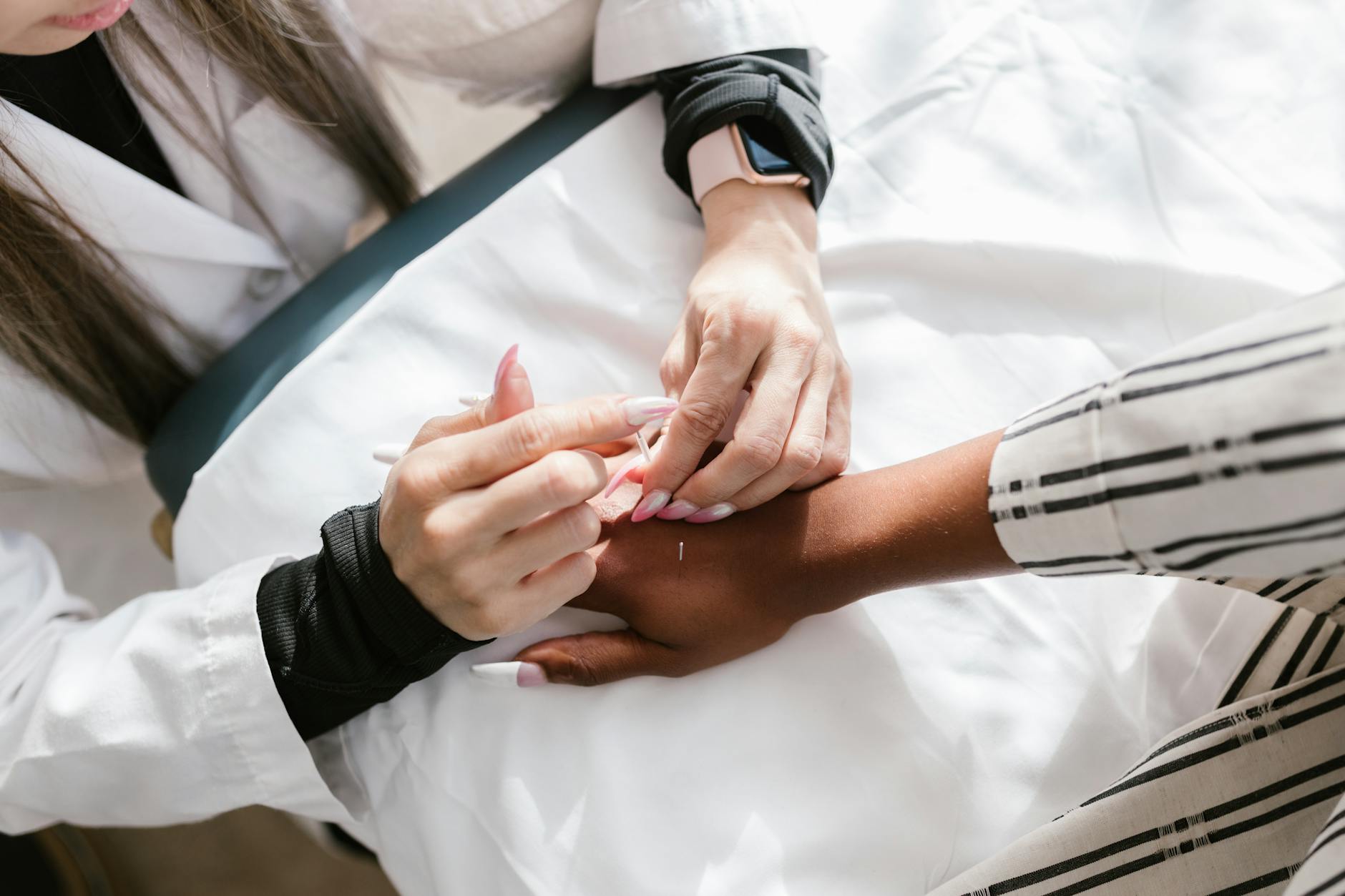
The treatment targets specific facial points including the jawline, temples, and forehead areas where hormonal acne typically appears. Unlike body acupuncture, facial treatments use extremely fine needles and focus on points that correspond to digestive organs, reproductive systems, and stress response mechanisms.
Licensed acupuncturist Dr. Lisa Park, who works alongside dermatologists in Beverly Hills, notes the treatment’s dual approach: “We’re addressing both the local inflammation on the face and the systemic imbalances causing the acne. Patients often see improvements in sleep, digestion, and stress levels alongside clearer skin.”
Who Benefits Most from This Combined Approach
Dermatologists are finding facial acupuncture most effective for specific patient profiles. Women with PCOS-related acne, those experiencing breakouts during menstrual cycles, and patients dealing with stress-induced flare-ups show the strongest responses to combined treatment protocols.
“Traditional treatments like retinoids and antibiotics work on the surface, but they don’t address why the acne keeps returning,” explains Dr. Jennifer Walsh, a dermatologist in Chicago who now offers integrated treatment plans. “For patients where hormones are the primary driver, acupuncture can be the missing piece.”
The treatment protocol typically involves weekly sessions for 8-12 weeks, combined with conventional dermatological care. Patients continue their prescribed topical treatments while receiving acupuncture to address internal factors contributing to breakouts.

Case studies from integrated practices show particularly promising results for adult women who developed acne after age 25, a demographic that often struggles with traditional teenage acne treatments. These patients frequently have clear lab work but persistent chin and jawline breakouts that correspond to hormonal fluctuations.
Dr. Chen tracks her combined treatment patients and reports 75% see significant improvement within three months, compared to 45% with topical treatments alone. “The patients who respond best are those willing to commit to the full protocol and make complementary lifestyle changes,” she notes.
Insurance and Integration Challenges
The growing acceptance of facial acupuncture in dermatology practices faces practical hurdles. Most insurance plans don’t cover acupuncture for acne treatment, leaving patients to pay out-of-pocket costs ranging from $80-150 per session.
Dr. Rodriguez has partnered with licensed acupuncturists in his building to offer package deals and payment plans. “We’re treating the whole person, not just the skin condition. The investment often pays off when patients need fewer prescription medications and see lasting results.”
Some dermatologists are pursuing additional training in facial acupuncture to offer integrated services. The American Academy of Medical Acupuncture provides certification programs specifically for physicians, though the training requires significant time investment.
Professional collaboration between dermatologists and acupuncturists is becoming more common in major metropolitan areas. These partnerships allow for coordinated care plans where both practitioners monitor progress and adjust treatments based on skin response and overall health improvements.
The approach aligns with broader trends in personalized medicine, where treatments are tailored to individual genetic, hormonal, and lifestyle factors rather than using one-size-fits-all protocols.
Future of Integrated Acne Treatment
Research institutions are launching larger studies to establish standardized protocols for combining acupuncture with dermatological treatments. The National Institutes of Health has funded several trials examining acupuncture’s effects on hormonal acne, with results expected over the next two years.
Dr. Walsh predicts this integration will expand beyond acne treatment: “We’re already seeing success combining acupuncture with other holistic approaches in anti-aging protocols. The future of dermatology is addressing skin health from multiple angles simultaneously.”
Technology is also enhancing traditional acupuncture techniques. Some practitioners use electroacupuncture devices that provide controlled electrical stimulation to enhance treatment effects, though research on these modifications for acne treatment is still emerging.
The shift toward integrative dermatology reflects changing patient expectations. Today’s acne sufferers often arrive at appointments having researched holistic approaches and seeking practitioners who understand the connection between internal health and skin appearance.
As more dermatologists witness the results of combined treatments, facial acupuncture is likely to become a standard option for hormonal acne patients who haven’t responded to conventional therapies alone. The key lies in finding practitioners trained in both approaches and committed to evidence-based integrated care.
Frequently Asked Questions
How does facial acupuncture help with hormonal acne?
Facial acupuncture targets specific points that help regulate hormonal pathways, reducing inflammation and addressing underlying imbalances that cause persistent breakouts.
Is facial acupuncture covered by insurance for acne treatment?
Most insurance plans don’t cover acupuncture for acne treatment, with sessions typically costing $80-150 out-of-pocket.