Hospital scrubs are finding new life on fashion runways across Europe and North America, as design students transform medical textiles into avant-garde collections. What started as a sustainability experiment at London’s Central Saint Martins has sparked a movement that’s reshaping how emerging designers view waste and functionality in fashion.
The trend emerged from the pandemic’s aftermath, when hospitals disposed of massive quantities of textiles due to updated safety protocols. Fashion students, already grappling with the industry’s environmental impact, saw opportunity in what others considered waste. The results challenge traditional notions of luxury and beauty while addressing fashion’s sustainability crisis.

From Operating Room to Runway
Fashion programs at Parsons School of Design, SCAD, and the Royal College of Art have incorporated medical textile upcycling into their curricula. Students source materials from hospital suppliers, textile recyclers, and medical facilities updating their linens. The fabrics offer unique properties: antimicrobial treatments, moisture-wicking capabilities, and durability standards far exceeding typical fashion textiles.
Mia Fernandez, a final-year student at Parsons, created an entire graduation collection from decommissioned surgical linens. Her structured jackets and flowing dresses retain the clinical precision of their origins while introducing unexpected silhouettes. “These fabrics are engineered for extreme conditions,” Fernandez explains. “They bring a different kind of luxury – one based on performance rather than precious materials.”
The technical requirements of medical textiles create design challenges that push students beyond conventional techniques. Hospital bed sheets, typically made from high-thread-count cotton blends, offer excellent drape but resist traditional dyeing methods. Surgical wraps provide structure but require specialized cutting techniques. These constraints force creative solutions that often result in innovative construction methods.
Sustainability Meets High Fashion
The environmental impact drives much of this movement. Fashion schools report that medical textile projects reduce material costs by 60-80% while eliminating waste from the supply chain. Unlike fast fashion’s synthetic blends, hospital textiles often use natural fibers chosen for patient comfort and safety.
London-based textile recycling company ReNew Fabrics reports a 300% increase in inquiries from fashion students seeking medical-grade materials. The company, which partners with NHS trusts to divert textiles from landfills, has created educational programs specifically for design schools. Students learn to assess fabric quality, understand antimicrobial treatments, and work within the constraints of pre-used materials.
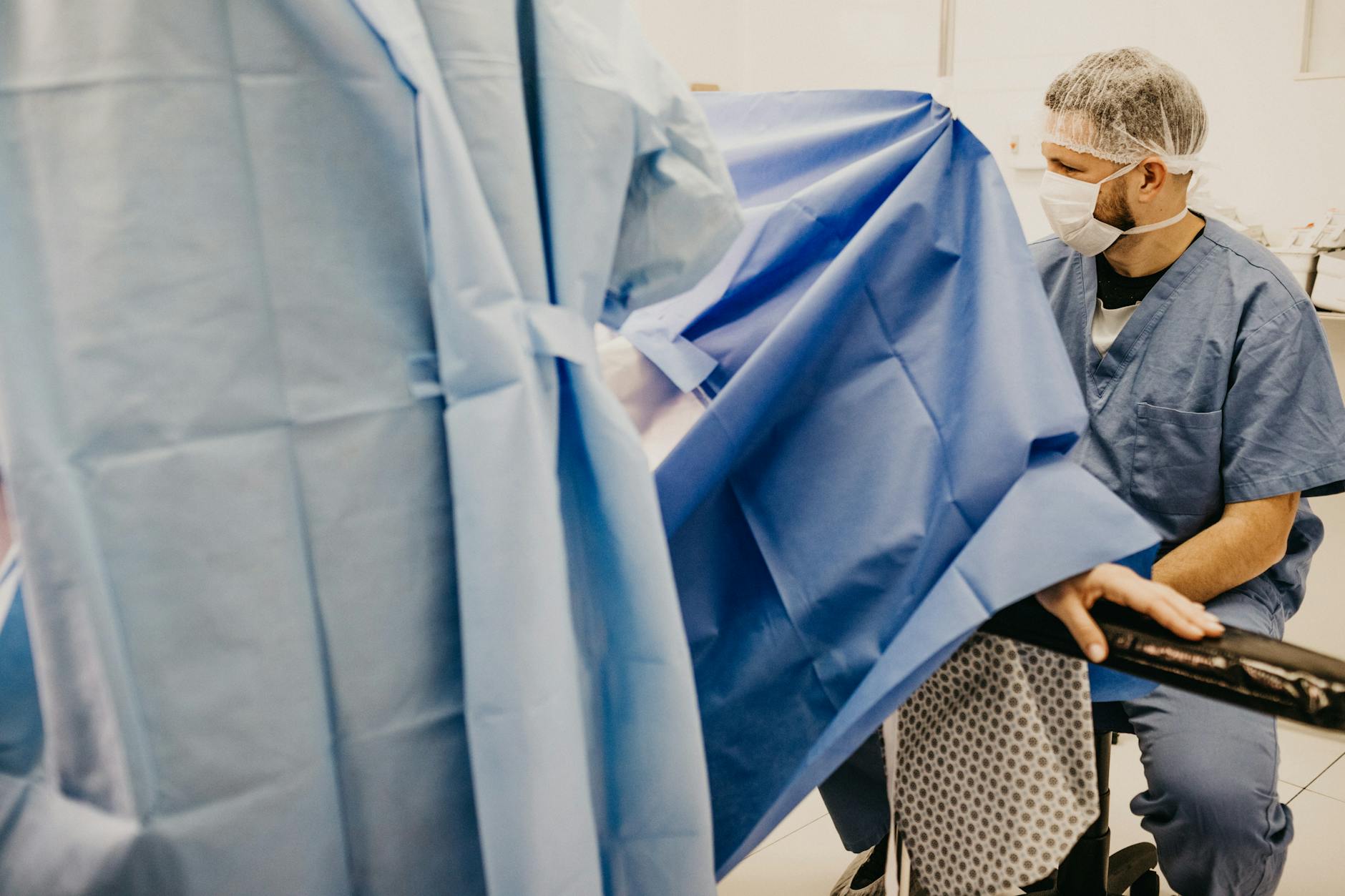
The aesthetic possibilities surprise many observers. Hospital blues and surgical greens, once associated purely with clinical environments, create striking color palettes when combined with contemporary cuts. The institutional nature of these materials adds conceptual depth to collections exploring themes of care, healing, and transformation.
Technical Innovation Through Constraint
Working with hospital textiles requires students to develop new skills in material analysis and adaptation. Many medical fabrics undergo chemical treatments that affect how they respond to heat, pressure, and traditional garment construction techniques. Students must understand these properties to successfully integrate the materials into wearable designs.
Professor Janet Morrison at SCAD’s fashion department notes that students working with medical textiles show improved technical skills across all projects. “When you can’t rely on buying exactly what you want, you become more inventive,” Morrison observes. “These students develop problem-solving abilities that serve them throughout their careers.”
The movement connects to broader trends in functional fashion, where technical performance meets aesthetic appeal. Just as workwear has influenced high fashion, medical textiles bring their own functional heritage to contemporary design. The antimicrobial properties, moisture management, and durability of hospital fabrics align with consumer demands for clothing that performs beyond appearance.
Some students collaborate directly with healthcare facilities to understand the original context of their materials. These partnerships provide insight into why certain fabrics were chosen, how they performed in medical settings, and what led to their replacement. This knowledge informs design decisions and adds narrative depth to finished pieces.
Industry Response and Future Implications
Established fashion houses are taking notice of this student-led movement. Several major brands have quietly begun sourcing medical-grade textiles for limited collections, though most prefer to position these as “technical innovations” rather than upcycled materials. The stigma around “used” materials remains strong in luxury fashion, even when those materials meet higher standards than typical fashion fabrics.
Sustainability consultants predict this trend will expand beyond student projects as the fashion industry faces increasing pressure to reduce waste. Medical facilities generate consistent streams of textile waste, creating potential partnerships between healthcare systems and fashion brands. However, regulations around medical waste disposal currently limit such collaborations in many jurisdictions.
The success of hospital textile collections at student fashion shows has attracted attention from buyers and press. Several emerging designers have secured orders based on their medical textile innovations, suggesting commercial viability for the concept. As consumers become more conscious of fashion’s environmental impact, the story behind these materials may become a selling point rather than a limitation.

The hospital textile movement represents more than a trend – it’s a fundamental shift in how designers approach materials and sustainability. As fashion education evolves to address environmental concerns, students working with medical textiles gain skills in resourcefulness, technical innovation, and conceptual thinking that traditional design programs rarely provide. This generation of designers, trained to find beauty and potential in unexpected places, may reshape fashion’s relationship with waste and functionality for decades to come.
Frequently Asked Questions
Where do fashion students get hospital textiles?
Students source materials from hospital suppliers, textile recyclers, and medical facilities updating their linens through partnerships with schools.
What makes hospital textiles good for fashion?
Medical textiles offer antimicrobial properties, moisture-wicking capabilities, and durability standards that exceed typical fashion fabrics.