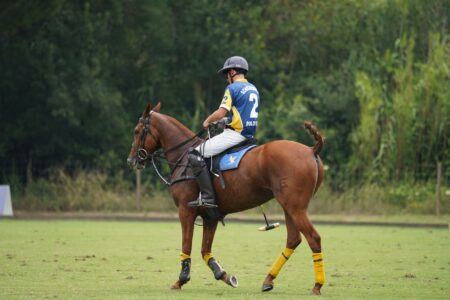


Croquet has never been a quiet sport – the crack of mallet on ball, the ceremony of coloured pegs marking corners and winning posts, the whole theatrical apparatus of a lawn game that takes its visual identity seriously. Now that coded colour system is finding its way into knitwear, specifically at the hem, where designers are translating the sport’s peg palette into tight, ordered stripe sequences that finish a sweater or cardigan with something between a referee’s signal and a coat of arms.

Where the Peg Palette Comes From
A standard croquet court uses coloured pegs and clips to identify ball order and mark boundaries – typically blue, red, black, and yellow as the primary set, with white and green appearing in six-ball variants. The arrangement is not decorative in any casual sense. It follows a strict sequence, and anyone familiar with the game reads those colours the way a sailor reads signal flags. That specificity is exactly what makes the palette interesting when pulled into fashion: the colours arrive pre-loaded with logic.
Structured knitwear has always used stripe placement as a way to control visual weight. A hem stripe grounds a garment, draws the eye downward, and creates a finish that reads as intentional rather than incidental. What the croquet peg palette adds to that convention is a layering of cultural reference – the stripes don’t just finish the garment, they announce an allegiance to a specific visual world. The lawn, the afternoon light, the particular Englishness of the whole enterprise.
The trend is arriving through knitwear rather than other categories for practical reasons. Knit construction allows colour changes at precise row intervals without seaming or patchwork, which means a three or four stripe sequence at the hem can be executed cleanly, keeping each band sharp and equal in weight. Woven fabrics require additional construction steps to achieve the same result. Knitwear does it natively, which gives designers more control over the stripe’s proportional relationship to the garment body.
The colour order matters as much as the colours themselves. Designers working with this reference are not simply reaching for a stripe of yellow and calling it croquet-coded. The sequences tend to appear in pairings or four-band arrangements that mirror the actual peg hierarchy – blue anchoring the base, red layered above it, with black and yellow completing the set. When the order is scrambled, the reference collapses into generic retro sportswear. When it holds, the hem reads as a direct citation.
How the Hem Stripe Is Being Constructed
The placement is narrower than it might first appear in reference imagery. Most executions keep each individual stripe band between five and eight rows of knit – enough to register clearly as a distinct colour block without overwhelming the hem’s proportion to the garment body. The total stripe section typically spans no more than three to four centimetres, sitting just above or at the fold of the rib. That restraint is what keeps the detail feeling tailored rather than sporting.
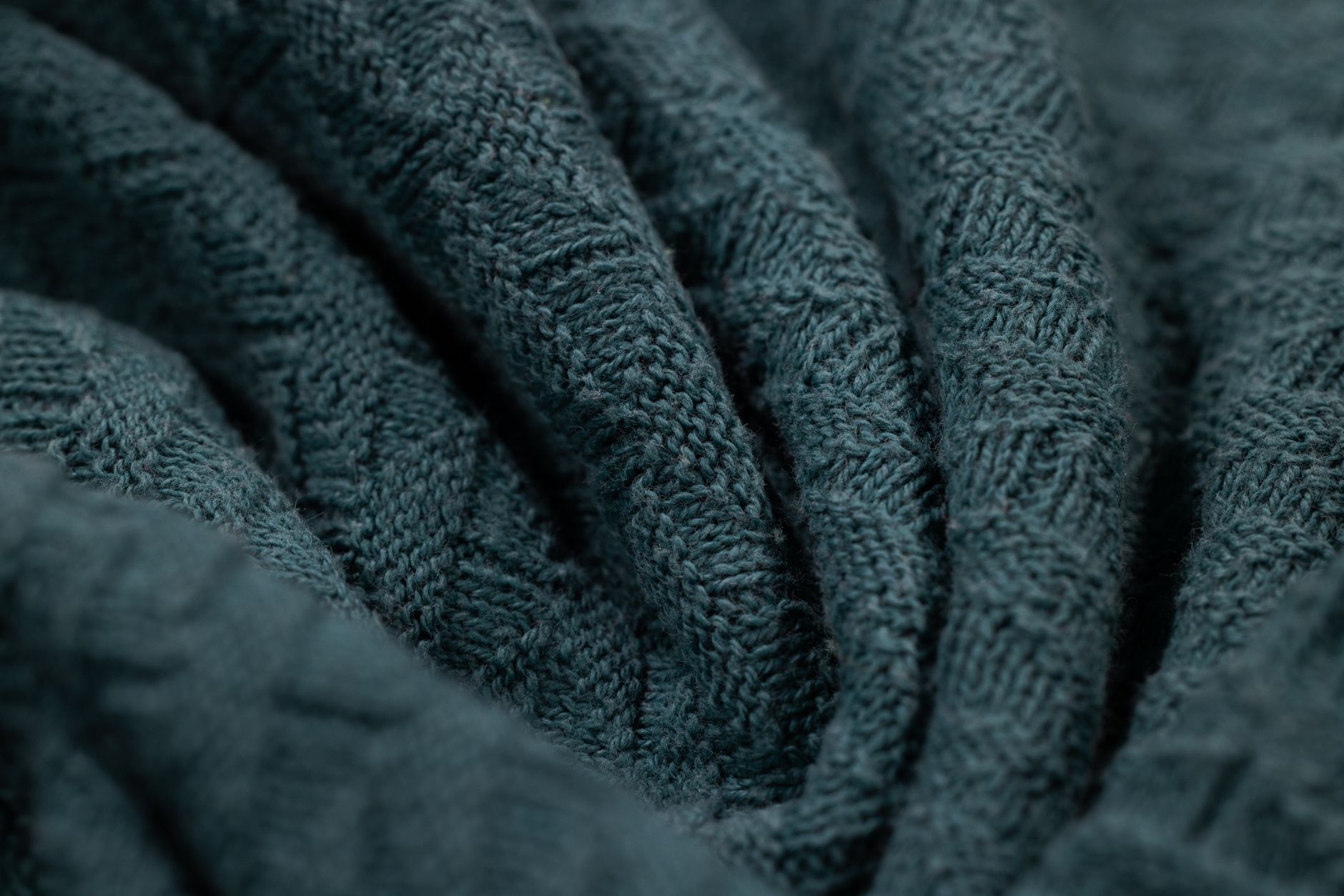
Ribbed hems are the dominant construction choice, and the reason is structural rather than aesthetic. A rib hem has natural elasticity and return, which means a stripe sequence embedded within it will compress and expand with the fabric rather than buckling or distorting. Flat hems in the same colourway tend to curl, which disrupts the visual cleanness of the stripe order. Some designers are working with a hybrid approach – a flat knit body transitioning into a ribbed hem section that carries the stripe sequence, using the shift in texture to frame the colour work as a separate, deliberate zone.
Yarn weight is keeping tighter than expected. The croquet peg palette reads best in a fine to medium gauge, where the colour changes stay crisp and the individual stripe rows are distinct rather than blurring into each other. Chunky knits work against the reference because the row scale is too large – a single row of chunky yarn in yellow reads as a thick band rather than a stripe, losing the proportional logic of the peg sequence. Designers using heavier yarns are compensating by increasing stripe count while narrowing individual band width, threading the needle between weight and precision.
The sweater silhouette carrying this detail is consistently structured rather than oversized. Boxy or oversized proportions push the hem too far from the body, which dilutes the visual impact of a narrow stripe sequence. A fitted or semi-fitted body brings the hem close enough to the line of the hip or waist for the stripe to read as a deliberate finish rather than an afterthought. Cardigans are showing up as a secondary vehicle – the stripe carries across the front bands and hem simultaneously, creating a framing effect that reads as closer to a uniform than a casual layer.
Some labels are extending the logic beyond the hem alone, carrying a single stripe of the sequence to the cuff to create bookending without full repetition. The effect works because it signals system – the viewer understands immediately that the colours are coded rather than decorative, and the restraint of using only one cuff stripe versus the full hem sequence creates hierarchy within the garment itself. This approach also avoids the risk of the piece reading as costume, which is the dominant failure mode when sporting references go too literal.
The Broader Positioning of This Detail
Croquet-coded knitwear sits within a wider interest in British lawn sport aesthetics that has been building through both runway collections and independent knitwear labels. The visual grammar of the lawn – whites, creams, precise colour marking, a sense of ceremony around leisure – translates cleanly into knitwear because the sport was always as much about appearance as competition. Wearing the colour sequence of the pegs at the hem is a way of borrowing that ceremonial quality without requiring the full costume context of actual court dress.

What keeps this from tipping into novelty is the scale of the detail. The stripe is small enough that it does not announce itself immediately – the garment reads first as a well-constructed structured knit, and the hem sequence reveals itself on closer inspection. That order of discovery is exactly what separates a directional detail from a theme. The question worth watching is whether the peg sequence holds its specificity as the reference spreads, or whether the colours get shuffled into a generic heritage stripe and the croquet connection dissolves entirely.