


The lifeguard whistle – that blunt, functional object clipped to a red swimsuit strap or hung around a neck slick with sunscreen – has no obvious business appearing in a curated jewellery drop. And yet, here it is.
When Safety Equipment Becomes Statement Jewellery
A small but growing cluster of independent jewellery designers has started reworking the lanyard-and-whistle format into precious and semi-precious versions: sterling silver whistles strung on delicate box chains, matte gold-plated cylinders on waxed cord, oxidised brass pieces with the same blunt silhouette but finished to a high polish. The functional object is preserved in its exact shape, stripped of its utility, and sold as adornment. That tension – between what something is and what it now means – is exactly what makes the trend land.
The appeal connects to a wider appetite for workwear and utility references in fashion. The same instinct that has driven paramedic vest designs into high-end tactical wear collections is now operating at the jewellery scale. When fashion borrows from professional or occupational contexts, it is usually reaching for a specific kind of authority – the suggestion that the wearer operates in a world that demands competence, not just taste. The lifeguard whistle carries that charge efficiently. It reads as outdoors, physical, alert. On a fine chain against a collarbone, it reads as all of those things and also, somehow, composed.
What separates this from a novelty item is execution. The designers pushing this aesthetic are not treating the whistle as a joke or a nostalgia prop. The proportions are considered – small enough to sit elegantly but large enough to register as a deliberate choice. Materials are quality: vermeil, solid sterling, recycled brass. Cords are either high-grade nylon in muted tones or fine chains with a delicate weight that contradicts the industrial reference. The object says utility; the materials say the opposite. That contradiction is the whole point.
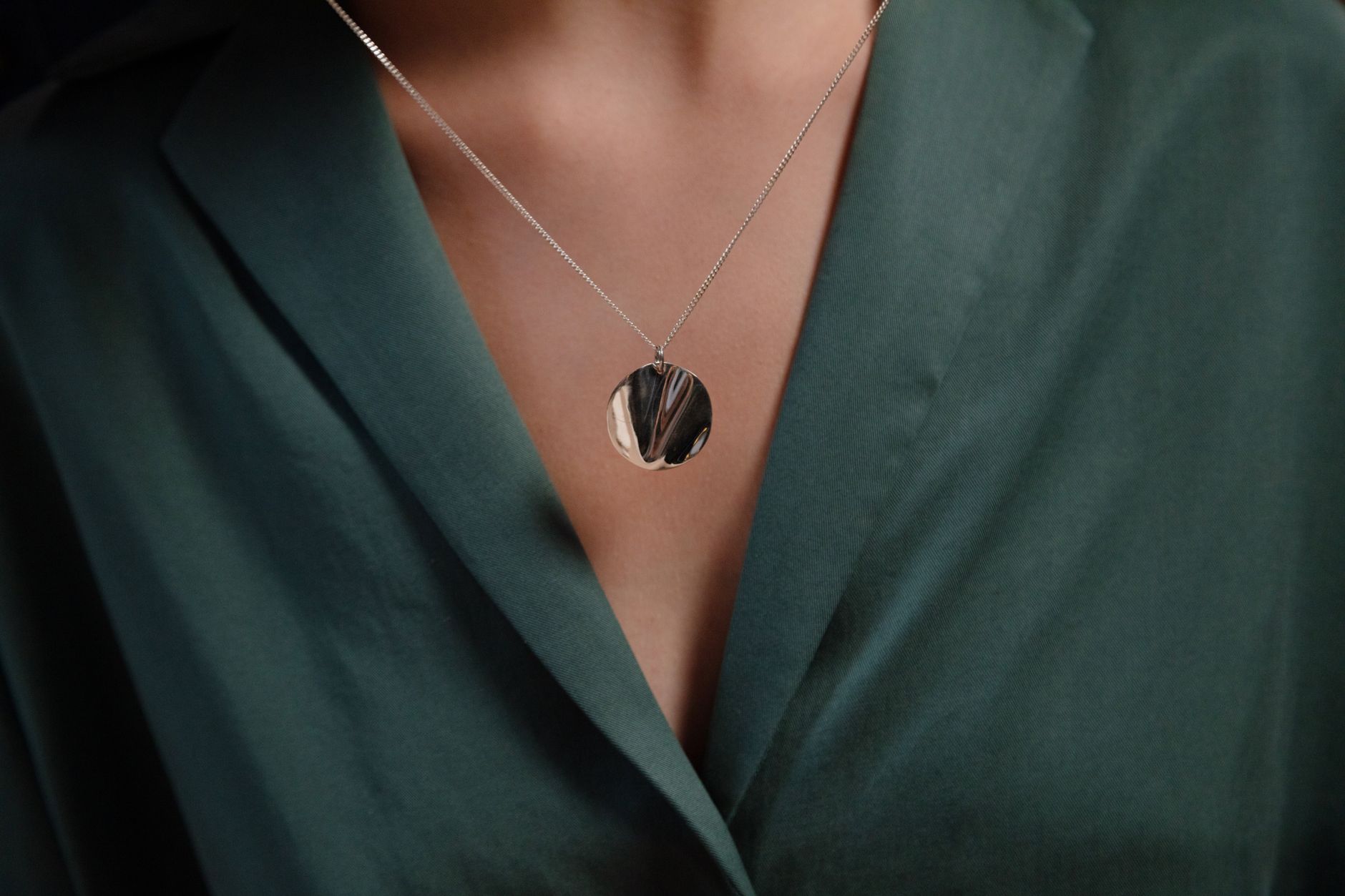
Lanyards, for their part, are no longer the soft-foam conference badge holders of office life. Designers working in this space are treating the lanyard itself as part of the jewellery object – braided leather, fine rope in muted earth tones, or minimal chain constructions that hang with enough weight to feel intentional. Some versions are adjustable, some are fixed length sitting just below the collarbone. The styling choices being photographed alongside these pieces lean toward clean white tank tops, minimal knits, bare summer skin. Nothing competes with the piece. It gets the full frame.

Why Minimalist Jewellery Was Ready for This
Minimalist jewellery has been in a comfortable groove for several years – fine chains, small hoops, signet rings, the occasional architectural pendant. The category built a strong following by being quiet, stackable, and wearable every day without demanding much from an outfit. That reliability was also, eventually, its limitation. After enough time, the category started to feel safe to the point of inertia. There was nothing to push against.
The whistle lanyard offers friction. It carries meaning that a small gold disc does not. It references a specific professional context, a specific sensory memory – the crack of a whistle over a crowded public pool, chlorine, summer heat. That associative weight gives the jewellery something to do beyond simply looking clean and expensive. For a buyer who wants minimalism but does not want neutrality, the whistle pendant is a workable solution: it stays within a restrained visual language while refusing to be anonymous.
There is also a physical logic to the format. Pendant necklaces worn on longer chains have dominated styling for several seasons. The lanyard-length drop – sitting lower than a choker, higher than a long chain – fills a specific space on the body that feels fresh without being unfamiliar. Designers working with the format note that the length hits differently depending on what you wear it with: against an open collar, the whistle becomes a focal point; tucked under a crewneck, it becomes a private detail that catches light when it shifts. Both readings work.
The colour story matters too. Most versions being released are working in a deliberately narrow range – blackened silver, warm gold, raw brass, natural cord. Nothing pastel, nothing bright. The palette reinforces the utility reference without tipping into costume. A neon-orange whistle on a neon cord would read as parody. A brushed brass version on a dark waxed cord reads as design.
Social media has helped clarify who this is for. The pieces are showing up on accounts that operate in a specific overlap between sport-influenced dressing, minimalist aesthetics, and an interest in objects with a clear history or function. The styling tends toward the unstudied – wet hair, minimal makeup, a single piece as the only jewellery worn. The effect is that the whistle reads less like an accessory and more like something the wearer simply never takes off.
Where the Trend Has Room to Go
The whistle is one entry point into a broader interest in functional-object jewellery – pieces that borrow their form from tools, safety equipment, or professional gear. Carabiner pendants, nail-knot rings, and rope-hardware bracelets have all moved through the same pipeline. What keeps each wave distinct is the specificity of the reference. The lifeguard whistle is narrow enough to feel precise, legible enough to read without explanation, and removed enough from high fashion that there is no inherited association to fight against.

The more interesting question is whether the whistle stays precious or goes mass. Once a format gets picked up by larger commercial players, the material quality drops and the price point collapses, which usually kills the design rationale. A whistle pendant in plastic on a polyester cord is just a toy. The entire meaning of the piece depends on the materials saying something the shape does not – and that balance is fragile enough that it may only survive at the independent and small-batch level. Whether that constraint becomes a selling point or a ceiling is still unresolved.
Frequently Asked Questions
What is the lifeguard whistle jewellery trend?
Independent designers are creating pendants shaped like lifeguard whistles in sterling silver, brass, and vermeil, worn on fine chains or cord lanyards as minimalist statement jewellery.
How do you style a whistle pendant necklace?
Most styling leans minimal – a single whistle pendant worn alone against a clean white top or bare skin, at a length that sits just below the collarbone.


