


When Equestrian Craft Meets the Hemline
Polo club saddlery has never been a quiet influence. The sport’s gear carries a visual language built on tension, precision, and practical elegance – and the saddle cantle binding tape, that tight woven strip reinforcing the rear arch of a riding saddle, is now speaking directly to the hemlines of structured skirts. What started as a functional material choice in equestrian manufacturing is finding its way into fashion ateliers and contemporary knitwear studios as a finishing detail that changes how a hem reads on the body.
The appeal is not purely aesthetic. Cantle binding tape – typically a tightly woven grosgrain or leather-edged textile strip – creates a stiffened, slightly raised border that holds its shape under movement. Applied to a skirt hem, it does the same thing: lifts the edge, keeps the silhouette clean, and adds a subtle architectural line that soft-hemmed or folded finishes simply cannot replicate. Designers working in wool crepe, heavy cotton, and bonded jersey are finding that this borrowed technique solves a structural problem that conventional hemming methods have always struggled with.

The Mechanics Behind the Detail
To understand why cantle binding tape translates so well to structured skirts, it helps to know what it does on a saddle. The cantle – the upward-curving rear of a saddle seat – takes significant stress during riding. The binding tape runs along its perimeter not just to finish the edge cleanly, but to distribute pressure and prevent fraying under repeated load. In high-quality polo saddles, this tape is applied under tension and anchored with precise stitching, creating a border that feels almost architectural when you run your fingers across it.
When fashion applies this logic to a skirt hem, the structural benefits carry over. A hem finished with cantle-style binding tape resists rolling, holds its angle through movement, and creates a sharper visual cut at the base of a silhouette. For A-line and pencil skirts, this means the hem behaves more like a seam than a fold – it stays where it is placed. This is especially valuable in heavier fabrications where a traditional blind stitch hem would eventually pull or drop under the weight of the cloth.
The tape itself comes in multiple constructions. The most equestrian-faithful version uses a woven polyester or cotton twill with a reinforced core, often heat-bonded on one face. Some saddlery suppliers produce leather-wrapped versions for premium bridle work, and these have caught the attention of designers working in leather goods and fashion who want an edge binding that reads as luxury without being decorative. The distinction matters in fashion application: cantle binding tape at its most honest is not ornamentation. It is engineering that happens to look good.

How It Reads on a Runway Silhouette
The visual effect of cantle binding tape on a skirt hem is specific enough that it deserves its own category of description. It sits differently than grosgrain ribbon trim, which tends to feel retro or costume-adjacent. It reads differently than topstitched hems, which flatten against the fabric surface. The binding tape, applied correctly, creates a slight three-dimensional ridge at the hem edge – a shadow line that makes the skirt’s base look finished and intentional in a way that photographs sharply and reads clearly even from a distance on a runway.
This is part of why the detail is gaining traction in fashion editorial. When a skirt moves, a soft hem diffuses its own silhouette. The binding tape keeps the base line tight, so the skirt’s shape reads cleanly through motion. For photographers and stylists, that consistency in movement is genuinely useful. For the wearer, it means the skirt holds its intended profile through a full day rather than softening progressively toward the end of the fabric’s weight limit.
Some designers working in structured tailoring have extended the cantle tape approach beyond the hem itself, running it along kick pleat edges and vent openings – areas that share the same structural logic as a saddle’s binding points. The same thinking driving modern blazer vent construction applies here: a bound edge holds its geometry where a finished-and-turned edge will eventually relax. The tape keeps the structure honest.
The color and material choices being made around this detail are also worth watching. Early applications tended to match the tape exactly to the skirt fabric, treating the binding as invisible structure. A more recent approach, visible in both independent design studios and some high-street interpretations, uses a contrast tape – cream binding on charcoal wool, tan on navy, black leather-edged tape on white cotton – that makes the equestrian reference explicit without becoming costume. It acknowledges the source material rather than hiding it, which gives the skirt a more direct visual personality.
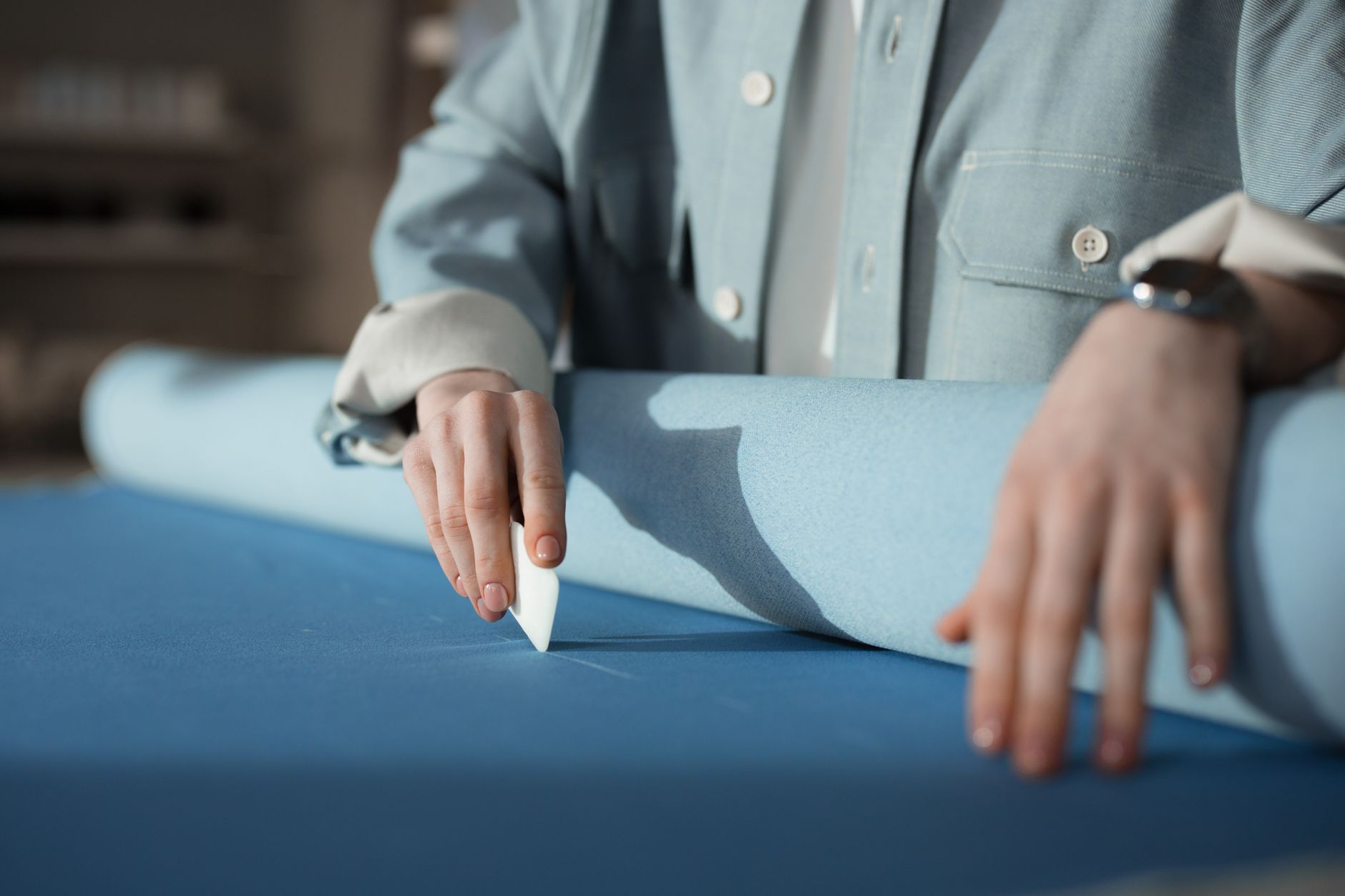
What keeps this trend from tipping into novelty is the fact that it solves a real problem before it creates a visual effect. The fashion industry regularly borrows from workwear and sport for surface reasons – a zipper here, a buckle there – without adopting the underlying logic. Cantle binding tape is the opposite case. The hem strengthening comes first. The reference to polo club craft is a consequence of the technique, not a costume decision laid over an otherwise conventional garment. That order of priorities is exactly what gives a detail staying power – when removing it would make the skirt worse, not just less interesting.
Frequently Asked Questions
What is saddle cantle binding tape?
It is a tightly woven textile or leather-edged strip used to reinforce the rear arch of a riding saddle, valued for its ability to hold shape under repeated stress and movement.
How is cantle binding tape applied to skirt hems?
It is stitched along the hem edge under slight tension, creating a raised, stiffened border that prevents rolling, holds the hem’s angle, and creates a sharp visual line at the base of the skirt.