

When Protective Gear Becomes a Design Object
The polo umpire helmet has spent decades doing exactly one job: protecting the face of the official standing between two charging horses and a fast-moving ball. Its grille – a welded cage of steel bars fitted over the visor – was engineered for function alone, shaped by impact resistance rather than any conversation about aesthetics. Now that same grille is showing up as a direct reference in runway headwear, editorial shoots, and sculptural visor collections that have nothing to do with sport.
The shift is subtle but deliberate. Designers are not copying the helmet wholesale. They are lifting the grille’s geometry – the vertical and horizontal bars, the convex curve of the face cage, the way metal intersects at controlled intervals – and translating it into materials like resin, powder-coated aluminum, laser-cut brass, and even rigid leather. The result is a visor that reads as both industrial artifact and wearable sculpture.
Where the Reference Comes From
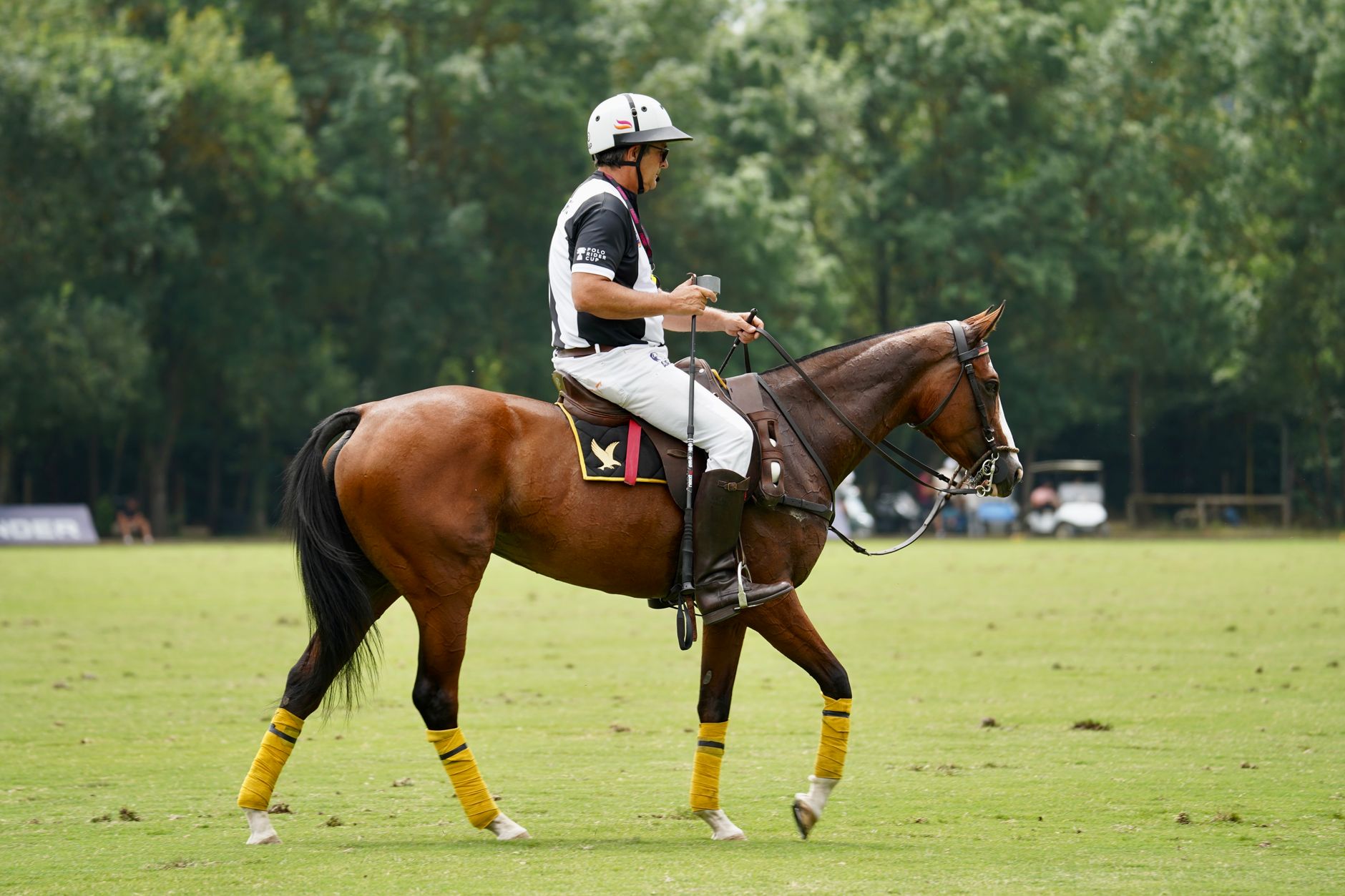
Polo umpire helmets occupy a very specific corner of equestrian equipment. Unlike the riding helmets worn by players, which are shaped for lateral impact and covered in velvet or leather, the umpire’s helmet sits higher on the head and features a full-face grille – closer in silhouette to a fencing mask or a medieval sallet than to anything in contemporary sportswear. That medieval association is part of what makes it interesting to designers working in the space between fashion and armor.
The grille itself varies by manufacturer, but the most recognizable versions feature a flat or slightly domed front cage with evenly spaced bars running vertically, intersected by two or three horizontal bars across the chin and brow line. Some versions have a flip-up mechanism. Others are fixed. The fixed versions, with their locked, staring quality, are the ones attracting the most attention – they carry a severity that a flip-up cannot replicate.
That severity is the point. A growing number of millinery designers and accessories labels are drawn to the umpire grille specifically because it projects authority without ornamentation. There are no feathers, no brims, no embellishment signals to read. The grille communicates through structure alone – and structure, right now, is where a lot of fashion headwear wants to be.
The Sculptural Visor as Fashion Object
Visors already occupy an interesting position in fashion accessories. They cover the upper face, create dramatic shadow, and frame the wearer’s features in a way that a hat brim does not. The sculptural visor – one that extends the form past purely functional sun protection into three-dimensional construction – has been building momentum in editorial and runway contexts for several seasons.
Introducing grille geometry to that form adds a layer of tension. A visor made of laser-cut bars arranged in a cage pattern over the eyes is no longer just protective eyewear styling – it becomes something closer to face jewelry, or armor worn lightly. The open structure means the wearer’s eyes are visible through the bars, which creates an unsettling half-concealment effect that photographers and art directors find very useful.

How the Design Translation Actually Works
The technical challenge in moving from steel grille to fashion accessory is weight. A polo umpire grille is heavy by necessity – the bars need mass to absorb impact. A fashion version made from the same gauge steel would be unwearable. Designers working with this reference are solving it through material substitution, using aluminum sheet cut to bar dimensions, rigid polyurethane resin cast in bar molds, or layered acetate strips that mimic the grille pattern without replicating its weight. The visual language of the grille survives the material swap. The structural logic – bars at regular intervals, a convex forward plane – translates cleanly.
Proportion is the second variable. The polo umpire grille sits close to the face, which is what gives it its caged, contained quality. Fashion interpretations tend to push the grille plane slightly forward, creating a few centimeters of space between the face and the bars. That gap changes the reading entirely – the wearer is no longer inside the cage, but wearing it as a projection in front of them. It moves from enclosure to declaration.
Color also does significant work in the translation. The original grille is almost always bare steel or matte black, finishes chosen for durability and visibility in outdoor light. Fashion versions are experimenting with powder-coat colors – raw copper, dusty olive, warm bronze – that push the reference away from functional equipment and toward decorative metalwork. Some versions are being produced in the kind of artisan finishes associated with architectural hardware rather than sporting goods, which repositions the whole piece in the mind of whoever is looking at it. This is also where the connection to sculptural knitwear moving through equestrian references becomes visible – different categories, same appetite for structure borrowed from a world that was never meant to be fashionable.
What makes the polo umpire grille a more durable reference than most sport-to-fashion borrowings is that it has no strong existing fashion history to compete with. Football helmets carry decades of streetwear coding. Fencing masks have been done. The polo umpire helmet is genuinely obscure outside equestrian circles, which means designers can work with its geometry without fighting against accumulated associations. The form is clean, available, and strange enough that it does not read as costume. Whether it stays that way depends on how quickly the references pile up.
The question worth sitting with is whether the grille reads as protective or predatory once it leaves its sporting context – because those two readings lead to very different places in terms of who wears it and how.
Frequently Asked Questions
What is a polo umpire helmet grille?
It is the steel bar cage fitted over the face of a polo match official’s helmet, designed for impact protection rather than aesthetics.
How are fashion designers adapting the grille for wearable accessories?
Designers are recreating the bar geometry in lighter materials like aluminum, resin, and acetate, often pushing the grille plane slightly forward for a sculptural rather than enclosed effect.