When Athletic Utility Becomes Wearable Identity
Stroke coach whistles have always lived at the end of a lanyard – tucked into a breast pocket, looped around a neck during early morning practice, forgotten on a boathouse hook by afternoon. The cord itself was never the point. It was the thing that kept the whistle from sinking when someone leaned too far over the dock. But something shifted when that same flat, woven cord started showing up off the water, stripped of its whistle, worn as a standalone necklace by people who had never touched an oar in their lives.
The appeal is not nostalgia, exactly. It is the specific visual language of functional minimalism – a cord that looks like it belongs somewhere, that carries the quiet authority of a tool, but sits against a collarbone like deliberate jewelry. Rowing club lanyards, particularly the flat-braided nylon and waxed cotton versions issued to stroke coaches and team captains, are thin enough to read as delicate, structured enough to hold shape, and plain enough to layer without competing with anything else.

The Object Underneath the Trend
Stroke coach lanyards are not the decorative variety sold at gift shops. They are workhorses – typically 3mm to 5mm flat-braided cord in single or two-tone colorways, finished with a simple barrel clasp or a sewn loop at one end. The palette runs institutional: navy, black, forest green, oxblood. Some versions use a slightly waxy finish that gives the cord a subtle sheen without looking polished. That combination of matte structure and restrained color is exactly what draws minimalist dressers to them now.
What separates these from generic cord necklaces available in any accessory aisle is provenance. A lanyard pulled from an actual rowing club context – or a faithful replica of one – carries a visual specificity that reads as considered rather than purchased. The cord’s flatness is different from a round paracord; the clasp placement is functional, not decorative. These details register even when a viewer cannot name them, creating the impression of an object that came from somewhere real.
A growing number of independent accessory makers have recognized this and begun producing cord necklaces that directly reference the stroke coach format – the same flat braid, the same institutional color palette, sometimes even the same barrel hardware. Worn without the whistle, the lanyard becomes a negative-space accessory: you notice the absence of something at the end of it, which makes the cord itself more visible, not less.
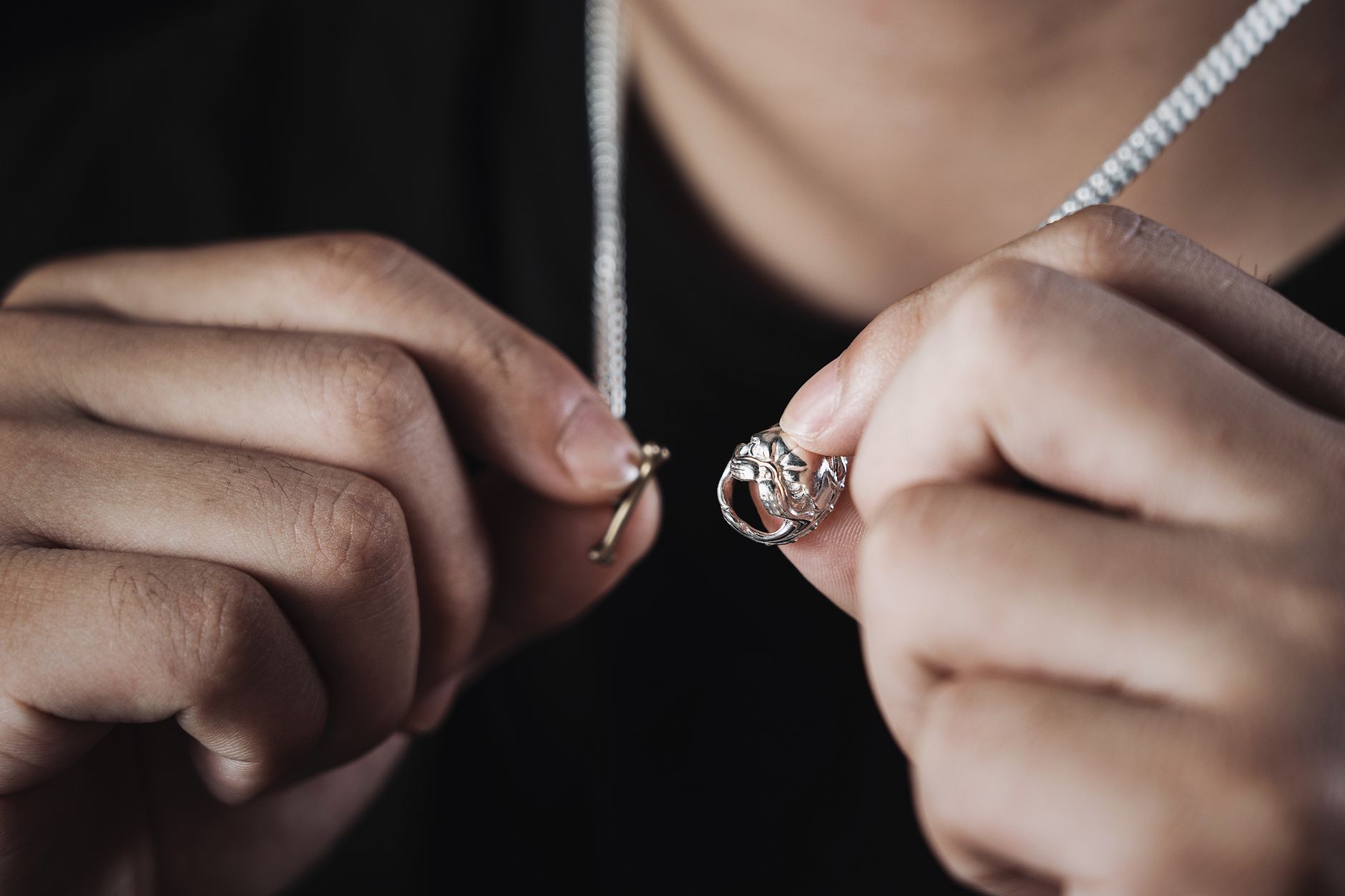
How It Reads On the Body
Styling a bare lanyard cord as a necklace requires almost nothing. That is the point. Against a high-neck ribbed tee, a flat waxed cord in navy sits like a line drawing – spare, graphic, intentional. Against an open collar or a deep V-neck, the same cord behaves like a choker that refuses to perform. It does not catch the light. It does not stack with other pieces unless those pieces are equally restrained. It is, in that sense, an editing tool as much as an accessory.
The silhouette it creates differs from chain jewelry in a specific way: chains hang in curves, responding to gravity and movement. Flat braided cord sits closer to the body and holds its own shape more stubbornly. That rigidity reads differently depending on what it is worn with. On a tailored shirt, it reinforces the structure already present. On something soft and draped, the cord creates contrast – a hard line interrupting fluid fabric. Both readings work because the cord is neutral enough to support either interpretation.
Layering is where this trend gets more complicated. Cord lanyards do not stack with thin gold chains the way a delicate pendant would. The visual weight is too different – cord reads utilitarian, gold reads precious, and the two together usually cancel each other out rather than building something. The cleaner approach, favored by people who have been experimenting with this look, is to layer two cord pieces at slightly different lengths, or to combine the lanyard cord with a single heavy metal pendant that references the same functional vocabulary – a carabiner clip, a compass rose, a flat-stamped disc with no engraving.
This is where the trend connects to a wider movement around sport-specific objects becoming fashion reference points without losing their origin context. Equestrian hardware has been doing this for some time – dock loops, buckles, and binding details migrating into ready-to-wear without announcement. Rowing is following the same path, and the lanyard cord is its most portable export.

The Minimalism Question
There is a version of minimalist jewelry that achieves its effect through expense – a thin gold band, a single diamond, a chain so fine it is barely there. That version communicates restraint through the deliberate withholding of something valuable. The cord lanyard operates on different logic: it communicates restraint through the deliberate deployment of something ordinary. The material itself is inexpensive, reproducible, and entirely without luxury signaling. What it signals instead is a refusal to perform.
That refusal is, paradoxically, its own kind of statement. Wearing an unadorned athletic cord as a necklace in a context where jewelry is expected – a dinner setting, a professional environment, an evening event – requires confidence in the object’s sufficiency. The cord has to be enough. And for a specific dresser, the one who finds chain jewelry too legible and pendant necklaces too explanatory, it is.
The waxed cotton versions of these lanyards age in ways that nylon does not. The wax gradually wears off at the contact points, leaving those areas with a slightly softer texture and a faintly lighter color. Over months, the cord develops a patina that is individual to the person wearing it – which is something no chain necklace can replicate, and something the rowing context reinforces. A stroke coach’s lanyard, worn through seasons of practice, cold mornings, and salt spray, earns its wear. The fashion version earns its wear differently, but the logic of material memory is the same.
The question no one styling this trend has fully answered is where it stops. A bare cord is minimal. A cord with a single found object threaded through it – a river stone with a natural hole, a flat ceramic disc – is still minimal. A cord with a handmade pendant from an independent maker starts to become something else. The lanyard’s authority depends on its blankness, and the moment it becomes a vehicle for another object, it stops being the point. That tension – between the cord as end and the cord as means – is exactly what keeps this trend from settling into a single aesthetic rule.
Frequently Asked Questions
What makes rowing club lanyards different from regular cord necklaces?
Stroke coach lanyards use flat-braided nylon or waxed cotton in institutional colorways with functional hardware, giving them a visual specificity that generic cord necklaces lack.
How do you style a lanyard cord as a minimalist necklace?
Wear the bare cord against a high-neck tee or open collar without additional layering. For more dimension, pair two cords at different lengths or add a single flat metal pendant with no engraving.