

What happens when the most dependable piece in the spring wardrobe becomes too predictable? The trench coat has held that job for decades, showing up every March in stone, khaki, and black, belted and buttoned with the confidence of a garment that never has to explain itself. Lately, a humbler jacket is turning up where the trench used to be: the barn jacket, with its boxy shape, corduroy collar, and pockets built to carry actual things.
The swap makes sense once you look at what spring dressing demands. Mornings are cold, afternoons are mild, and the day often includes a train platform, a walk in drizzle, and an office with aggressive air conditioning. A trench is dressy by design. A barn jacket is practical first, and that ordering is what many people want from a layer they will wear four days out of seven.
The Trench Problem
None of this is an attack on the trench’s pedigree. It began as functional military outerwear, and its storm flap, epaulettes, and D-ring belt are still a pleasure to look at. The trouble is repetition. Because the trench has been the default for so long, wearing one now reads as a decision made out of habit. It also carries a formal posture that clashes with how people dress around it: sneakers, wide-leg denim, chunky knits, and relaxed tailoring.
Then there is upkeep. A pale trench shows rain spots, coffee drips, and the gray smudge of a subway pole. The belt has to be tied or tucked, the length catches on bags and bike chains, and the whole thing wants a hanger rather than the back of a chair. None of these complaints is serious alone. Together they explain why a coat that asks for care is losing ground to one that looks better after being slung over a fence.
Why the Barn Jacket Works
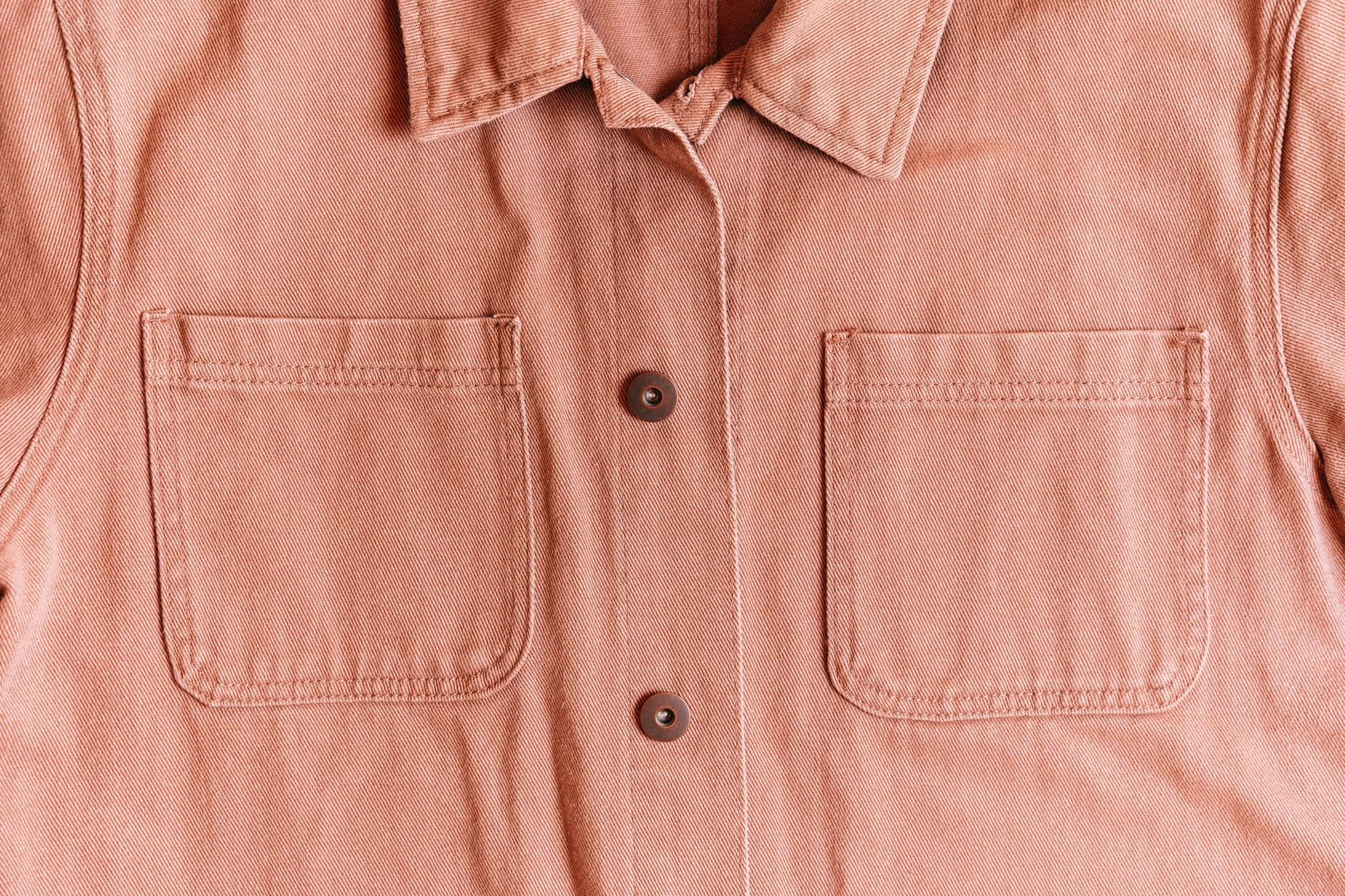
Start with the cloth. Barn jackets are usually made from canvas, waxed cotton, or heavy twill, often lined with flannel, blanket fabric, or light quilting. The weight gives the jacket structure without stiffness in the shoulders, and the materials behave differently from trench gabardine. Where a trench is meant to stay crisp, canvas softens and waxed cotton creases and fades in a way that reads as character rather than damage.
The cut matters just as much. A barn jacket is boxy, hip-length, and straight through the sleeve, with enough room to fit over a thick sweater or a hoodie. That length lands at the widest part of the hip, which makes it easy to wear with high-waisted trousers, midi skirts, and straight denim. A trench can swallow shorter frames, but a cropped, squared-off jacket gives the lower half of an outfit room to breathe. The corduroy collar, common on many versions, adds a texture contrast near the face that a trench’s self-fabric collar cannot.
Then come the pockets. They are large, square, and deep enough for gloves, keys, a paperback, and a phone without leaving a lump.
The palette is the final piece. Olive, tobacco, faded navy, mustard, and ecru are colors borrowed from fields and fences, and they hide wear instead of announcing it. They also sit comfortably beside the neutrals most closets already hold, from gray knits to white shirts to black trousers. A barn jacket in one of these shades rarely fights with anything, which is the quality people used to praise in the trench. The difference is that this one does not mind being sat on, rained on, or stuffed into a tote.
Styling It Without Looking Like You Are Headed to a Farm
The simplest rule is to let the jacket be the rugged element and keep everything else clean. Pair it with pressed trousers, a fine-gauge knit, and leather loafers, and the canvas looks deliberate rather than costume-like. Another route works in the opposite direction: a slip dress or a satin skirt with boots, where the sheen of the fabric plays against the matte, workmanlike outer layer. The contrast does most of the styling for you.
Proportion deserves a little thought. Because the jacket is boxy, the bottom half of the outfit looks best either slim or intentionally wide, not vaguely bulky. Thin turtlenecks and button-down shirts under the jacket keep the silhouette tidy, while cuffing the sleeves once shows off the lining and breaks up the straight line of the arm. Leaving it unbuttoned or buttoned only at the middle keeps the shape relaxed.
Buying One That Lasts
Check the construction before the label. Look for stitched-down stress points around the pocket corners, sturdy snaps or a heavy zipper, and a lining that feels substantial rather than papery. A jacket that looks rugged but is assembled with thin seams will fall apart faster than a trench ever would, and the whole argument for this piece depends on it aging well.
Fit is the next test. Size for the thickest sweater you plan to wear under it, then check that the shoulder seam sits near the edge of your shoulder and the sleeves end at the wrist bone, not halfway down the hand. Try it on with a knit in the fitting room if you can, because a barn jacket that pinches across the back when layered will end up on a hook.

Expect a break-in period. New waxed cotton can look glossy and stiff, and new canvas tends to stand away from the body for the first few weeks. Waxed versions also need a fresh coat of dressing about once a year, a small chore that, unlike dry-cleaning a trench, involves a tin of wax and a hair dryer.
Frequently Asked Questions
What is a barn jacket?
A barn jacket is a boxy, hip-length jacket usually made from canvas, waxed cotton, or twill, often with a corduroy collar, large patch pockets, and a warm lining.
How should a barn jacket fit?
Size for the thickest sweater you plan to wear underneath. The shoulder seam should sit near the edge of your shoulder, and the sleeves should end at the wrist.
Can you wear a barn jacket with dressy outfits?
Yes. Pairing it with pressed trousers, loafers, or a satin skirt lets the rugged fabric contrast with polished pieces.
How do you care for a waxed cotton barn jacket?
Spot clean it with a damp cloth and re-apply wax dressing about once a year. Avoid machine washing, which strips the finish.