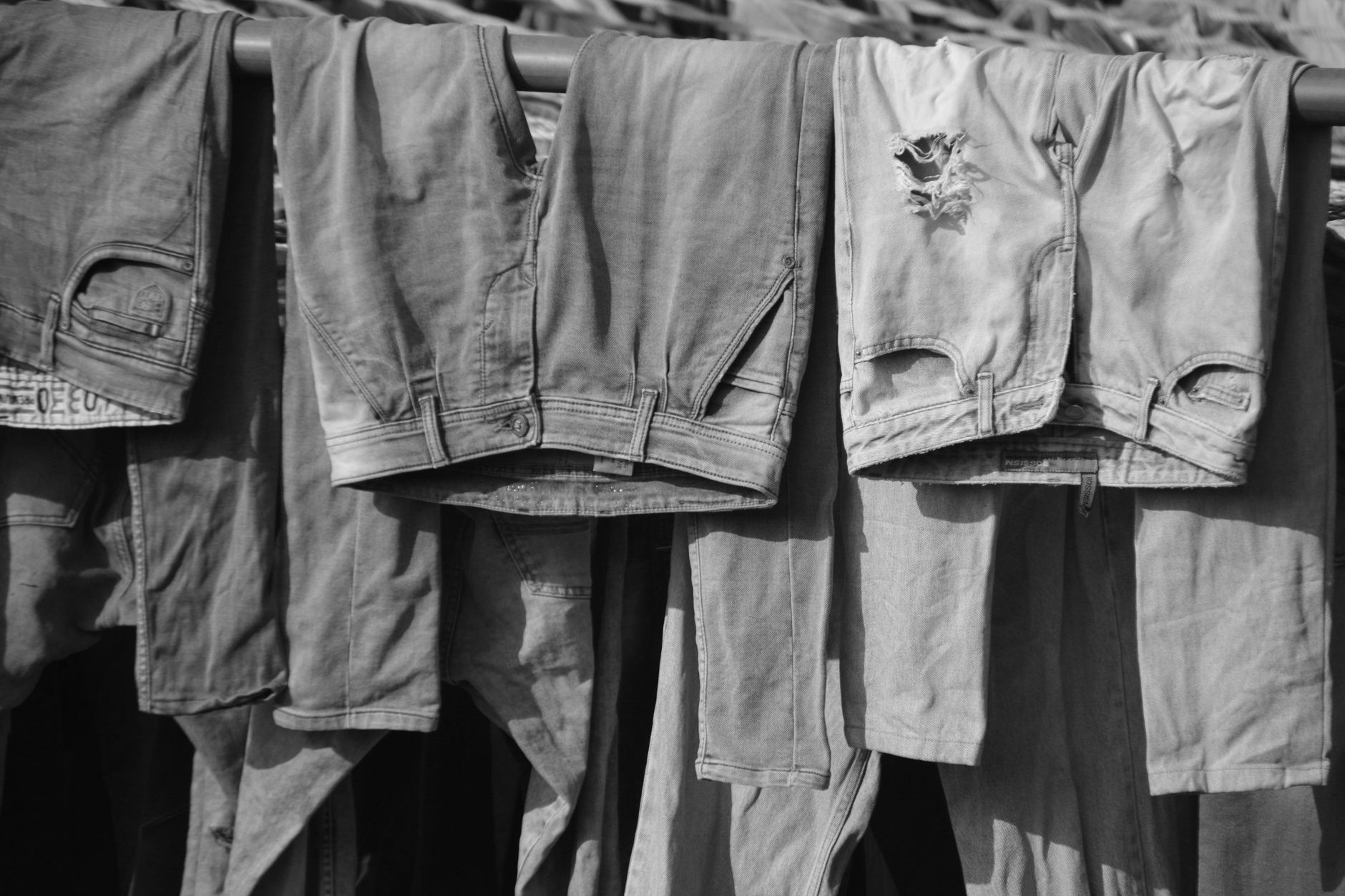


When Lawn Sports Meet Laundry Chemistry
Croquet chalk – the powdery white compound pressed into mallet heads and dragged across grass to mark yard lines – contains calcium carbonate and occasionally trace amounts of calcium hypochlorite, the same active family of compounds found in diluted bleach solutions. When denim hems drag across freshly chalked lawn markings, those compounds transfer and, with enough sun exposure, begin a slow oxidation process that fades indigo dye from the bottom up. The effect is subtle at first: a half-inch of lighter wash creeping upward from the hem fold. Then, after a few hours on a July afternoon, the denim tells a different story entirely.
What started as an accidental byproduct of weekend lawn parties is now circulating through the style consciousness of people who actually own croquet sets – and those who have simply noticed what happens to their favorite jeans after an afternoon on a club lawn. The result is a hem-specific fade that no commercial wash can perfectly replicate, because the gradient is driven by contact pattern, grass moisture, and sun angle rather than any controlled industrial process.

The Chemistry Behind the Fade
Denim gets its color from indigo dye, a pigment that sits on the surface of cotton fibers rather than penetrating them deeply. This surface-sitting quality is what makes denim famously susceptible to fading through abrasion and oxidation – and also what makes it vulnerable to calcium compounds in chalk dust. When chalk residue on damp grass contacts a denim hem, the calcium acts as a mild alkali. Combined with UV exposure, the alkaline environment accelerates dye degradation in concentrated patches, producing uneven, organic-looking lightening rather than a uniform wash.
The hyper-local nature of the reaction is what creates the visual interest. Because the chalk contacts only the outermost two to four inches of the hem – the part dragging along the turf – the bleaching stays low and graduated. The denim directly above remains deep indigo. Below, the color breaks into lighter washes ranging from medium blue to almost white at the very edge. Denim with a worn or frayed hem picks up the effect faster because the exposed fibers have more surface area for chalk to cling to.
How the Look Is Being Worn
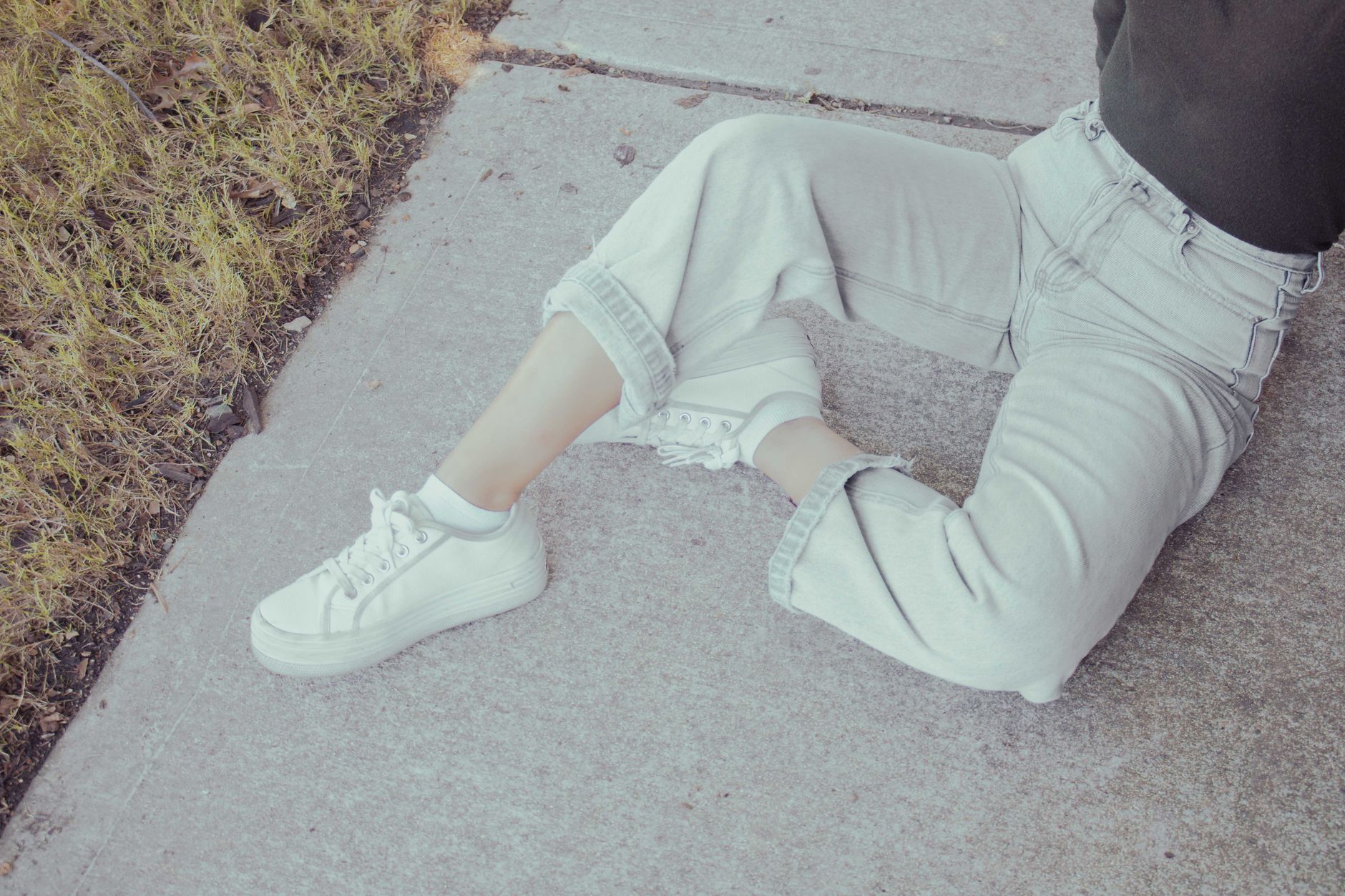
The accidental version of this look tends to appear on straight-leg and wide-leg silhouettes, simply because those cuts have hems that actually contact the ground during movement. Skinny or tapered cuts rarely produce the effect unless the wearer is kneeling or sitting directly on a chalked surface. Wide-leg linen-cotton blends and heavier rigid selvedge denim both show the gradient differently – the heavier the fabric, the slower and more defined the fade line.
Styling-wise, the hem fade works because it adds a point of visual complexity at the foot without competing with the rest of the outfit. A plain white shirt, a tucked linen blouse, or even a fitted blazer reads as intentionally composed when the eye eventually travels down to the subtly bleached hem. The contrast between a clean, unaltered upper garment and a weathered, oxidized hem carries a kind of effortless tension that over-distressed denim never quite achieves – because over-distressed denim announces itself immediately, while this barely whispers.
The polo and equestrian world has been circulating adjacent ideas for some time – sport-derived details crossing into everyday fashion is a well-worn path – but the croquet version carries a very specific lawn-party register. It suggests leisure, outdoor games, afternoon drinks, and a certain casualness about expensive clothing. That combination of class signaling and apparent carelessness is precisely where certain fashion circles currently like to operate.
Pairing choices that reinforce the lawn sport origin tend to work best. Loafers or low espadrilles let the hem rest low enough to show the gradient properly. High-top sneakers or thick-soled boots often obscure the very part of the denim where the fade lives. Cropped tops or tucked shirts keep attention from being pulled upward, giving the hem its moment without any stylistic competition from above the waist.
Replicating It Intentionally
For those unwilling to wait for a croquet match invitation, the look is reproducible at home with basic materials – though replication requires some patience to avoid producing something that simply looks like accidental bleach damage rather than a studied fade. A diluted solution of calcium hypochlorite, brushed along the hem of damp denim while the garment is laid flat on an outdoor surface, then left to oxidize in direct sun for thirty to ninety minutes, produces a result close to the lawn-contact version. The key is dilution: a heavily concentrated solution produces harsh, uneven bleaching rather than the graduated wash that makes the original effect appealing.
Fraying the hem before application helps. Cutting the fold away and pulling a few threads creates the same exposed-fiber advantage that worn thrift-store denim naturally has. The fade will anchor at the edge and move upward in a way that mirrors what actually happens on a chalked lawn surface, rather than producing a hard horizontal line that reads as artificially applied.
The Denim Weight Question
Not all denim responds equally, and this is where the look either succeeds or collapses into blotchy inconsistency. Lightweight chambray and thin denim – anything under about ten ounces per yard – fades aggressively and unevenly, often producing a white patch rather than a gradient. Mid-weight denim, between twelve and fourteen ounces, gives the oxidation process enough material to work through slowly, producing a more natural range of tones across the fade zone.
Selvedge denim in raw or lightly washed form responds particularly well because the dense weave slows the chemical progression and the tightly bound edges hold fraying in check while still allowing surface oxidation. Pre-washed or heavily treated denim – the kind already artificially faded at the factory – may show minimal additional change, since much of the available surface dye has already been removed. The effect, in that case, tends to disappear into the existing distressing rather than reading as a distinct hem detail.
Dark indigo and true black denim produce the highest contrast gradient, which is why those colorways have become the most circulated versions of the look. A nearly black hem fading to soft grey-blue at the edge carries more visual weight than a medium-wash fade that starts from a lighter baseline and barely registers. If the goal is a hem detail that actually reads across a room – or across a lawn – the darker the starting point, the more pronounced the result.