


The Field Game is one of Eton College’s oldest and most insular sporting traditions – a football variant played nowhere else on earth, governed by rules so arcane they require a dedicated rulebook to decode. Its kit has historically drawn zero attention from the fashion world. But one element of that kit, the shin guard strap, is now doing something unexpected: it’s showing up in the vocabulary of minimalist ankle hardware, and designers working in leather goods and footwear accessories are paying close attention to why it works.
The strap itself is simple to the point of severity. It wraps, it fastens, it sits flush against the lower leg without decorative intent. That functional purity is exactly what makes it interesting now. At a moment when ankle hardware has become oversaturated with buckle stacks, chain links, and logo embossing, the stripped-down geometry of a Field Game shin guard strap reads as quietly radical.

What the Strap Actually Looks Like
The traditional Field Game shin guard strap is a narrow band, typically cotton webbing or thin leather, secured with a simple friction-fit or basic buckle at the back of the leg. It holds the guard in place without excess material, without visible branding, and without structural flourish. The fastening sits behind the ankle or just above it, keeping the front profile completely clean. Width tends to run between 15 and 22 millimeters – narrow enough to read as a line rather than a band.
That proportional restraint is the detail that translates directly into fashion contexts. When a strap sits at that width and wraps at that ankle position, it doesn’t fight the silhouette of a trouser or boot shaft. It defines the ankle without competing with footwear. Several independent footwear designers working in the minimalist space have started incorporating single-wrap ankle straps at exactly this width, often in undyed or vegetable-tanned leather, with fastenings that prioritize low profile over visual statement.

Why Minimalism Needed a New Reference Point
Minimalist ankle hardware has spent the last several seasons drawing from the same pool of references: Japanese artisan footwear, Scandinavian leather goods, early 2000s Margiela. Those wells aren’t exhausted, but they’re recognizable. Buyers and editors who have been navigating these references for years can spot them immediately, and that recognition flattens the sense of discovery that drives early adoption.
Niche British sporting traditions offer something different – a visual vocabulary that is legible enough to feel coherent but obscure enough to feel fresh. The Field Game strap carries institutional gravity without the luxury-brand associations that have made some heritage references feel overworked. It suggests a kind of insider knowledge that fashion consistently rewards, particularly in accessories.
The timing also aligns with a broader turn toward what might be called functional provenance – the idea that an object’s design should trace back to a genuine use-case rather than a purely aesthetic decision. A shin guard strap exists because a player needed protection held in place under physical stress. That logic produces a different object than one designed primarily to look good on a shelf, and that difference is increasingly legible to consumers who have become skeptical of decorative reasoning dressed up as utility.
There’s also a class dimension worth naming directly. Eton is one of the most socially coded institutions in the world, and that coding cuts in multiple directions. For some designers, referencing its sporting equipment is a way of reclaiming institutional aesthetics on different terms – stripping them of their original social meaning and retaining only the formal qualities. This is a familiar move in fashion, but the Field Game offers unusually raw material because it’s so visually unknown outside its original context.
How It Translates Into Accessory Design
The clearest translation is in ankle straps added to otherwise minimal sandals and mules. A single wrap at shin-guard width, fastened at the rear with a small rectangular buckle, adds structure to a flat silhouette without introducing decoration. The strap functions as an architectural line rather than an ornament. When executed in leather with a matte finish, the result sits closer to equestrian or athletic hardware than to conventional shoe trim – and that cross-category quality is what gives it traction.
Bag hardware is picking up related signals. Wrist straps and luggage handles using the same narrow-wrap proportions, secured with low-profile friction fastenings, are appearing in collections that prioritize weight reduction and clean carry. The influence of sport-derived keeper loops on bag strap hardware has been building for a few seasons, and the Field Game strap fits naturally into that progression – another instance of functional athletic construction finding its way into carried objects.
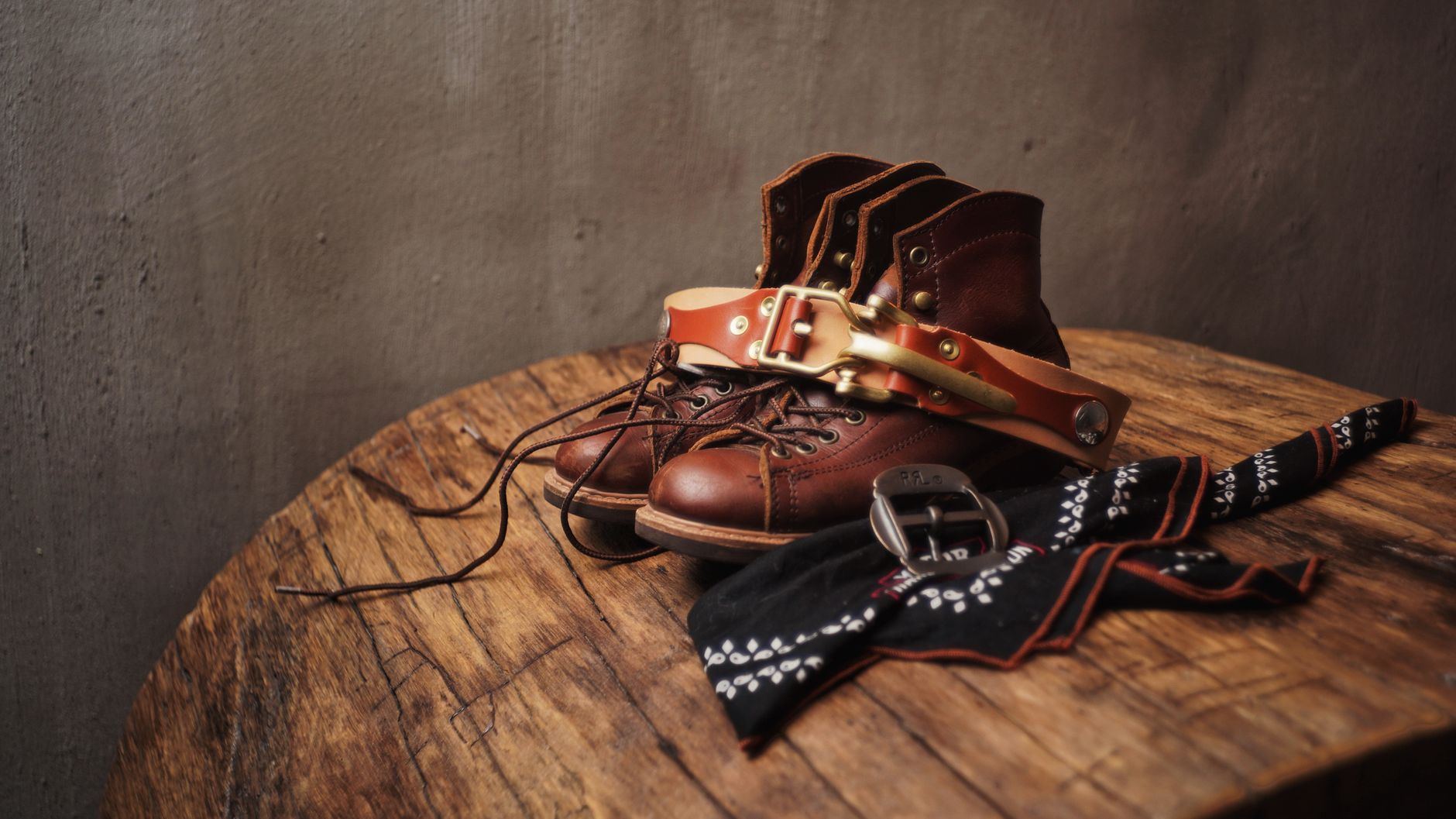
The Limits and the Possibilities
Not every aspect of the reference travels well. The original strap is designed for temporary wear over thick socks on a grass pitch, which means it prioritizes grip over comfort against bare skin. Designers adapting the form for fashion contexts have to solve for that – lining the inner face, adjusting the fastening tension, sometimes rethinking the buckle mechanism entirely to avoid pressure points. The visual logic imports cleanly; the construction logic requires renegotiation.
There is also the question of how long this kind of reference sustains interest before it either becomes legible enough to lose its edge or obscure enough to remain niche. The Field Game strap sits in an unusual position: specific enough to carry genuine provenance, but visually simple enough that the finished product doesn’t announce its source. A wearer doesn’t need to know anything about Eton’s sporting calendar to wear a 20mm vegetable-tanned ankle strap well. That separation between reference and legibility is what keeps the trend alive beyond the people who first decoded it.
What hasn’t been fully explored yet is how the strap behaves in layered styling – worn over a boot shaft, or doubled at the ankle with slight variation in width between the two wraps. That territory is where the formal logic of the strap gets genuinely tested, because the proportional restraint that makes a single wrap work can collapse quickly if the layering isn’t calibrated precisely. Whether the narrow-band minimalism holds under that pressure is the question still being worked out on showroom floors and sample rails right now.
Frequently Asked Questions
What is the Eton College Field Game shin guard strap?
It’s a narrow functional strap used to secure shin guards in Eton’s exclusive Field Game sport, typically made from webbing or thin leather with a simple buckle fastening.
How is the Field Game strap influencing fashion?
Its narrow proportions and clean rear-fastening profile are being adapted into minimalist ankle straps for sandals, mules, and bag hardware, valued for functional restraint over decoration.