

From the Pitch to the Pavement
The Eton College Field Game is not football, not rugby, and not anything most people outside of Windsor have ever watched. It is a sport played exclusively at Eton, governed by rules written in the 19th century, and built around a culture of physical intensity that demands specific protective gear. The shin guards worn during the Field Game – thick, strapped, deliberately utilitarian – were designed for one purpose: to absorb punishment on a muddy pitch. What nobody anticipated is that the silhouette, the strap hardware, and the raw material weight of those guards would start appearing in legwear collections with no sports affiliation whatsoever.
This is a quiet migration. It does not arrive with major campaign announcements or runway spectacle. Instead, it surfaces in small-batch drops from independent labels, in the leg detailing of certain avant-garde workwear lines, and in the way certain designers are reaching backward into niche athletic history for structural references that feel genuinely new because almost nobody has touched them yet.

The Object Itself
A traditional Field Game shin guard is not a sleek compression sleeve. It is a formed pad, often reinforced at the tibia, with external strapping that wraps the calf and sits visibly over whatever the wearer has on underneath. The straps are functional – they exist to keep the guard in place during the particular chaos of a Field Game “bully” – but they also create a strong visual line along the lower leg that reads as architectural rather than athletic. That distinction matters when something crosses from sport into fashion consideration.
The material history is worth understanding. Early versions used leather and canvas with metal buckles. More recent iterations use dense foam composites with nylon webbing, but many institutions and heritage sporting goods suppliers still produce versions closer to the original construction. That material weight – the physical density of the object – is part of what draws designers toward it. Lightweight compression gear is already everywhere. Something that has obvious mass and obvious structure is a different design problem entirely.
The color palette has always been spare. Cream canvas, black leather, natural nylon. No branding, no color-blocking, nothing that would look uncomfortable in a 1910 photograph. For a design community that has spent years pulling reference from military surplus and workwear archives, this kind of restrained, functional object represents exactly the kind of raw material they know how to work with. Eton’s broader aesthetic legacy has been creeping into fashion for some time – the Eton boater hat brim has already found its way into millinery conversations – and the Field Game guard is simply the next artifact in that progression.
Why Legwear, Why Now
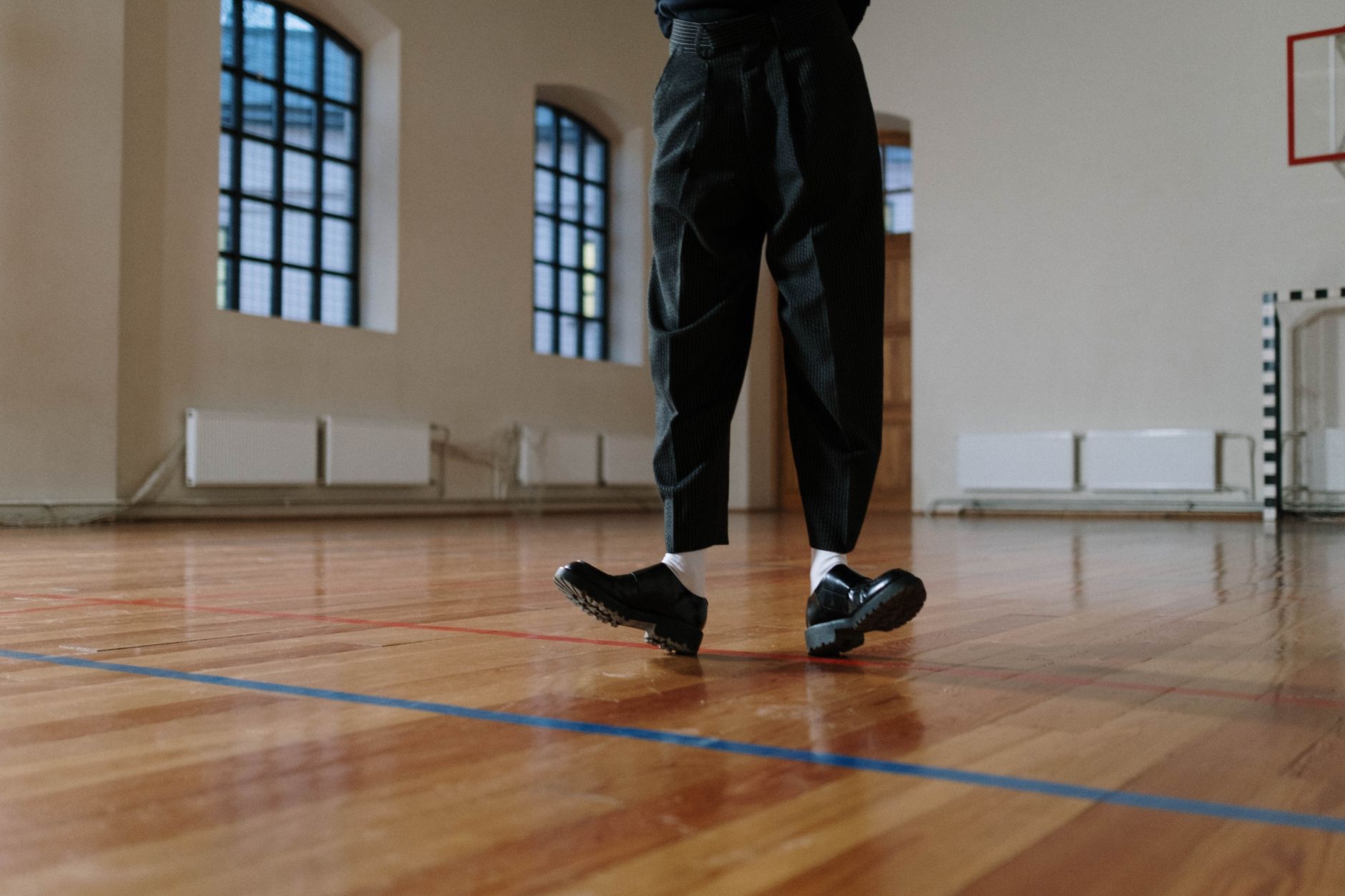
Lower-leg design has become an area of genuine creative competition. The ankle, the shin, and the calf represent surfaces that have not been exhausted the way that outerwear and footwear have. Designers working in this space are looking for references that carry structural logic rather than decorative impulse, and protective sporting equipment offers exactly that.
The shin guard format works particularly well because it operates as a layer rather than a replacement garment. It can sit over trousers, over wide-leg pants, over the top of boots, creating a visible strapping element that adds dimension without requiring a complete outfit reconstruction. That layering logic is consistent with how a growing number of consumers are actually building looks – not as single units but as accumulations of distinct pieces.
The Design Translation
The most direct translation appears in detachable shin-panel trousers, where a structured front panel is connected to the main garment by visible hardware – D-rings, buckle straps, or press-stud closures lifted almost directly from protective sports gear construction. The panel does not need to provide any real protection to read correctly. The visual language of protection is sufficient, and it carries enough context that the reference lands without explanation.
A subtler approach involves integrating strap detailing into otherwise conventional trousers – a single strap crossing the shin at mid-point, attached to nothing in particular, functioning purely as a formal interruption of the vertical line of the leg. This is the version that crosses into mainstream retail without requiring any commitment to an avant-garde aesthetic. The wearer does not need to know the reference exists. The structural detail reads as considered design and stops there.
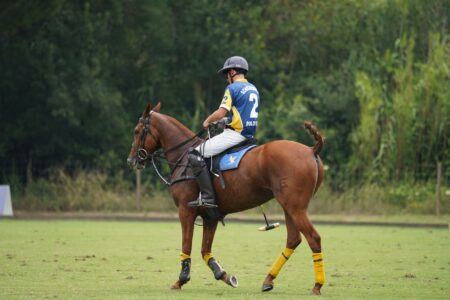
There is also work happening at the accessory level, where the shin guard is being treated as a standalone object rather than incorporated into a larger garment. Structured shin pieces in leather or waxed canvas, worn over the outside of pants, sit closer to armor dressing or exo-layer styling than to traditional sportswear. This direction has obvious limitations in terms of market size, but it is where the reference is being developed most seriously as a design idea rather than a commercial adaptation. The overlap with equestrian and polo traditions is visible here too – the same structural logic that drives polo club exercise bandage-inspired arm warmers applies to the lower leg as a site of protective layering.

What makes the Field Game guard a more specific reference than generic shin protection is the buckle placement. On standard football shin guards, straps wrap horizontally and disappear. On the Field Game version, external buckles sit at the outside of the calf, facing outward, creating a side-profile detail that photographs well and reads clearly from a distance. That asymmetry – protection engineered for impact but buckled on the decorative-facing side – is the exact kind of functional-aesthetic accident that designers spend considerable time trying to engineer deliberately. The fact that it already exists, fully resolved, in a 19th-century school sport is either convenient or slightly embarrassing, depending on how seriously any given designer takes their own research process.