


When Prep School Heritage Meets Modern Restraint
The pop collar has always carried a certain coded confidence – raised against the wind on a sailing dock, flipped up under a blazer at a school chapel service. But stripped of its rugby shirt bravado and recontextualized against a clean, minimal placket, it becomes something else entirely: a structural detail that earns its place through geometry rather than nostalgia. That is exactly what is happening right now in shirting, and Eton College’s aesthetic legacy is threading through it whether designers acknowledge it or not.
Brass stud rivets are the quiet accomplices in this shift.
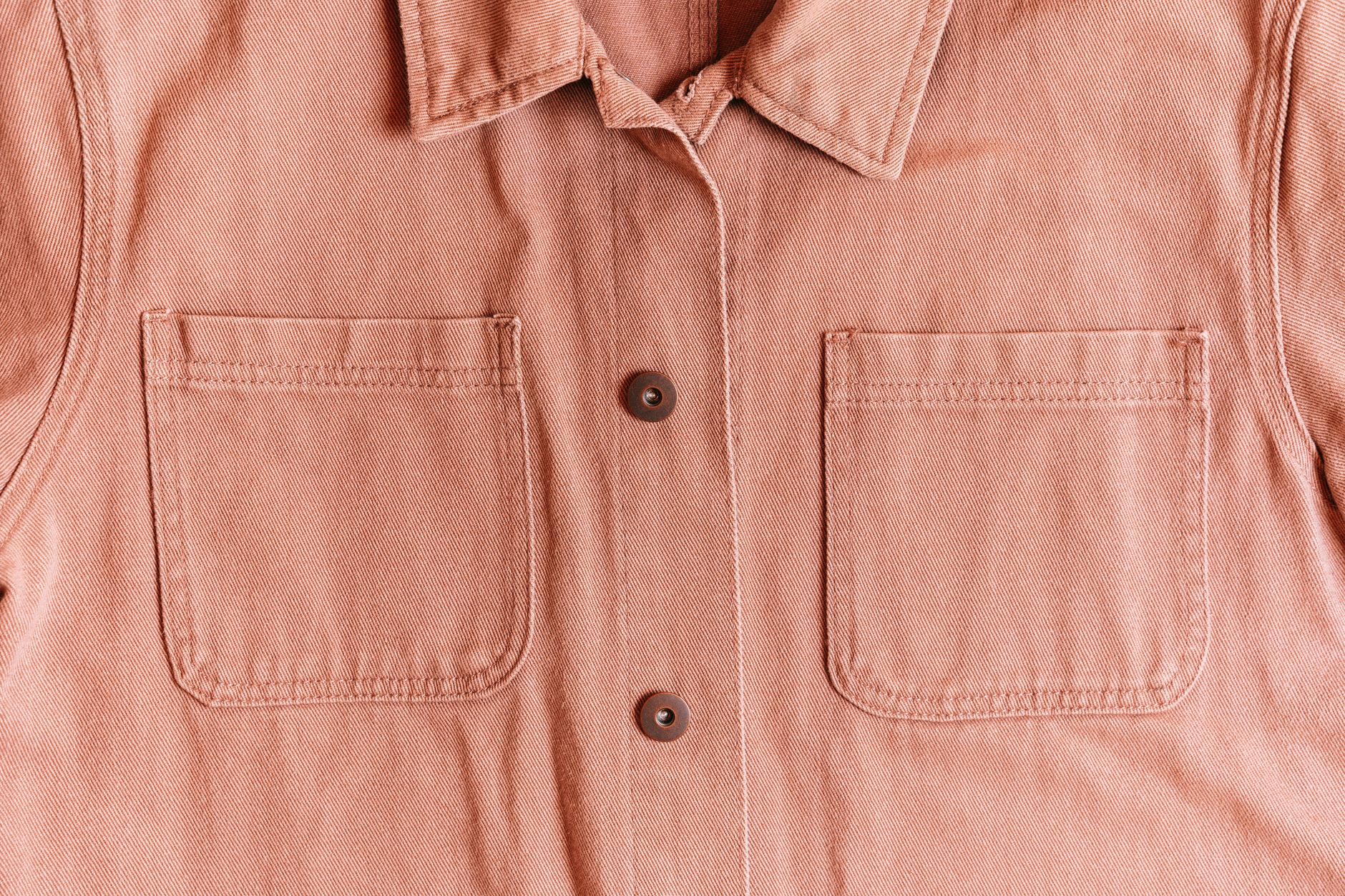
Where once a shirt placket was simply the functional strip of fabric housing buttons, a growing number of shirting labels are now treating it as a site of considered hardware. Small brass rivets – the kind more associated with denim construction or military webbing – are appearing at stress points along the placket edge, at the collar stand, and occasionally framing the button loop itself. The visual effect is restrained. The message is precise: this shirt was built, not just sewn.

The Eton Reference and Why It Reads Now
Eton College’s dress code has long been one of the most scrutinized school uniforms in the world – the stiff white collar, the tailcoat, the insistence on formality as a daily posture. What made it visually distinctive was never decoration for its own sake. It was structure made visible. The collar did not lie flat. The placket did not soften. Every element announced its architecture. That design logic, applied to contemporary shirting, produces something that feels more honest than trend-driven.
Brass rivets connect the prep school world to workwear in a way that feels less like a collaboration and more like an acknowledgment that both traditions solved the same problem differently. Workwear used rivets to reinforce. Dress shirting used tight construction and interfacing to achieve the same end invisibly. Bringing rivets to the dress shirt collapses that distinction, and the resulting garment occupies an interesting middle territory – too considered for the office in a conventional sense, too refined for the site or the field.
The pop collar complicates this further. Worn up, it reads Eton. Worn down against a minimalist placket with visible hardware, it reads something closer to an architect’s weekend shirt – purposeful, slightly austere, aware of its own construction. That dual function is what makes the detail genuinely useful rather than merely decorative. Hardware on a shirt that can only be worn one way is a costume. Hardware that changes the reading of the garment across different configurations is design.
How the Placket Becomes the Focal Point
Minimalist shirting has spent years solving the problem of interest without ornament. The answer, for most of that period, was fabric – weight, weave, texture, drape. A beautifully milled Oxford cloth or a dense poplin with visible structure did the work that a print or a pattern would have done elsewhere. That approach still holds, but the brass rivet placket adds a second layer of resolution: interest that is tactile and architectural rather than purely visual.
What makes this work on a minimalist shirt specifically – rather than on a heavily styled or pattern-heavy garment – is contrast. A plain white or ecru shirt with a pop collar and five small brass rivets running the placket length does not compete with itself. Every element is doing a distinct job. The fabric provides ground. The collar provides form. The rivets provide punctuation. Remove any one element and the composition weakens. This is the logic of restraint applied with confidence rather than timidity.
The collar stand height matters more here than in most shirting contexts. A low collar stand with a pop collar reads casual and slightly shapeless when the hardware draws the eye upward. A medium-to-high stand keeps the geometry tight and gives the brass rivets something to anchor against. Some labels experimenting with this configuration are also reinforcing the collar band itself with a visible topstitch in a contrasting thread – off-white on white, or a warm gold tone that picks up the brass below. The effect is cohesive without being coordinated in any obvious or heavy-handed sense. This same interest in visible hardware as a design statement has been surfacing across accessories, with rigger bracket bolt details finding their way into minimalist jacket hardware through a parallel logic.

The Shirt That Does Not Need to Explain Itself
Brass stud rivets on a pop collar placket will not read to everyone – they are not supposed to. The garment operates as a signal between people who notice construction, who look at where a seam terminates or how a button is set. That is a narrow audience, and that narrowness is the point. A shirt built around a hardware detail this specific is not trying to be worn by everyone. It is trying to be worn correctly by the person who understands it – collar up, top button closed, nothing competing with the placket below.