

The Prep School Code Gets Decoded
The regimental stripe has always carried baggage – the kind measured in centuries of institutional loyalty, house colors, and the unspoken social grammar of British boarding school life. Eton College’s distinctive diagonal striping, worn by pupils as a mark of belonging, was never designed to travel beyond Windsor. Yet that specificity is exactly what makes it interesting to designers who traffic in borrowed authority and coded references.
What’s happening now isn’t costume or parody. A growing number of accessories labels are pulling the structural logic of the Eton stripe – bold diagonals, high-contrast color blocking in navy, burgundy, and cream, rigidly spaced bands – and routing it through gender-neutral scarves, neck ties, and wraps that carry none of the original institutional weight. The reference is there for those who recognize it. For everyone else, it reads as sharp, considered color work.

Why Institutional Stripes Travel So Well
Regimental and school-tie stripes have an unusual quality among pattern types: they age without dating. The diagonal cut across a woven ground creates movement that solid color blocks cannot, and the strict geometry resists the kind of trend drift that kills most seasonal prints within two years. Eton’s particular palette – deep navy anchoring warmer accent tones – sits in a color range that functions across autumn and spring without effort. That seasonal neutrality matters enormously when a brand is committing to a neckwear silhouette that needs to sell year-round.
The unisex angle amplifies this. Traditional school tie stripes were, for most of their history, a male dress code signal. Presenting the same structure on a wider, less formal scarf format – something closer to a neck wrap or loosely draped panel – removes the gender prescription while keeping the visual authority. The stripe pattern does the work of looking considered and purposeful without requiring the wearer to signal any specific affiliation or identity.
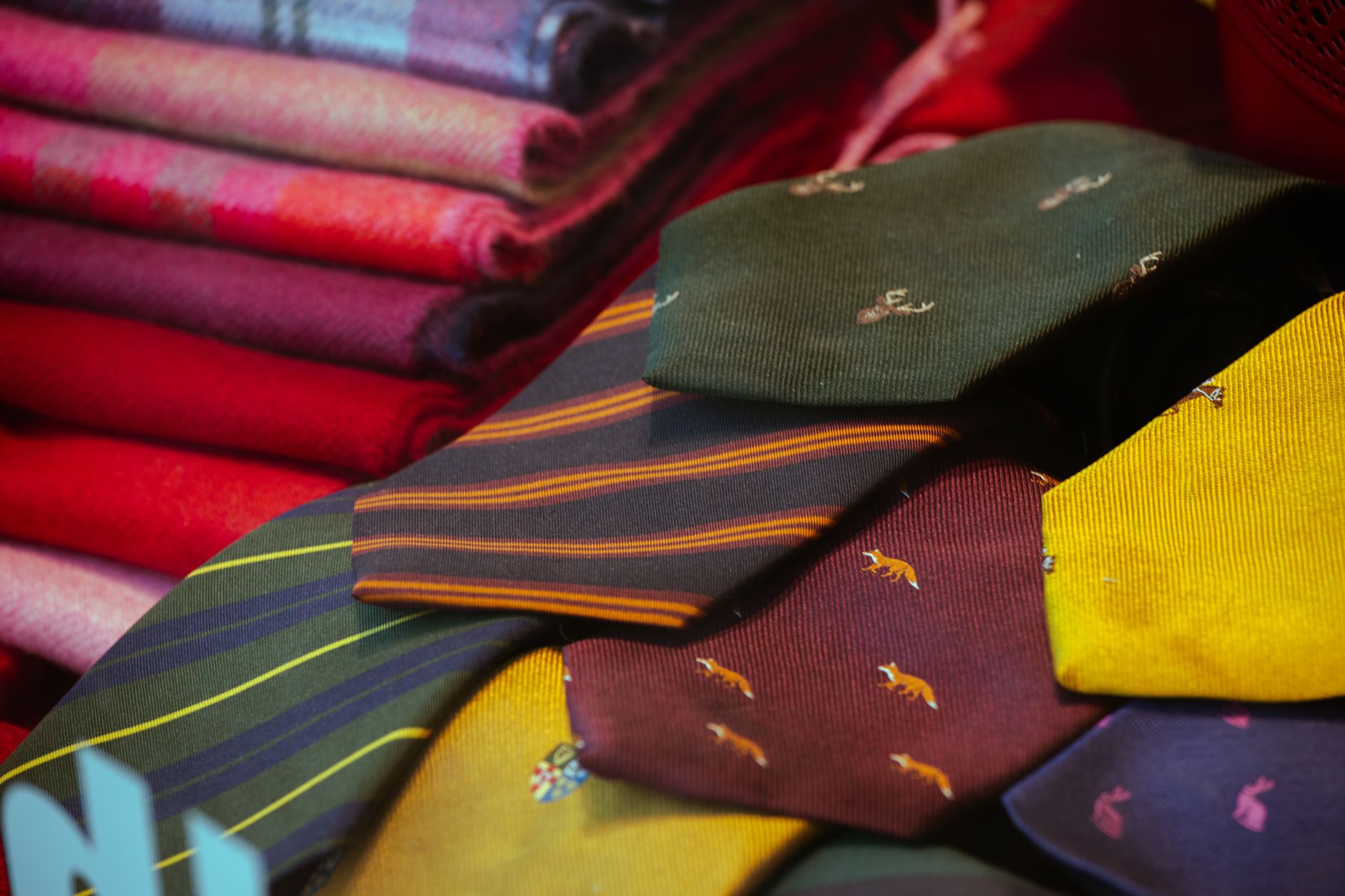
Fabric choice is where designers are making the most deliberate departures from the source material. The original Eton scarf runs in wool or wool-blend weaves built for cold Windsor mornings. The current neckwear iterations are appearing in lighter weights – fine merino, silk-cotton blends, even open-weave linen constructions that let the stripe pattern breathe differently depending on the ground. This shifts the garment from a cold-weather utility piece into something that works across a wider temperature range, which is a practical argument for stocking it.
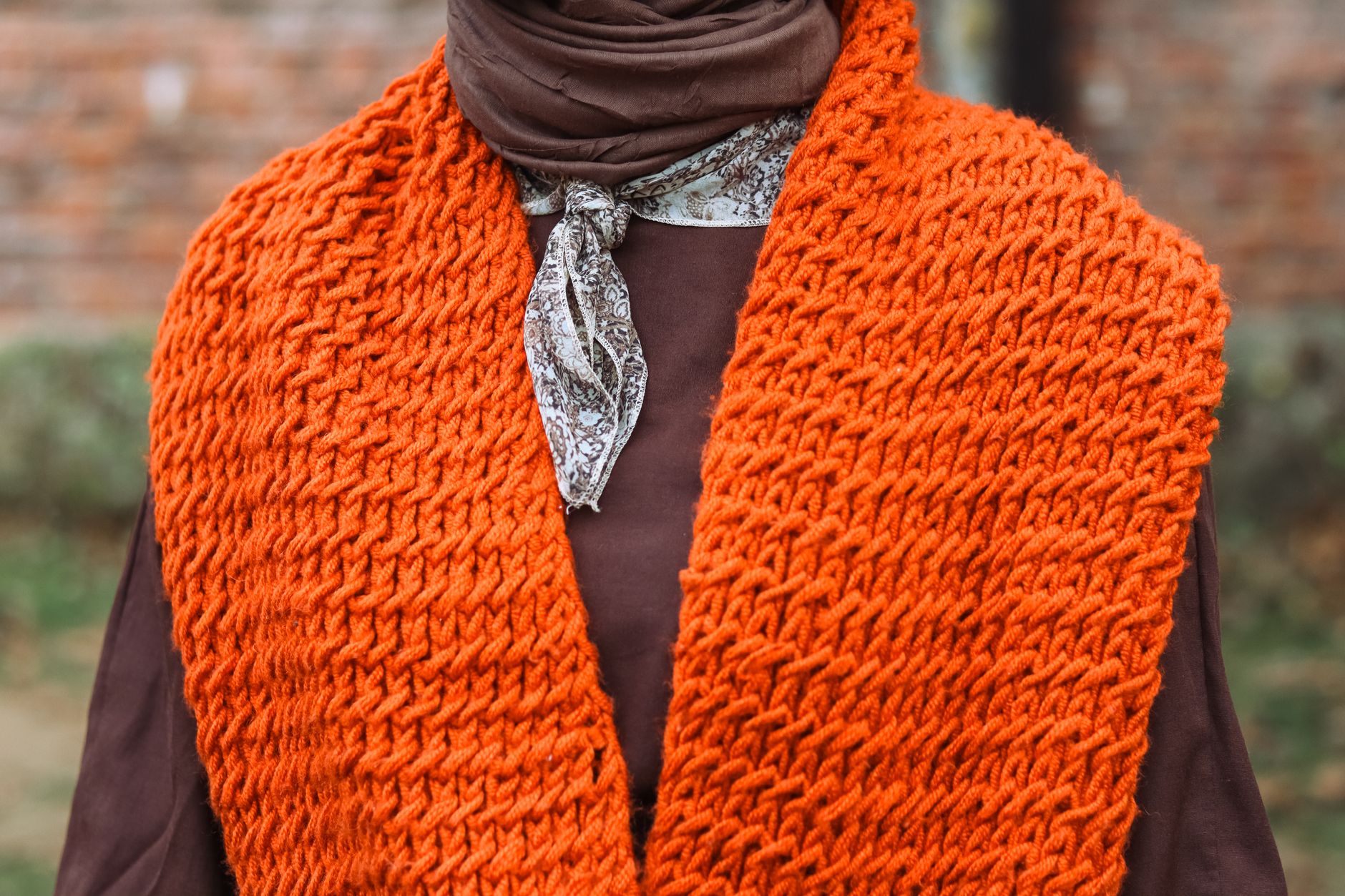
Proportions are also shifting. Where the classic school scarf runs long and narrow, formatted for draping or wrapping tightly around the neck, newer versions are appearing in wider, shorter cuts that sit more like a shawl collar extension than a traditional muffler. Some iterations are appearing with raw-edge finishing that deliberately signals handcraft and informality – a direct counterpoint to the pressed, institutional precision of the original. The tension between that precision and the loosened finish is what gives the trend its current energy.
The Unisex Market’s Appetite for Coded Heritage
Unisex neckwear as a category has been building a particular appetite for references that carry cultural weight without requiring explanation. The Eton stripe fits this because it operates on two levels simultaneously: visually striking color geometry for buyers who have no connection to British prep school culture, and a recognizable institutional signal for those who do. A single product reads differently depending on who’s looking at it, which is a merchandising advantage that’s genuinely hard to manufacture from scratch.
This dual-reading quality connects to a broader pattern in accessories, where pieces carrying institutional British references are being repositioned for contemporary gender-neutral dressing. The appetite isn’t nostalgic – it’s more precise than that. Buyers aren’t reaching for prep school culture because they want to inhabit it. They’re reaching for the visual grammar it produced, which turns out to be highly adaptable.
How Designers Are Working the Reference
The most successful executions are those that take the stripe structure but apply it in colorways that deviate from the strict Eton palette. Versions appearing in terracotta and cream, or forest green and gold, retain the diagonal discipline and the high-contrast spacing without triggering the direct institutional association. This gives the designer permission to claim the visual logic without the cultural footnote, which widens the addressable customer base considerably.
Construction details are doing a lot of signaling work in the more considered versions. Double-faced weaves that show the stripe pattern cleanly on both sides allow for display draping without exposed reverse sides. Fringe finishing – applied at both ends – nods toward the knotted scarf traditions of the original while adding tactile interest that reads as intentional rather than referential. These aren’t accidental design choices; they’re a way of demonstrating that the stripe is a starting point, not a conclusion.
The question the category hasn’t fully answered yet is price positioning. Eton’s original scarf carries institutional value that justifies its cost to the buyer who understands it. A gender-neutral neckwear piece borrowing the stripe logic needs to build its own value argument – and that argument currently rests almost entirely on fabric quality and construction finish. Brands pricing into premium territory without committing to fabric weights and hand-finishing that justify the number are finding the stripe isn’t sufficient cover for a weak product. The reference only carries so far.
Frequently Asked Questions
What makes Eton College scarf stripes appealing to contemporary fashion designers?
The diagonal stripe structure, high-contrast palette, and seasonal versatility make it adaptable across gender-neutral neckwear without dating quickly.
How are designers making Eton-inspired stripes work for unisex neckwear?
By adjusting proportions, using lighter fabric weights, and applying alternative colorways that retain the geometric discipline without the direct institutional association.