


The Quiet Detail Making Noise in Tailoring Circles
Silk facings on a structured lapel have always communicated something – rank, occasion, a certain kind of membership. But the specific language being spoken right now borrows directly from the Eton College tails coat, that narrow-shouldered, high-collared uniform piece that has remained almost entirely unchanged for well over a century. What tailors and designers are quietly pulling from it is not the silhouette itself, but the silk-lined lapel edge: a thin, precisely applied strip of woven silk that runs the outer perimeter of the lapel, giving it both visual definition and a subtle sheen that catches light without demanding attention.
This is not a revival of schoolboy dressing, nor is it heritage cosplay. The Eton tails coat facing is a construction detail – a solution to a specific problem of how to finish a lapel edge with weight and clarity – and that solution is now finding its way into structured blazers, evening coats, and formal daywear at a growing number of tailoring houses working across London, Milan, and New York.
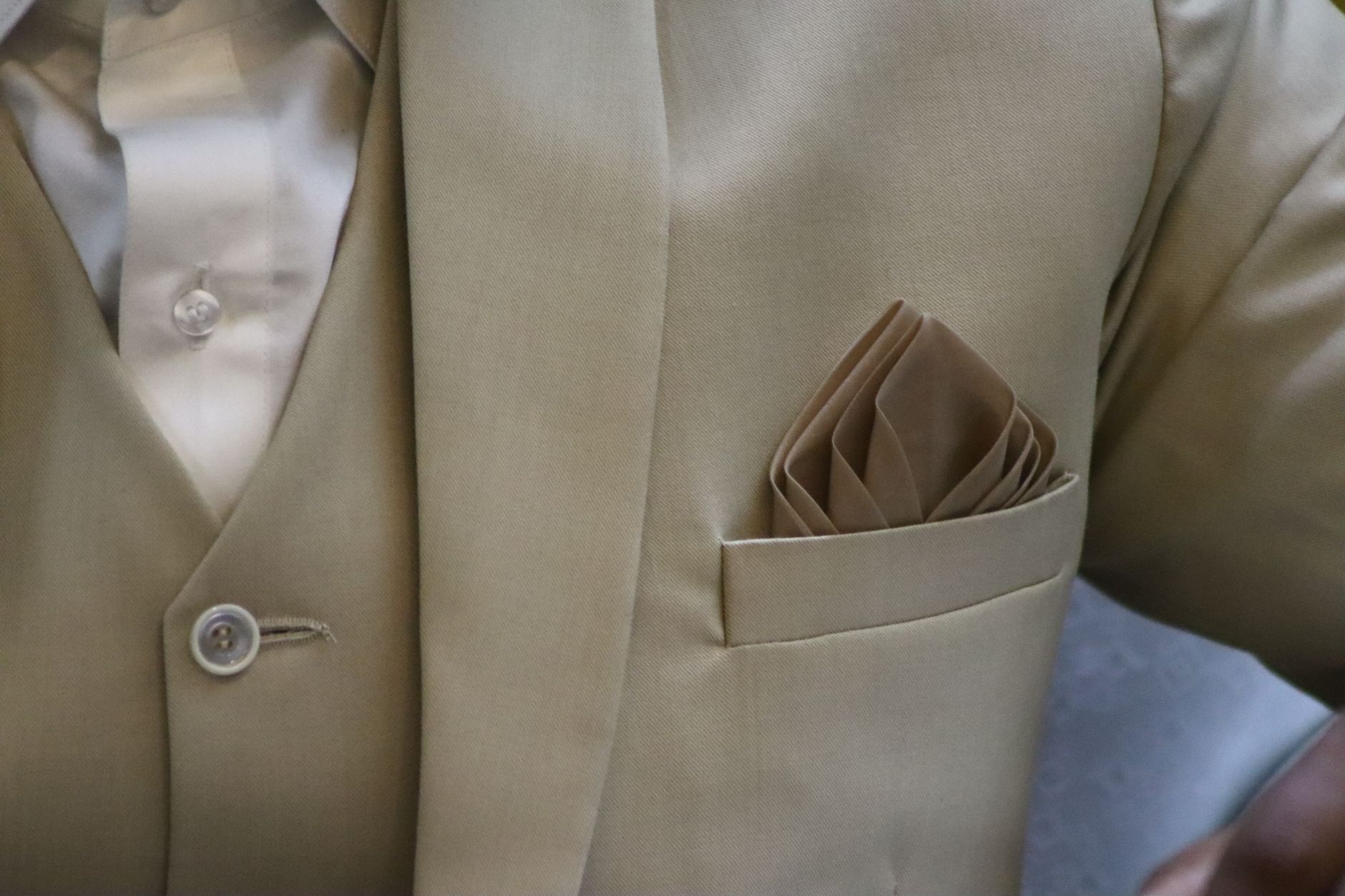
What the Facing Actually Is – and Why It Works
The traditional Eton tails coat uses silk facing along the lapel and front edge not purely for decoration but for durability and structure. Silk, when applied as a facing on the lapel’s outer edge, reinforces the roll line and prevents the edge from fraying or losing its pressed shape over repeated wear. It also responds differently to heat and movement than the wool or worsted base cloth, which creates that faint differentiation in texture visible when the jacket is photographed under directional light. That contrast – wool body, silk edge – is what gives the lapel its visual precision.
In formal tailoring, this has traditionally been the domain of peak lapels on black tie and white tie garments, where silk grosgrain or satin facings cover the entire lapel face. What the Eton influence introduces is narrower and more restrained: silk only at the edge, not flooding the whole lapel surface. The effect is more graphic, almost architectural. The lapel reads as a clean shape with a deliberate boundary rather than a reflective panel competing with the body of the jacket.
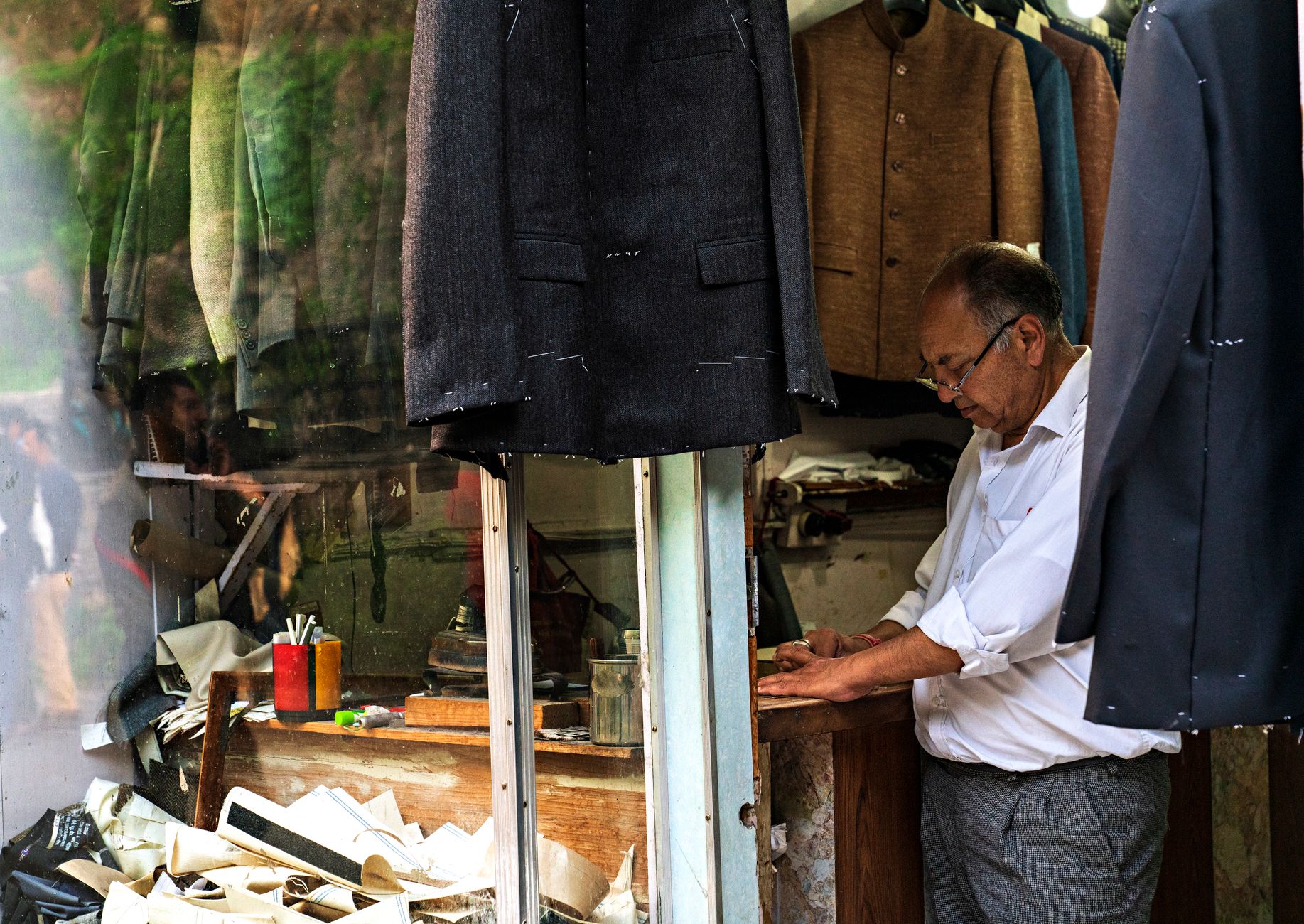
The construction requires a bespoke or at minimum made-to-measure approach. Ready-to-wear jackets with machine-fused interfacing cannot accommodate the technique without the silk edge pulling or bubbling over time. The detail essentially filters itself – it appears where real construction is happening, and disappears from garments built purely for speed and margin. That self-selection is part of why it carries weight when you see it.
Where the Influence Is Showing Up
The current application sits most visibly in structured eveningwear that is pulling away from conventional black tie conventions. Where a standard dinner jacket might use full silk grosgrain lapels, some tailors are now producing pieces with a wool or fine flannel lapel and a single silk-edged border – technically closer to the Eton tails construction than to traditional black tie facing. The result reads as formal without being ceremonial, which suits a generation of dressers who want evening clothes that function across multiple contexts.
Daywear structured blazers are the second environment where the detail appears. A charcoal or navy wool blazer with a notch lapel finished at the edge in a tone-on-tone silk – not contrasting, not decorative, simply there – gives the garment an interior-world quality, something you notice up close or when the wearer moves. It does not announce itself from across a room, which is precisely the point.
The Tailoring Logic Behind a Quiet Revival
Good tailoring details tend to survive because they solve real construction problems, and the Eton silk lapel facing solves several at once. It stabilizes the edge, adds visual definition, introduces a material contrast that reads as intentional rather than ornamental, and signals a level of hand-finishing that is increasingly rare. These are practical arguments, and practical arguments tend to have staying power in craft-oriented tailoring communities where aesthetic trends come and go but construction quality accumulates into reputation.
There is also something happening with the broader appetite for formal dressing that is neither nostalgic nor ironic. A growing number of wearers are returning to structured clothing not because they want to signal tradition, but because they want clothes that behave correctly – that hold their shape, age well, and read as intentional. The Eton facing detail lives in that space. It is not a costume reference. It is a construction answer to a question about quality.
The silk itself matters significantly. Woven silk, typically a fine twill or grosgrain, behaves differently from the base cloth in ways that create the facing’s characteristic visual effect. It reflects light at a slightly different angle, reads as a shade or two lighter or darker depending on the direction of view, and has a slight firmness that holds the lapel edge flat without stiffening the whole front. Choosing the wrong silk weight – too heavy, too lustrous – collapses the subtlety and turns the detail into something closer to a costume trim. Getting it right requires both sourcing knowledge and hand-sewing skill.

The tailors doing this well are largely not talking about the Eton connection explicitly. They describe the detail in construction language – “silk-bound edge,” “faced roll line,” “woven trim finishing” – because the actual interest is in what the technique does, not where it originated. The school association is almost incidental to the craft decision, which may be why the trend travels so cleanly out of its original context. A detail that was designed to last through years of institutional use, pressed and brushed by housemasters and draped over cold stone corridors, turns out to be exactly durable enough for tailoring that wants to mean something beyond a single season. Whether that lineage eventually becomes part of how these garments are marketed – or stays quietly embedded in the construction notes – is a tension the tailoring world has not yet resolved.
Frequently Asked Questions
What are Eton College tails coat silk facings?
They are narrow strips of woven silk applied along the outer lapel edge of the traditional Eton school tails coat, providing structural reinforcement and a refined visual finish.
How does the Eton lapel facing differ from standard black tie silk lapels?
Standard black tie jackets use silk to cover the entire lapel face, while the Eton-influenced technique applies silk only along the lapel edge, creating a more restrained graphic effect.