


Fencing lame fabric – the tightly woven, electrically conductive metallic textile used in competitive fencing to register sword touches – has spent decades confined to sporting arenas. Its construction is deliberately functional: fine metallic threads interlocked at high density to conduct electrical current reliably across the body. That same density, it turns out, produces a surface quality that evening wear designers have quietly started borrowing for structured bodice construction.
The movement is not loud. There are no press releases announcing a sudden pivot to sportswear-derived textiles. Instead, a growing number of atelier workrooms are sourcing lame-adjacent fabrics – woven with the same close metallic thread count and rigid hand – and building them into the boned, architectural bodices that anchor formal gowns and evening separates. The result is a surface that reads simultaneously as armor and eveningwear, technical and ceremonial at once.
What Makes Fencing Lame Different From Standard Metallic Fabric
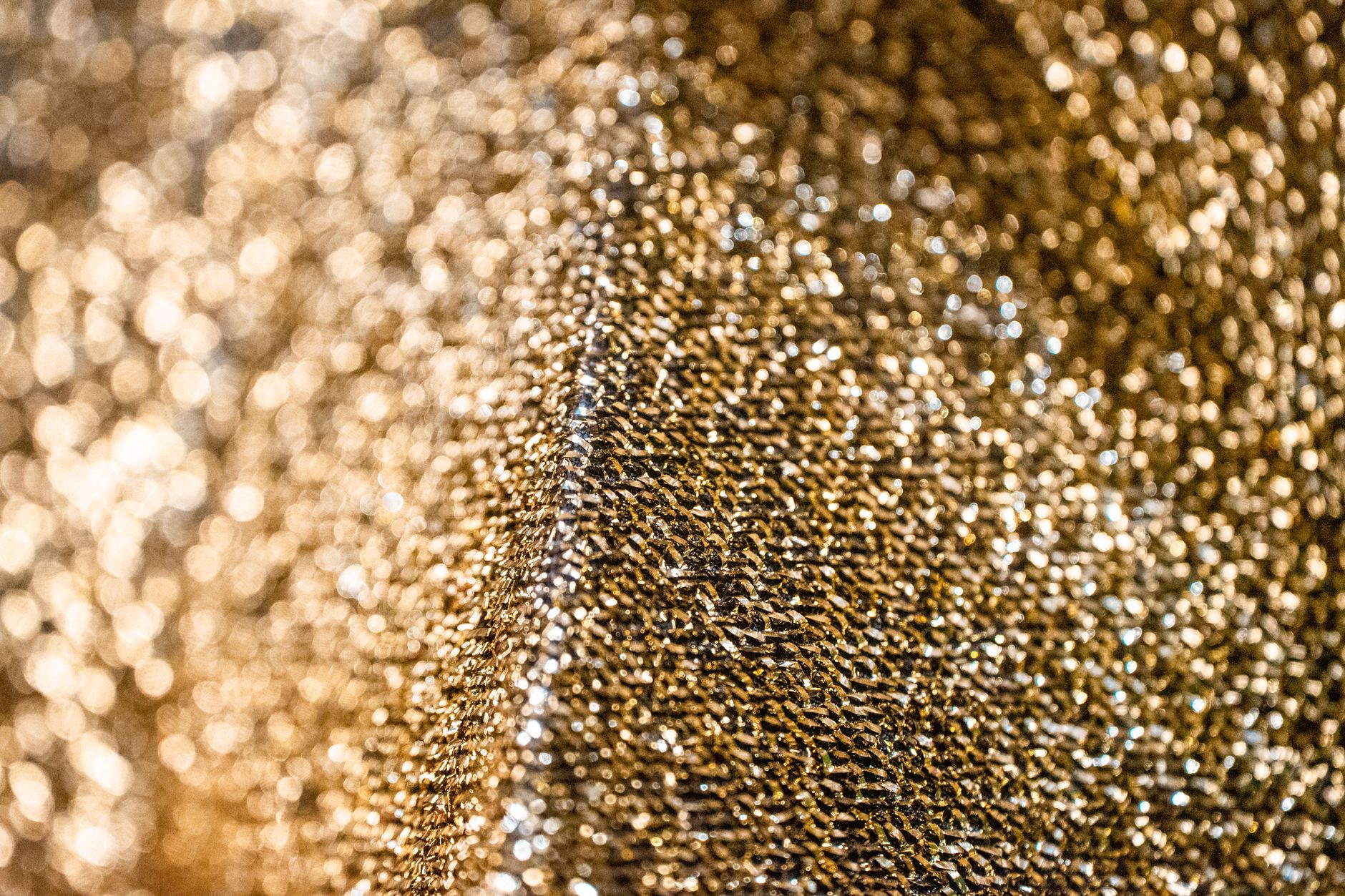
Standard metallic fabrics – lamé, brocade, sequined mesh – achieve their shimmer through surface application or loose weave structures that allow the metallic element to catch light with movement. Fencing lame works differently. The metallic threads are woven tightly into the base structure itself, creating a fabric that is rigid, matte-to-low-sheen, and dimensionally stable under tension. It does not drape. It holds.
That structural rigidity is exactly what separates it from the liquid metallics that dominated eveningwear for the better part of two decades. Where those fabrics moved with the body and amplified every curve through fluid reflection, fencing lame resists. It creates shape independent of the body beneath it, which makes it architecturally useful for bodice construction where boning, underlining, and interlining are traditionally required to achieve a similar effect with softer textiles.
Why Structured Bodices Benefit From Metallic Rigidity
A structured bodice carries a specific engineering challenge: the fabric has to maintain its silhouette under stress – the stress of movement, of sitting, of the natural pull of gravity over hours of wear. Traditionally, that means multiple fabric layers, spiral steel boning, and often a separate inner corset structure. The outer fabric is essentially decorative, stretched over a hidden architecture.
When the outer fabric itself carries structural integrity – as fencing lame does by virtue of its dense metallic weave – the internal engineering requirements shift. Designers working with this material report being able to reduce boning channels or eliminate secondary underlining layers without sacrificing silhouette retention. The fabric does part of the structural work on its own.
There is also a visual consequence to this approach. Because the fabric is not pulled taut over a separate structure, the surface tension reads differently. The bodice looks built rather than stretched. This gives eveningwear a sculptural quality that is distinct from both the corseted formality of traditional ball gown construction and the body-conscious stretch of modern fitted gowns. It occupies a middle register – architectural without being rigid in a punishing way, fitted without being clingy.
The low-to-matte sheen of fencing lame contributes to this effect. Under event lighting, the surface catches light selectively, depending on weave angle and body position. The result is a controlled, shifting shimmer rather than an all-over blaze – a quality that reads as more sophisticated under the bright lighting of formal venues than the full-mirror gloss of traditional metallic eveningwear.

How the Fabric Is Being Adapted for Wearability
Raw fencing lame is not comfortable against skin. The metallic threads, woven for electrical conductivity and durability in an athletic context, can be rough at the edges and are not breathable in the way a natural fiber lining would be. Every application in eveningwear requires a lining layer – typically silk charmeuse or a soft jersey – that separates the metallic structure from the wearer’s body. This adds a construction step but does not compromise the exterior silhouette, since the lame’s rigidity holds regardless of what is placed behind it.
Some workrooms are also experimenting with partial application – using fencing lame exclusively for front bodice panels while returning to traditional structured fabrics for back closures and side seams where flexibility and ease of fit adjustment are more important. This hybrid approach preserves the architectural effect at the focal point of the garment without creating the fitting complications that arise when a rigid fabric must accommodate a full range of body motion.
The Broader Appeal of Technical Textiles in Formal Wear
The interest in fencing lame connects to a longer-running conversation in eveningwear about the appeal of technical and functional fabrics repurposed for formal contexts. Ballistic nylon has appeared in structured handbag construction for years. Bonded performance fabrics have been used in cocktail dress construction where invisible stretch is required. The common thread is that functional fabrics are developed under constraints – durability, performance, dimensional stability – that happen to solve problems in formal wear that decorative fabrics struggle with.
Fencing lame’s specific contribution is the metallic surface combined with structural density. No decorative metallic fabric achieves both qualities simultaneously, because they are designed to prioritize surface effect over structural function. The lame achieves the effect as a byproduct of its engineering, which is why it produces results that are difficult to replicate with conventional eveningwear textiles. Hardware closures drawn from equestrian contexts have followed a similar logic – functional objects migrating into fashion because their engineering solves aesthetic problems more efficiently than purpose-built alternatives.

The question designers are now working through is one of sourcing consistency. Fencing lame is manufactured to sporting standards, not fashion standards, which means dye lots, thread weights, and surface finishes vary between suppliers in ways that a fashion house’s quality control process is not built to absorb. Adapting a technical textile for couture or high-end ready-to-wear production requires either finding a supplier willing to produce to fashion specifications or accepting the variability as part of the fabric’s character. Neither path is straightforward, and that friction is currently limiting how widely the material gets adopted beyond small-run and custom work.
Frequently Asked Questions
What is fencing lame fabric?
Fencing lame is a tightly woven metallic textile used in competitive fencing to conduct electrical current. Its dense construction makes it structurally rigid with a low-to-matte metallic sheen.
Can fencing lame be worn directly against the skin in evening wear?
No. The metallic threads require a soft lining layer, typically silk charmeuse or jersey, placed between the fabric and the wearer’s body for comfort.