The armor worn in kendo practice was never designed with fashion in mind – yet the structured cording that reinforces the men (chest and face guard) and do (trunk protector) is finding its way onto runway bodices, bridal construction, and avant-garde suiting with striking precision.
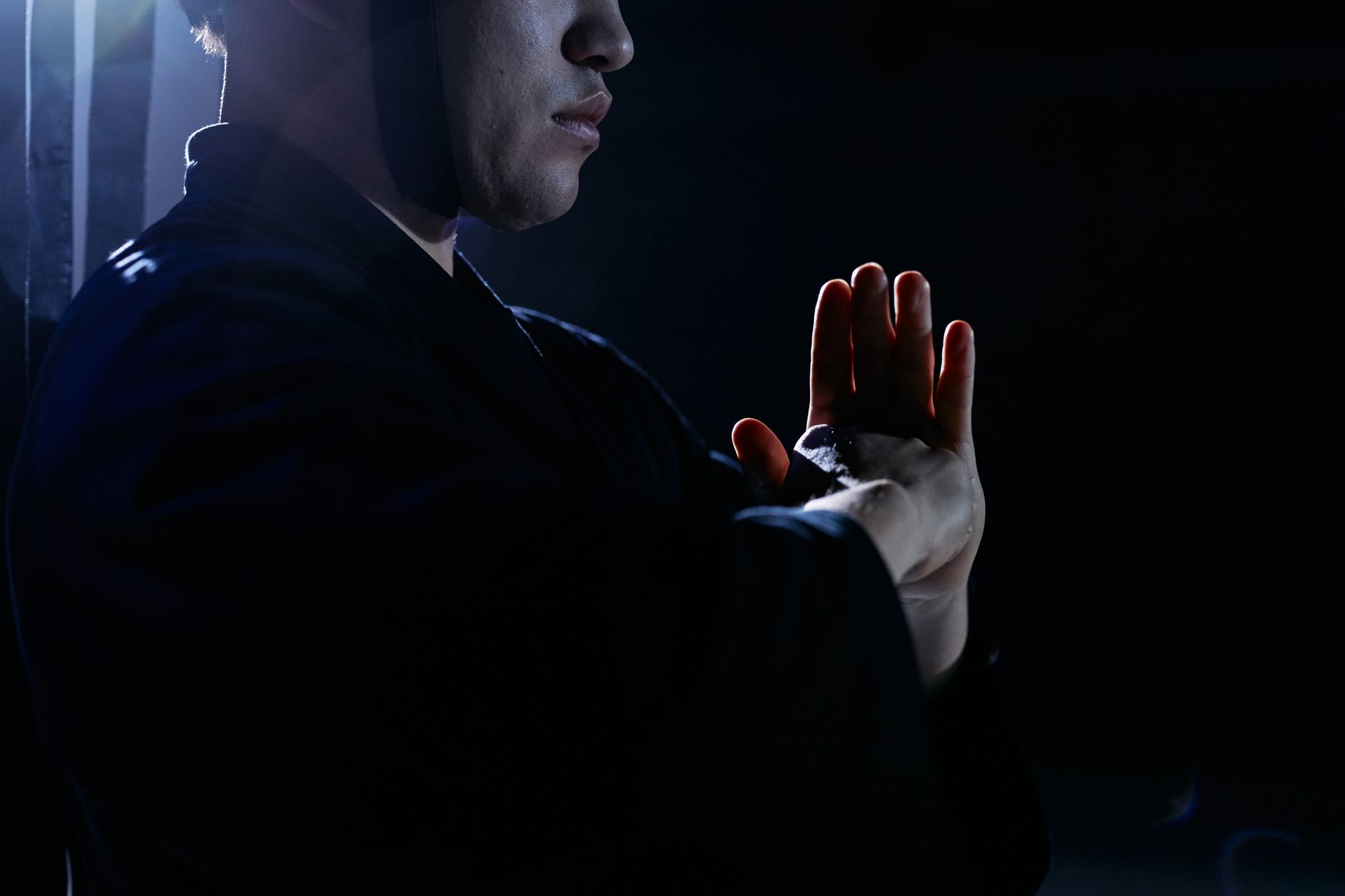
How Kendo Armor Cording Translates to Bodice Construction
Kendo’s do is a rigid, curved chest plate traditionally made from lacquered bamboo slats or molded resin, bound together with dense horizontal cording that runs in tight, parallel channels across the surface. That cording does structural work – it holds the slats in alignment, distributes impact, and gives the plate its characteristic ribbed silhouette. Fashion is borrowing not just the aesthetic of those ridges, but the actual method: stitched cord laid in channels across a stiff underlayer, creating topographic seam lines that stand away from the body’s surface.
The technique itself is older than kendo. Corded seams appear in Victorian stays, in ecclesiastical vestments, in the piping of military dress uniforms. What makes the kendo do version distinctive is its scale and regularity. The cording sits close together, usually no more than a centimeter apart, and follows horizontal lines that echo the body’s natural curve across the ribcage. When a designer applies that logic to a strapless bodice or a structured jacket front, the result is a garment that reads as both architectural and body-conscious at once – rigid in theory, shaped in practice.
Several independent ateliers and emerging designers have begun experimenting with this specific cord density and placement, drawn to how the parallel channels create visual weight without adding actual bulk. Unlike boning, which disappears inside a garment, corded channels are the surface detail. They are the ornamentation. This matters because it removes the need for embellishment layered on top – the structure itself becomes the decoration.
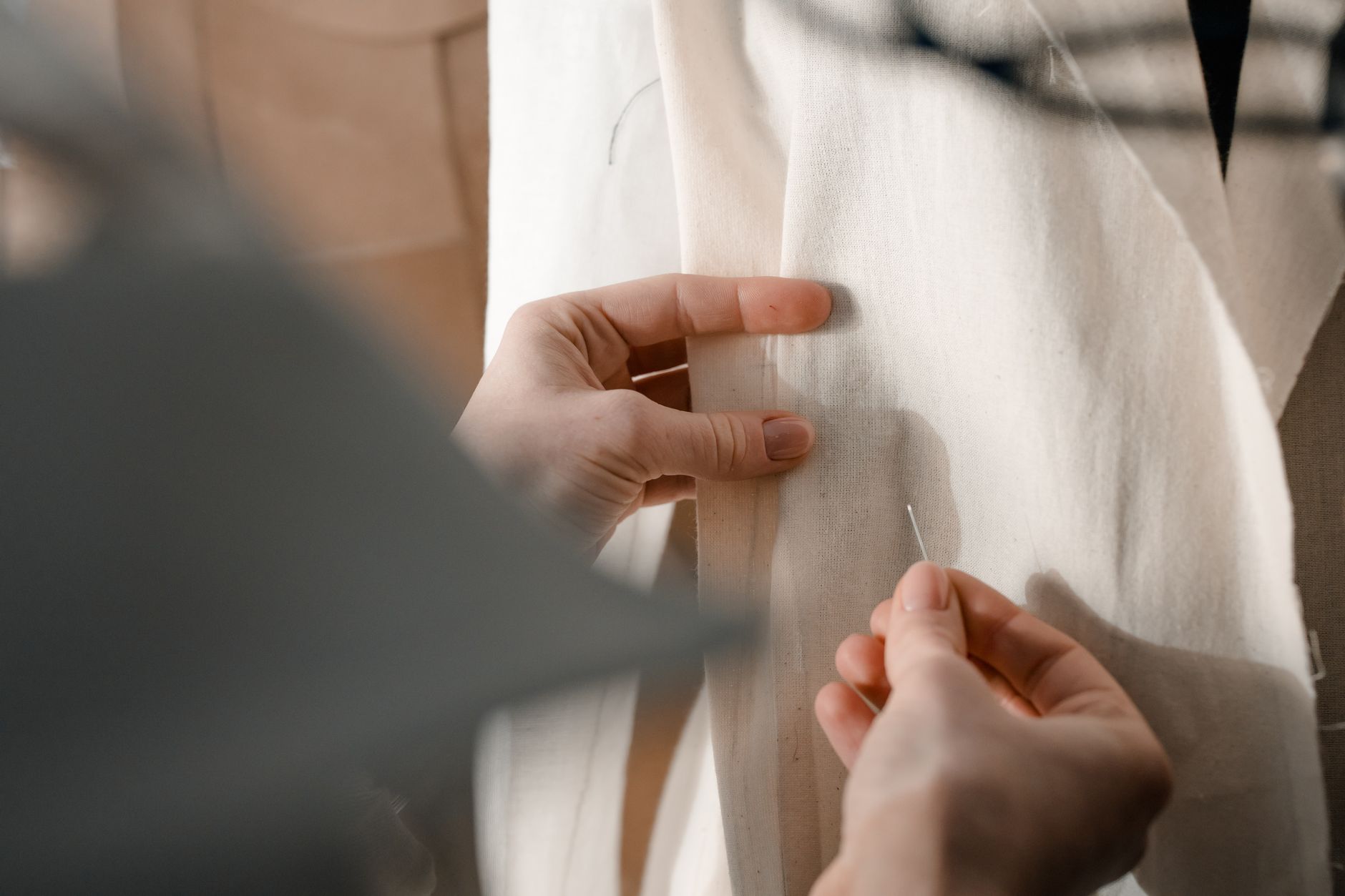
The construction process involves stitching cord into channels sewn into an interlining, typically a firm cotton canvas or buckram, before attaching the fashion fabric on top. Some makers work the cord directly into the outer fabric using a cording foot and pre-cut bias channels. Either method produces that hallmark raised line – a ridge just high enough to cast a shadow under direct light, which gives the bodice its dimensional quality in photographs and on stage.

Why Structured Seams Are Driving This Particular Direction
Fashion’s appetite for visible construction has been building steadily. Exposed seams, raw edges, topstitched panels – these are all part of a wider interest in showing the work rather than hiding it. Corded bodice seams fit neatly into that conversation, but they bring something specific to it: they suggest armor, containment, and discipline rather than casual deconstruction. The reference point matters. Kendo armor carries connotations of focus and protection, and those associations transfer to a garment in ways that, say, exposed serging simply does not.
There is also a purely technical reason why this trend is gaining ground in structured womenswear. A corded seam adds rigidity along its line without requiring boning, which means a designer can shape a bodice through seam placement and cord density rather than through a skeleton of steel or plastic. The result is a garment that holds its form without the fitting constraints that boning introduces. A corded bodice can be more forgiving in sizing, more comfortable across a range of movement, and easier to alter – practical advantages that matter enormously in custom and made-to-measure markets.
Bridal construction is where this technique is finding its most direct application. A strapless or low-backed wedding gown depends entirely on its bodice structure to stay in place, and corded channels distributed across the front panel create enough internal tension to function without a full boning grid. Designers working in this space are also drawn to how corded seams photograph – the subtle texture reads beautifully against silk crepe or duchess satin, adding interest without competing with beading or lace.
Theatrical costume is another natural home for this technique. Stage garments need to read from a distance, survive repeated performance wear, and hold a silhouette through movement. Corded bodice seams check all three requirements. The ridged surface catches stage lighting in a way that flat fabric does not, the cording adds internal strength to seams that would otherwise fatigue quickly, and the construction creates a body-skimming shape that stays consistent through eight shows a week. A number of costume houses have reportedly incorporated this specific cord spacing into their standard bodice block, citing the structural reliability.
Suiting is the more unexpected territory. A structured jacket front typically relies on chest canvas and pad stitching to hold its lapel and chest panel. Introducing horizontal cording below the bust line – particularly on collarless or Nehru-style jackets – creates a visual interruption that shifts the jacket’s reference point from tailoring toward armor. It is a deliberate design choice, not a finishing detail, and it changes the entire register of the garment. The silhouette becomes harder, more deliberate, with a formality that has nothing to do with conventional dress codes.
The Details That Separate Good Execution from Costume
The line between referencing kendo armor and simply recreating it in fabric is determined almost entirely by material choice and cord spacing. Heavy, widely spaced cording in black on a dark ground reads as costume. Fine cord in a tonal match, spaced at intervals calibrated to the body panel it covers, reads as design. The most convincing applications use a cord diameter between 2mm and 4mm – substantial enough to raise the surface, fine enough to allow the channels to follow the body’s contour rather than fighting it. Waxed linen cord holds a channel more cleanly than cotton, and sits flatter at the ends of each row, which matters most at center front where the eye travels first.
Placement is equally critical. On the kendo do, cording runs across the fullest part of the chest plate, which corresponds on the body to the area between the underbust and the mid-sternum. Designers who center their cording in that same zone – rather than distributing it top to bottom across an entire bodice – get the strongest structural reading without the garment tipping into full armor territory. Whether that restraint holds as the technique moves further into mainstream production is an open question, given that the more a construction detail gets replicated, the more exaggerated its versions tend to become.