


The Grid That’s Taking Over Fashion’s Front Lines
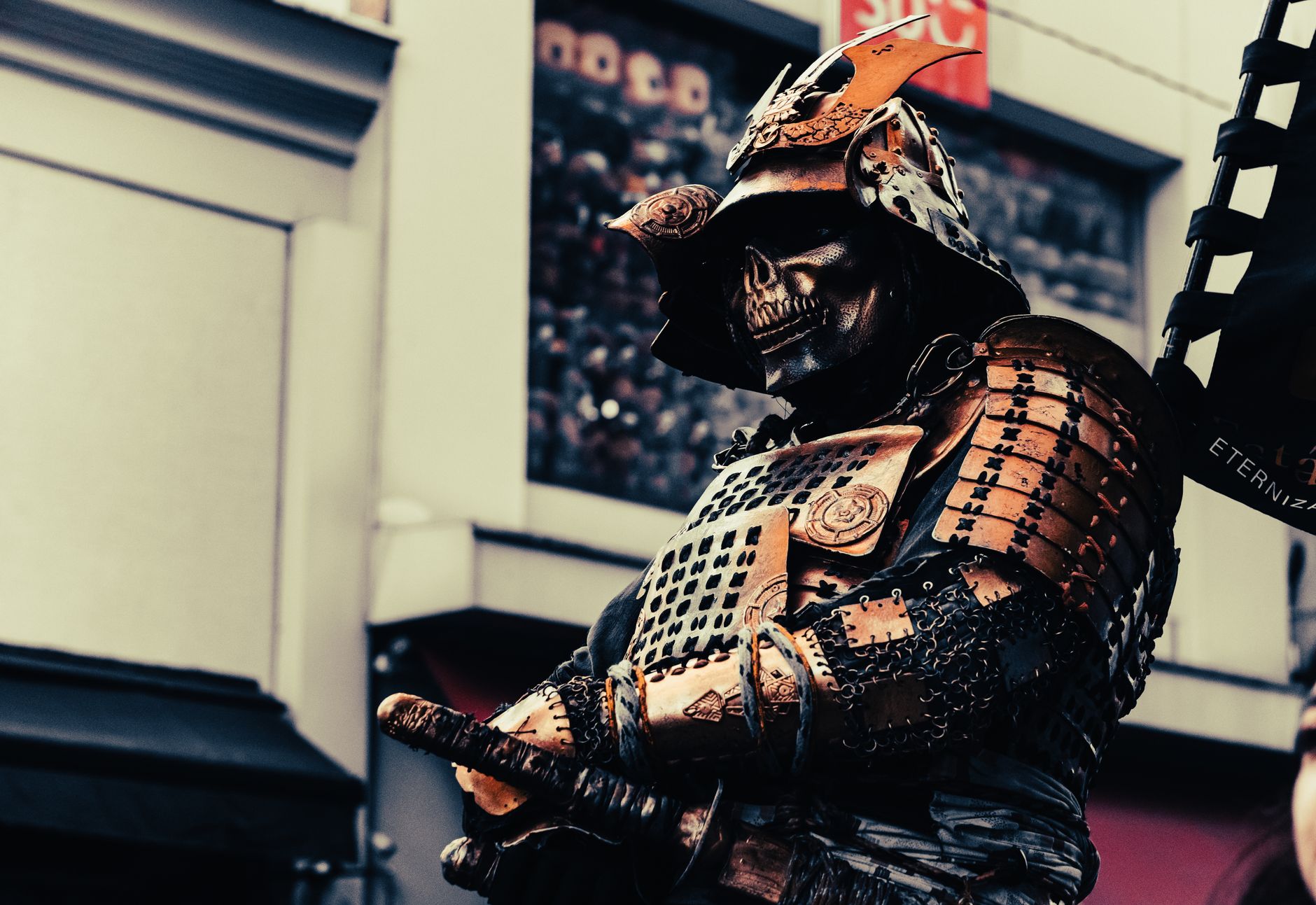
Structured visors have spent years cycling through inspirations – aviation, motorsport, military – but the latest reference point is coming from an unexpected corner of the martial arts world. The face guard bars of kendo’s men do, the lacquered bamboo grille worn to protect practitioners during sparring, are now showing up as a direct design language across men’s fashion accessories, headwear, and streetwear visor fronts. The translation is precise rather than loose: rigid, evenly spaced vertical and horizontal bars forming a clean grid over an otherwise minimal surface.
What makes this moment different from previous sportswear-to-fashion crossovers is the specificity of the borrowing. Designers aren’t reaching for a vague martial arts aesthetic or leaning on generic cage imagery. They’re lifting the exact geometry of the men do face guard – the proportion of bar width to negative space, the slight forward curvature that follows the brow line, and the way the grid sits proud of the surface behind it rather than being flush with it. That structural logic is what makes the resulting visor fronts feel architecturally convincing rather than costume-adjacent.
The grid visor is already moving faster than most trend cycles allow.
Why the Men Do Grid Works as Fashion Structure
The men do face guard functions under strict ergonomic rules – it has to protect without obscuring vision, stay lightweight enough for extended wear, and maintain rigidity under repeated impact. Those constraints produce a grid that is neither decorative nor arbitrary. The bars are spaced to allow a clear sightline, the frame is curved to distribute force, and the depth of the structure creates shadow lines that read as graphic even at a distance. When that logic transfers to a fashion visor, it arrives with built-in visual intelligence that purely decorative grilles rarely achieve.
Fashion’s current appetite for structured fronts also plays into this. Bucket hats and caps with reinforced bills have been building toward harder, more architectural silhouettes for several seasons. A gridded visor front pushes that direction further, adding dimension and visual weight to a surface that usually sits flat. The bars create a layering effect – shadow behind them, the bill surface below, the face beneath that – which photographs in a way that flat embroidery or print simply cannot replicate. For a category driven heavily by visual documentation and social content, that dimensional quality carries genuine commercial relevance.
The structural parallel to kendo men do chest cord lacing is hard to ignore – both elements draw on the same source object and apply its physical logic to fashion surfaces in ways that prioritize structure over decoration. The grid visor and the ribbed bodice panel are, in effect, two expressions of the same design instinct reaching different parts of the wardrobe simultaneously.

How the Grid Is Being Executed Across Categories
The execution varies by category but the underlying approach stays consistent. In streetwear-adjacent headwear, the grid bars are appearing as raised metal or resin elements applied over a conventional cap bill, maintaining the curvature of the original while adding the men do’s characteristic forward-facing depth. Some versions use matte black powder-coated bars against a lighter bill surface, leaning into the contrast that makes the grid legible even on a moving subject. Others replicate the traditional lacquered finish of actual kendo equipment, producing a high-gloss grid that catches light in ways that reference the original object directly without masking it.
Performance-adjacent fashion is using the grid differently. Here the bars are integrated into the bill structure itself rather than applied on top, which means the grid is load-bearing in a minimal sense and slightly more subtle in profile. The visual effect is cleaner and less immediately dramatic, but the structural read – that this visor front was designed from functional logic rather than decoration – comes through in the rigidity and the even spacing. That restrained approach tends to land in higher price points where the story behind the form carries as much weight as the form itself.
Accessory-focused brands with no direct connection to headwear are also entering the conversation through face-adjacent styling – structured visors worn as standalone accessories rather than attached to caps, functioning closer to a mask frame or a brow shield. The men do grid suits this format particularly well because the original object exists as a face frame independent of any hat structure, so the translation to a wearable visor without a crown feels true to the source rather than forced.
The Look That Won’t Stay Niche
The men do grid visor is in the precise window where it still reads as a considered reference rather than a mass-market motif, but the mechanics pushing it forward – dimensional photography, structural headwear momentum, the ongoing pull toward non-Western craft as a design source – suggest that window is narrower than it looks. Once the grid migrates fully into fast fashion’s interpretive cycle, the proportional specificity that currently makes it convincing will be the first thing to go, and what remains will be a cage graphic rather than a structured object. Right now, though, the ratio is still intact, and that ratio is everything.