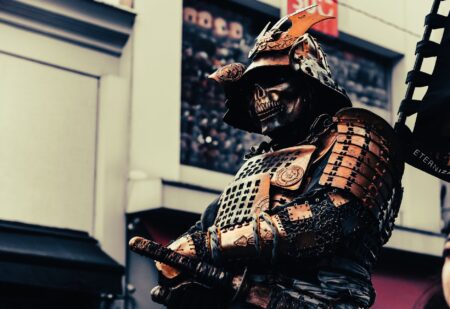


There is a very specific kind of structural detail that travels from one discipline to another without anyone formally announcing its arrival. The do-tare knot tie from kendo – those flat, precise lacing systems that hold armor panels against the body with controlled tension – has found an unlikely second life in high-concept sandal design. Footwear designers working with structured ankle strapping have quietly borrowed the logic of kendo’s binding tradition, applying its flat-cord geometry and layered knot architecture to the kind of sandal silhouettes that demand both visual weight and anatomical hold.
The connection is not accidental. Kendo’s men’s do armor, the chest and abdomen piece secured by tare ties at the waist, operates on a principle of distributed tension across multiple anchor points. A sandal ankle that needs to stay fixed without bulk faces a structurally similar problem. The solution, it turns out, looks remarkably similar: flat cord running in parallel rows, fixed at a central knot, with trailing ends that tuck rather than loop. What began as battlefield utility has become a formal reference point in footwear construction.
The Anatomy of a Kendo Tie, Translated to Leather
The do-tare connection in traditional kendo armor uses braided cotton or synthetic cords threaded through reinforced eyelets, pulled across the body’s midsection, and knotted at the back with a specific flat-knot finish that lies close to the surface rather than protruding. The system is designed to distribute pressure evenly across the torso, preventing any single point from taking concentrated stress during movement. When footwear designers translate this to an ankle strap, they are solving for the same physics: a joint that rotates, flexes, and bears weight needs tension distributed across its circumference rather than concentrated at a single buckle pin.
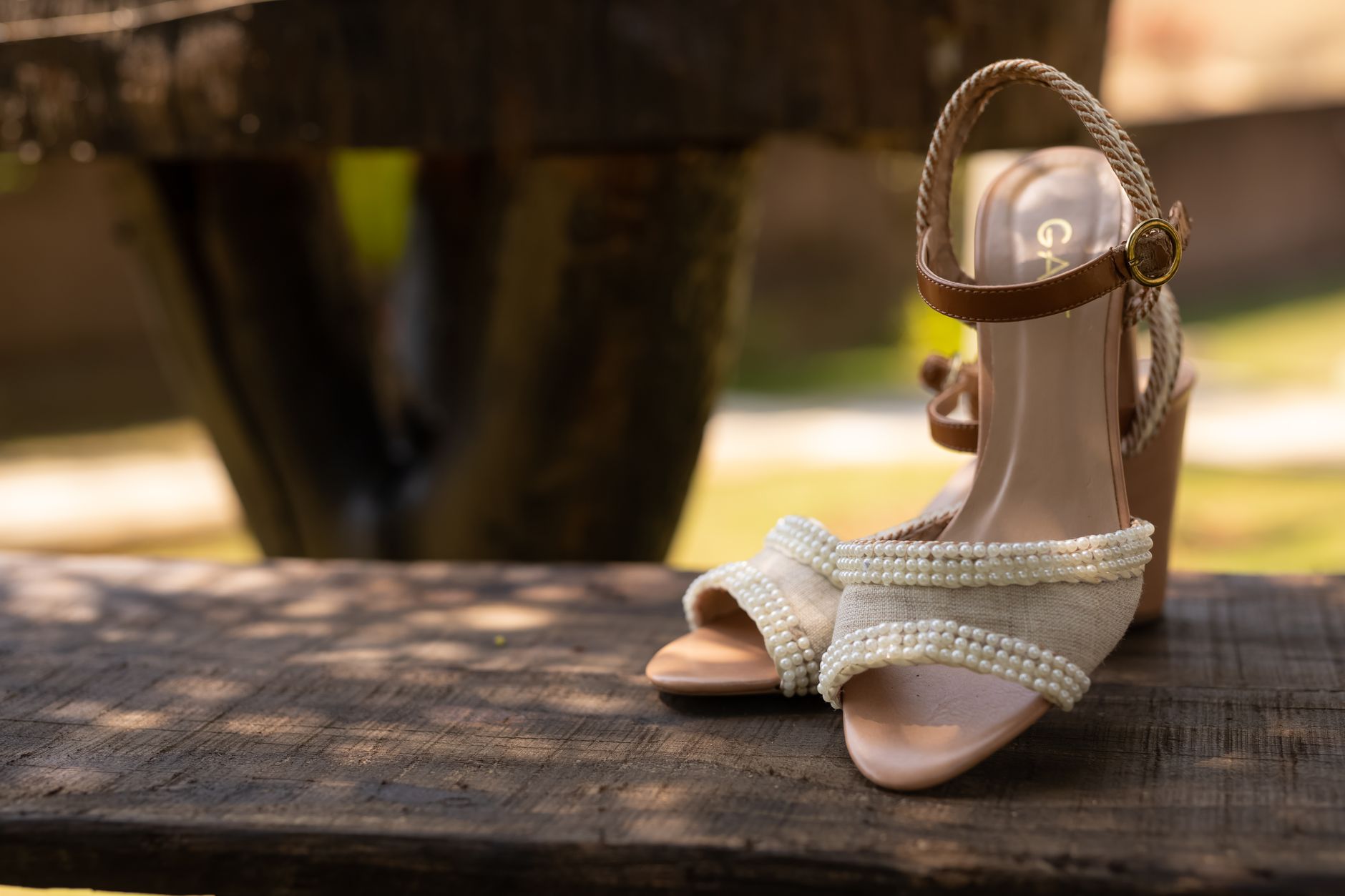
Some sandal makers working in this space use two to four cord passes across the front of the ankle, feeding through slots cut into the footbed’s lateral edge rather than conventional strap loops. The knot sits at the inner ankle, low and flat, mimicking the back-body placement of kendo’s own tie position. It reads as deliberate and architectural – not decorative lacing, but a visible structural decision that communicates something about how the shoe was designed to work.
Why Structure Needs Visible Anchoring
Structured sandals occupy a complicated space in footwear design. The category includes platform soles, rigid toe boxes, built-up midsoles, and articulated footbeds – all of which add vertical and horizontal mass. The challenge with a heavy sandal base is that a conventional buckle strap looks disproportionately thin against the volume below it, and often performs that way too. A single-pin buckle exerts pressure on a narrow band of tissue, which becomes uncomfortable on a heavy shoe that amplifies the lever effect of the forefoot during walking.
The kendo-derived tie system solves both the aesthetic and ergonomic problem at once. Multiple cord passes spread grip across more surface area, which reduces localized pressure. The flat-knot finish adds visual mass at the ankle that balances the shoe’s base, creating a proportional relationship between the footwear’s lower and upper halves. This is the same principle that makes a thick leather lace look correct on a combat boot and wrong on a court slipper.
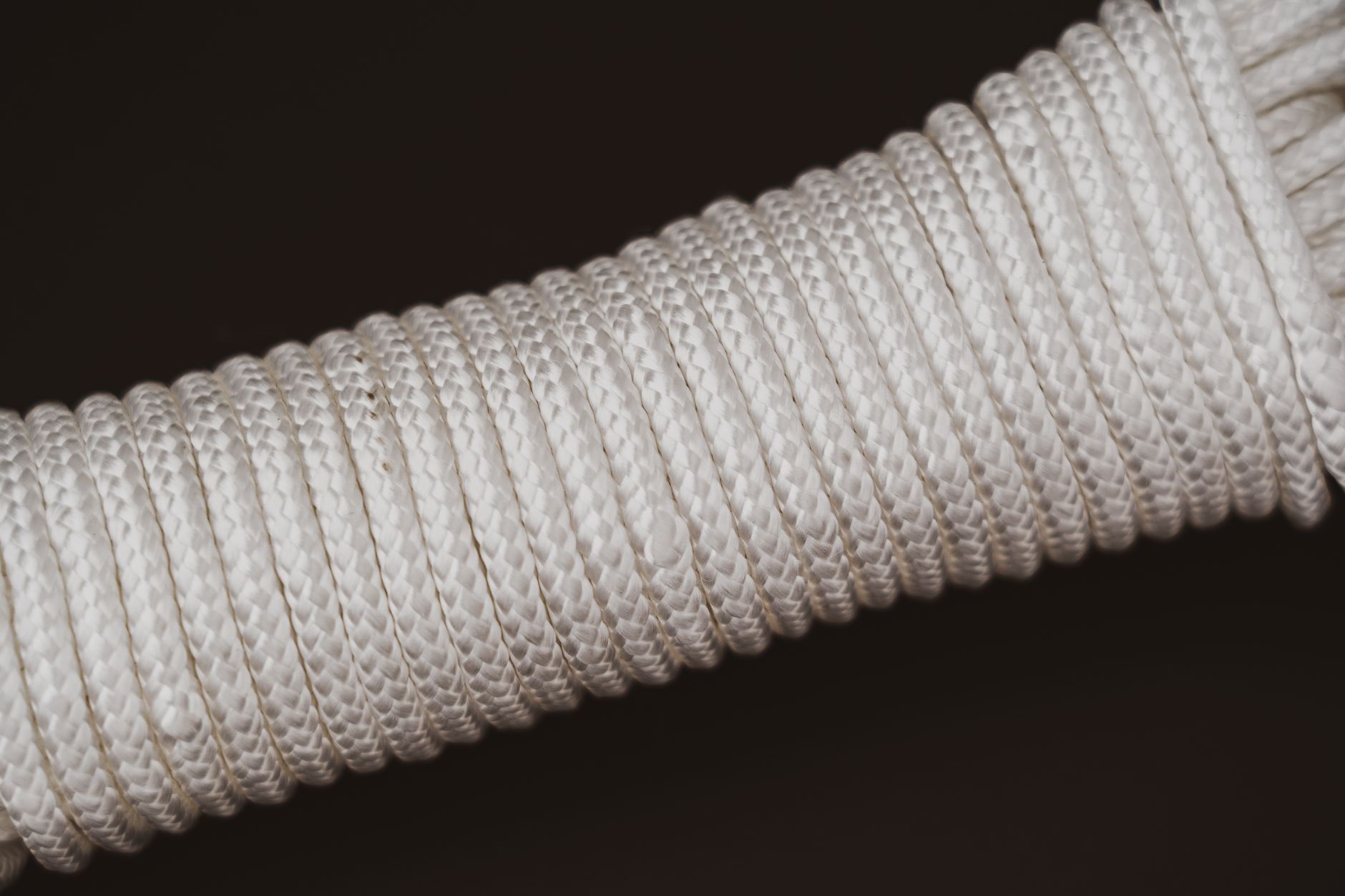
The cord materials being used here are worth examining. Designers are drawing from the same material families that kendo suppliers use: flat cotton braid, waxed linen, and occasionally high-tenacity polyester woven to a flat rather than round cross-section. These materials lie without rolling or twisting, which is why they create the precise parallel-line geometry visible on the upper. A round cord would pile up and shift. A flat cord holds its position after the knot is set, which is exactly what a structured sandal’s visual logic requires.
The knot itself tends to follow what martial arts practitioners call a square or reef-knot configuration, modified for symmetry. Unlike a standard shoelace bow, this finish creates a rectangular knot face rather than a looped one, keeping the profile tight against the ankle and preventing the kind of loosening that occurs when bows catch on clothing or furniture. For a sandal worn through a full day of walking, this matters more than it might initially seem.
Color and Cord as Design Language
Traditional kendo do-tare ties run in indigo, black, or white – colors tied to the armor’s own palette and the uniform codes of the practice. Footwear adaptations have moved considerably further, using cord color as a primary design statement. Sand and raw ecru cords against white leather create a tonal, almost sculptural effect. Black braided cord on a platform sandal reads as utilitarian and intentional. Some designers are working with color-blocked cord – two alternating shades running in adjacent passes – which creates a striped band across the ankle that exists nowhere else in the sandal’s construction.
This color flexibility is one reason the reference has spread beyond niche footwear into broader runway applications. The same knotting logic that appears on a craft-focused independent shoe also turns up in structured sandals from designers working with artisanal production in Japan and Italy, where the martial arts reference is absorbed naturally into a longer tradition of technique-forward construction.

The Ankle as Structural Statement
What the kendo tie brings to sandal design is a refusal to treat the ankle strap as an afterthought. Conventional sandal construction resolves the ankle last: the footbed and sole are engineered first, and the upper strapping is fitted to the result. A design built around a do-tare knotting system works in reverse – the ankle closure is architecturally primary, and the rest of the sandal’s construction responds to the demands of that system’s geometry. That inversion changes not just how the shoe looks but how it sits on the body.
The relationship between kendo men’s do chest cord lacing and structured bodice panels follows the same logic applied to a different body zone: the cord system imposes order and visible tension, and the garment or shoe is built to honor that imposition rather than conceal it. In both cases, the construction detail becomes the design’s central visual argument rather than a solution hidden inside the finished object.
The practical result of this approach is a sandal that announces its own support structure. The knot does not disappear into the shoe’s overall silhouette; it is the silhouette’s most readable point. For a category of footwear that often struggles to look considered rather than casual, that kind of structural legibility – borrowed directly from centuries of armor-making discipline – is a difficult thing to fake.