

Pickleball has spent years escaping its reputation as a retirement-community pastime, and now its dress code is following. The athletic gear worn on pickleball courts – moisture-wicking polos, pleated performance skorts, color-blocked zip-ups – is showing up at Friday afternoon meetings, coffee runs, and weekend brunches with enough frequency that it can no longer be called accidental.
From the Court to the Conference Room
The sport itself has pulled in a younger, more style-conscious demographic over the past few years, and that shift has changed what people are willing to wear while playing. Brands that originally built their reputations on tennis and golf apparel have moved into pickleball with collections that are cut slimmer, printed bolder, and finished with details – contrast piping, tonal monograms, ribbed collars – that read more like fashion than function. When the gear looks that considered, it stops being purely athletic.
Casual Friday has always been a moving target. What counts as “casual” in a given office has loosened considerably over the past decade, and performance fabrics have been central to that loosening. The same logic that got jogger pants and Chelsea sneakers through the door is now working in favor of a fitted polo in a geometric print with a subtle UV-protection finish. If it looks polished and fits well, many workplaces will accept it, regardless of what it was technically designed for.
The color palettes driving pickleball apparel right now are well-suited for the office crossover. Sage greens, warm whites, terracotta, navy with cream trim – these are not the neon combinations of a mid-2000s sporting goods aisle. The restraint in color choice makes the athletic origins of a piece easier to overlook. A sage zip-up track top with a clean cut reads differently in a workplace context than a screaming yellow windbreaker would, even if both items were built with the same technical materials.
Silhouette is doing a lot of the work here. Pickleball-specific pieces tend to favor a modified athletic cut – not skin-tight, not oversized – with enough structure to look intentional. The performance polo, in particular, has made a quiet return as a wardrobe staple precisely because it splits the difference between a dress shirt and a casual tee. Worn with tailored trousers or a wide-leg trouser, the court polo barely registers as sportswear at all.
The Styling Logic Behind the Crossover
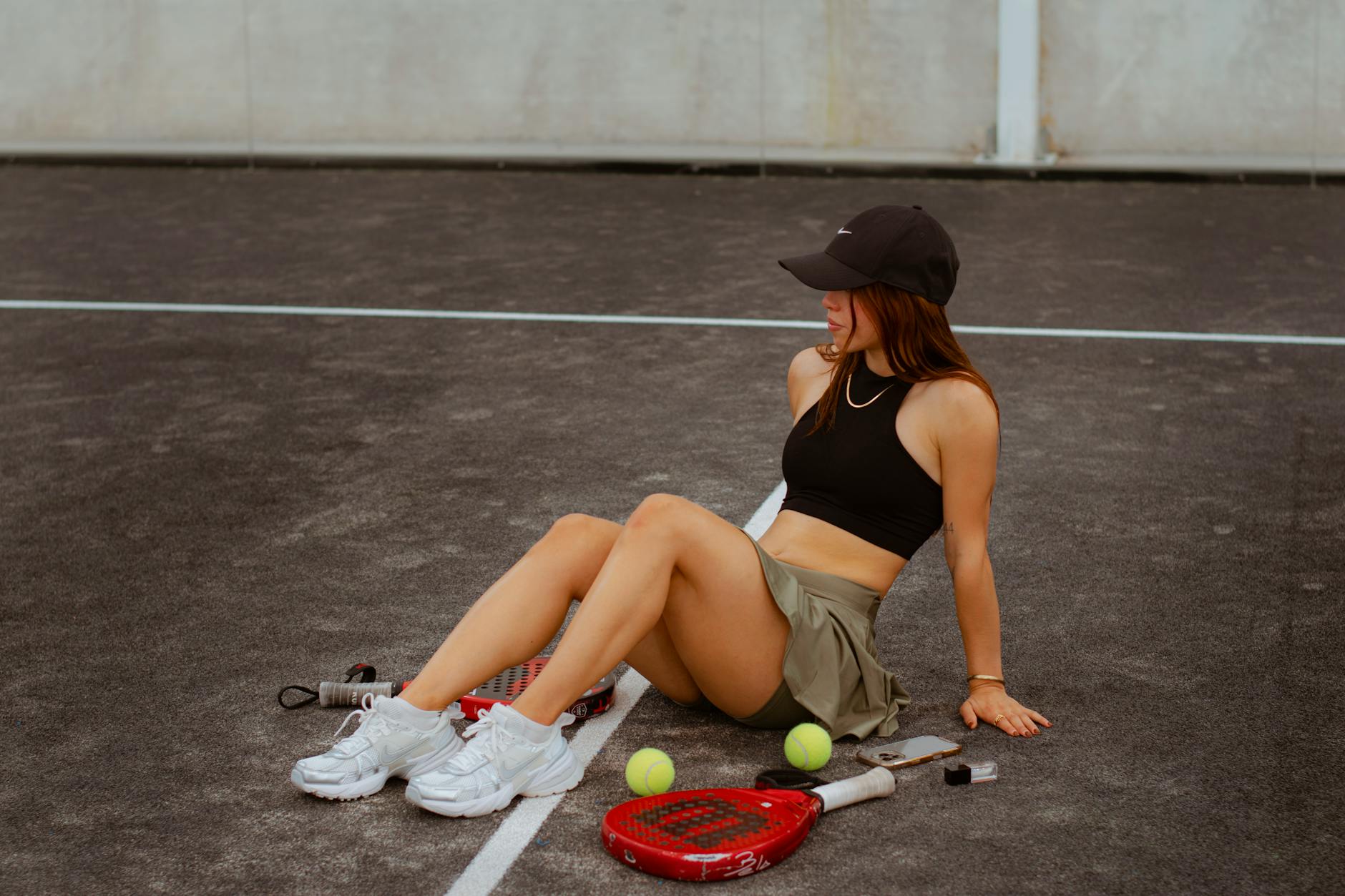
The way people are actually pulling this off comes down to contrast dressing. A pickleball skort – typically a pleated or A-line silhouette in a performance fabric – paired with a structured blazer and flat mules becomes something the fashion press would simply call “sporty chic.” The athletic piece gets absorbed into a broader outfit where it stops being the most notable element. That kind of contextual camouflage has worked for cycling shorts, for swim coverups, and now it is working for court skorts.
Footwear is the hinge point for most of these transitions. Court shoes themselves rarely make the jump – they are too sport-specific in their construction and visual vocabulary. What happens instead is that the apparel travels while the shoes shift. A pickleball polo that spent Saturday morning on the court can move into a Friday evening context when it is paired with clean white sneakers or leather loafers rather than court shoes. The swap in footwear reframes everything above it.
Accessories are being used similarly. A minimal leather tote or a structured shoulder bag reads as a signal to the rest of an outfit, one that says “this is deliberate” rather than “this person came from a game.” The bag becomes the anchor that pulls pickleball gear out of athletic territory and places it somewhere more ambiguous. That ambiguity is the sweet spot the trend occupies – clothes that could belong to multiple contexts simultaneously.
This sport-to-casual pipeline is not unique to pickleball. The same crossover has played out in niche athletic communities before. Bowls-club linen dressing traveled a similar road, moving from a very specific recreational context into resort wear and summer casualwear through the same mechanisms: restrained palette, clean silhouettes, fabrics that behave well outside their original setting. The difference with pickleball is pace – it is happening faster, partly because the sport’s growth has pushed more brands to invest in apparel that is designed to travel.
What separates the pieces that make the crossing from those that don’t is finish quality. A pickleball polo with bonded seams, a clean hem, and a considered collar will always travel better than one with exposed elastic or heavy logo placement. The brands that are succeeding at this crossover appeal are the ones treating their court collections the same way a ready-to-wear label would approach a casual category – with fabric weight, drape, and construction details that can hold up to a context outside a sports facility.
What the Offices Are Actually Wearing

The version of pickleball dressing that reads most clearly in a Friday-casual context is built around the performance polo and the zip-up track top. Both pieces have enough polo-shirt or light-jacket precedent in workplace casual that they do not trigger a dress code conversation. The skort is slightly more context-dependent – easier in creative industries, tech, and media, harder in environments where the expectations around women’s workwear are more formal – but even there, a longer pleated version in a neutral color is finding acceptance.
The real tension in this trend is whether pickleball apparel maintains its stylistic edge once it goes fully mainstream casual. Right now, the crossover works partly because it still carries a degree of specificity – wearing court-ready pieces into a non-court setting has a subtle “I know what I’m doing” quality that disappears the moment every fast-fashion retailer puts a generic performance polo on the rack at half the price. At that point, the aesthetic becomes table stakes rather than a statement, and the players driving the trend will have already moved on to whatever comes next.
Frequently Asked Questions
What pickleball clothing works best for casual office wear?
Performance polos and zip-up track tops translate most easily, especially in neutral or muted color palettes. Pleated skorts work in creative or relaxed workplace environments when paired with structured outerwear.
How do you style pickleball apparel outside the court?
Swap court shoes for clean sneakers or loafers, add a structured bag, and pair athletic pieces with tailored trousers or a blazer to shift the context from sporty to intentionally casual.