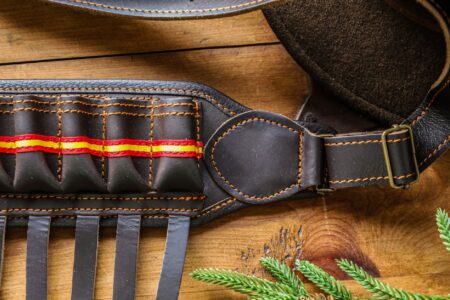


Equestrian gear has a long history of crossing into fashion – polo helmets, riding boots, and breeches have all made the journey from stable to street. But the latest crossover is more unexpected: tail guard wraps, the protective fabric bandages fitted around a horse’s hindquarters during transport and competition, are beginning to appear as design references in minimalist skirt construction. The migration is quiet, technical, and genuinely interesting.
What makes tail guard wraps worth paying attention to as a fashion reference isn’t their visual drama – they don’t have any. It’s their structural logic. These wraps are built around a specific engineering problem: how do you secure fabric snugly against a curved form without bulk, without slipping, and without restricting movement? That question, it turns out, maps directly onto one of the persistent challenges in skirt construction, specifically at the hem.

The Structural Problem Tail Guards Actually Solve
A standard tail guard wrap is constructed in layers. There’s an outer shell, typically in canvas or synthetic weave, a soft inner lining, and a fastening system – usually hook-and-loop or tie closures – that allows the wrap to conform to irregular anatomy without creating pressure points. The hem of the wrap is finished with a narrow, flat binding that prevents fraying and keeps the edge lying flush against the body. That finishing technique is where fashion designers have started paying attention.
Minimalist skirts, particularly those in the midi and maxi range, have always struggled with hem weight and drape control. A hem that’s too heavy pulls the fabric down in an unflattering line; too light and it floats unpredictably. The bound-edge finishing method used on tail guard wraps – where a strip of fabric is folded over the raw edge and stitched flat on both sides – creates a hem that has weight and structure without bulk. It sits cleanly. It doesn’t roll. It moves with the body rather than against it.
Some designers working in performance-influenced womenswear have begun borrowing this approach directly, applying narrow binding tape in matching or contrasting fabric to finish skirt hems with the same flush, controlled edge seen on equestrian equipment. The result is a hem that looks almost architectural – precise without being stiff.

Why Minimalism Is the Right Context
This trend isn’t landing in maximalist or heavily embellished collections. It’s finding its home specifically within minimalist design because the technique’s value is entirely structural, not decorative. When a skirt is built around clean lines, neutral fabric, and restrained silhouette, the hem becomes one of the few visible details that can make or break the entire garment. A poorly finished hem on a plain black midi skirt is immediately apparent. A precisely bound edge reads as intentional craft.
The equestrian reference also carries a specific cultural weight within minimalism’s aesthetic vocabulary. Polo club dressing has long been associated with a particular kind of understated wealth – the kind that invests in quality construction rather than visible branding. Borrowing structural techniques from that world reinforces a design position that values function-forward elegance. It’s not about signaling equestrian lifestyle; it’s about inheriting a construction philosophy.
How the Technique Translates in Practice
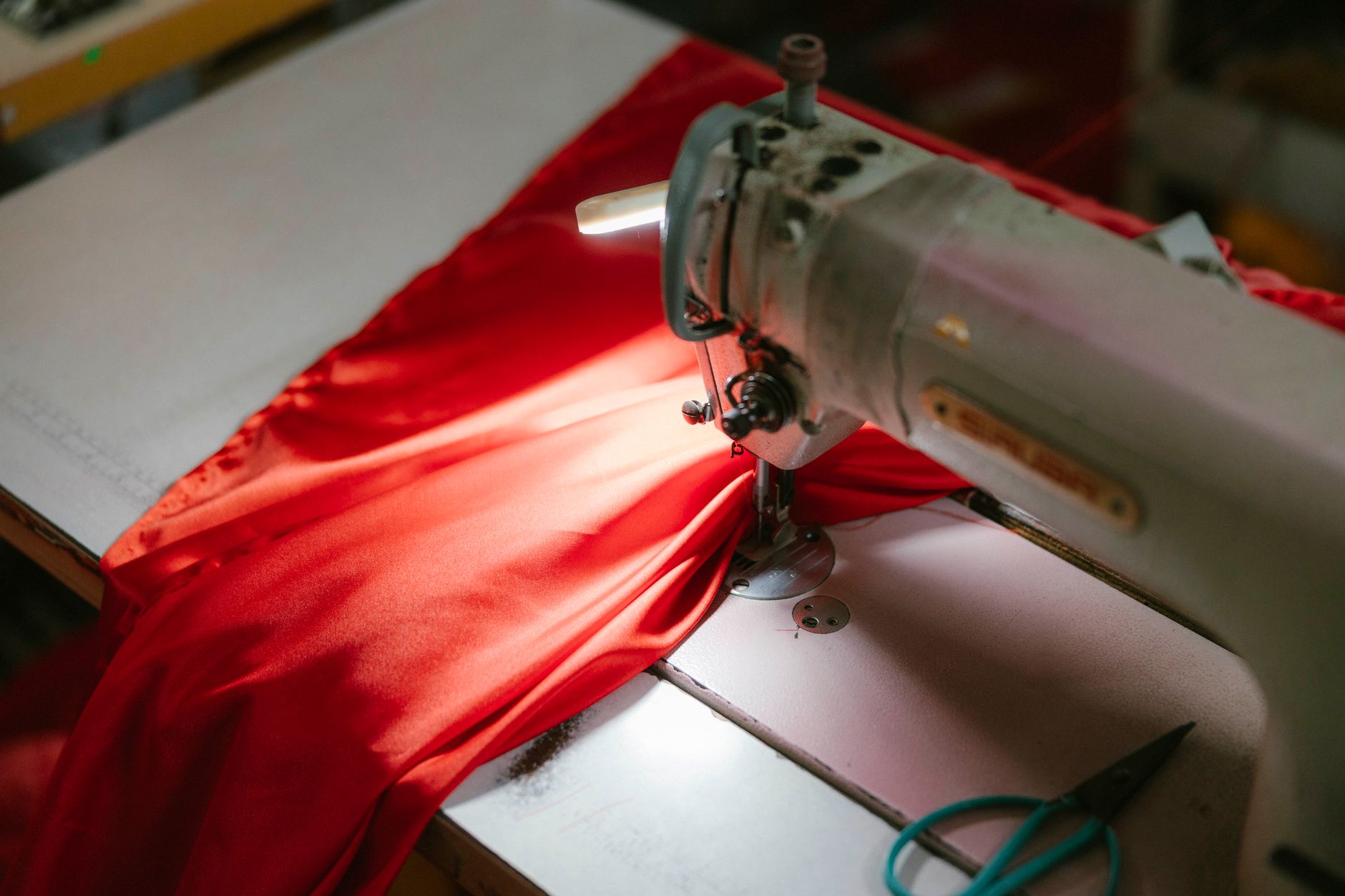
The most direct translation involves the binding strip itself. On equestrian wraps, this binding is typically a quarter-inch to half-inch wide strip of the same outer shell material, folded cleanly and stitched twice – once on the face, once on the reverse. In skirt construction, designers are applying this at widths ranging from a narrow 3mm to a more visible 15mm, depending on whether the intention is invisible structure or a faint decorative line. The narrower versions essentially disappear into the hem, adding integrity without any visual presence. The wider versions read as a deliberate design choice, a thin stripe of contrast or texture running along the skirt’s base.
Fabric choice plays a significant role in how successfully the technique works. Tail guard wraps use materials that resist fraying and have enough body to hold the bound edge flat without interfering with the outer shell’s drape. In skirt applications, this means the binding works best in crepe, ponte, or tightly woven cotton – fabrics that behave similarly. On silk or very light chiffon, the additional binding weight can create its own distortion, which is why the trend is appearing more in structured minimalist pieces than in fluid, draped styles.
The fastening logic of tail guards is also beginning to surface in skirt design, though more abstractly. Some pieces in this emerging category feature small internal tie systems at the hem – thin ribbon or twill tape loops stitched into the lining – that allow the wearer to adjust how the hem falls or create subtle gathering. It’s a direct analog to the adjustable closure system on a wrap, adapted to a context where the “irregular anatomy” being accommodated is a moving body rather than a horse’s tail.
This kind of equestrian influence on garment construction sits alongside other crossovers worth tracking – polo club whip cord fabric moving into tailored trousers follows a similar logic of borrowing performance material properties for everyday suiting. The tail guard hem approach is more subtle than a full fabric substitution, but it operates on the same principle: identify what makes equestrian gear technically excellent, then extract that specific quality and apply it where civilian clothing falls short.
The real question the trend raises is whether bound-edge hemming, once it moves beyond a niche construction detail into wider adoption, retains its meaning. Right now the technique carries a certain quiet specificity – a designer who knows the reference is making a deliberate choice. Once it appears in fast fashion production, which it will, the flat-bound hem will become just another finishing option, stripped of its structural logic and applied purely for the look. Whether the original precision survives that scaling is something the designers currently working with it are acutely aware of.