

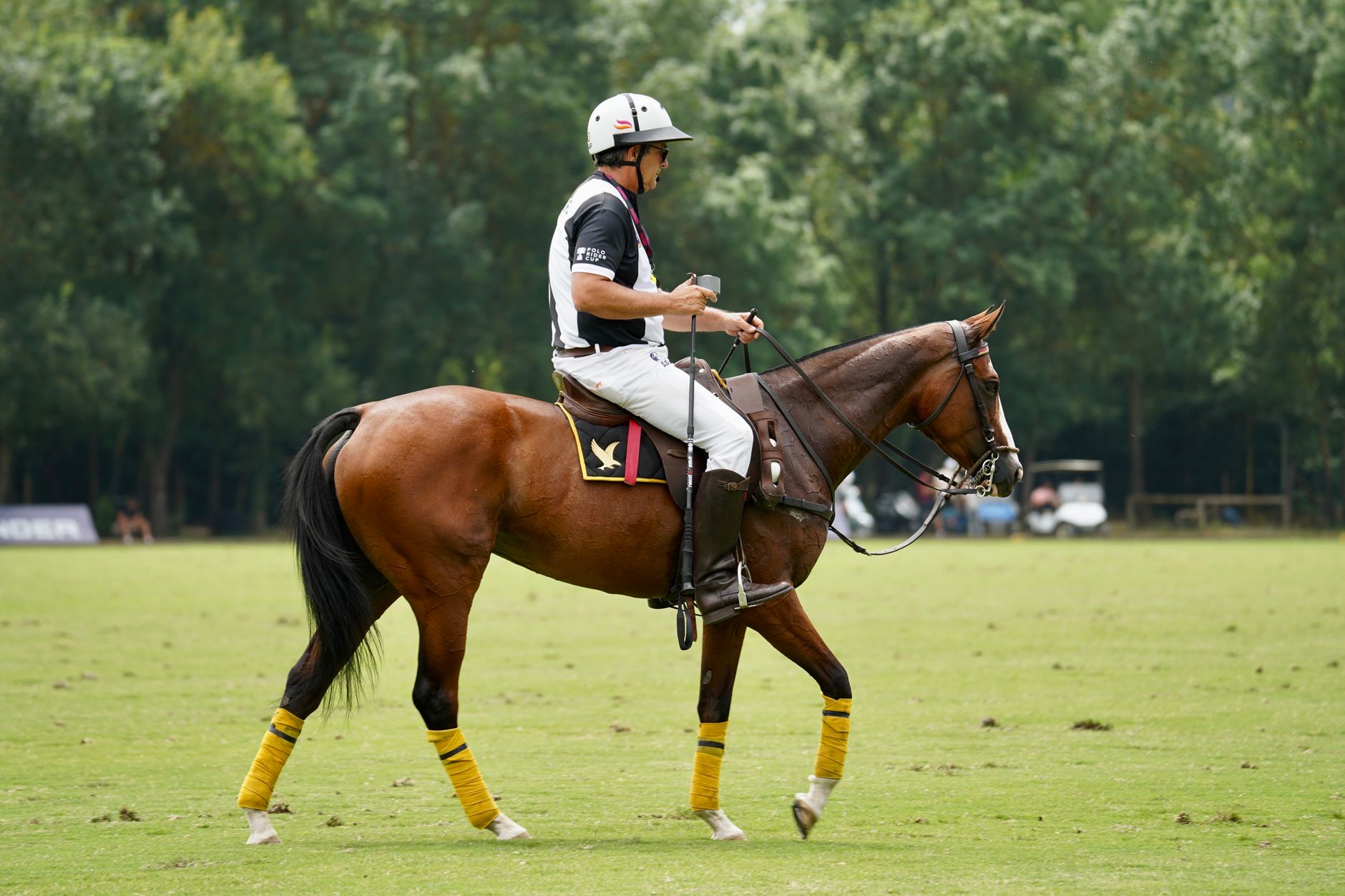
The peaked cap has long been a marker of equestrian culture – worn trackside at polo matches, shading the eyes of riders and spectators alike. Now that same silhouette is showing up somewhere far less rarefied: the school run, the weekend market, the coffee shop queue.

Where the Polo Cap Comes From – and Why It Traveled
Polo club caps carry a specific visual grammar. They tend to feature a structured, medium-height crown, a stiff flat brim, and detailing that signals heritage – think embroidered crests, club insignia, braided trim, or tonal piping along the panels. This is not the soft-brimmed baseball cap of stadium bleachers, nor the floppy canvas hat of a beach holiday. The polo peaked cap holds its shape, sits with authority, and reads as deliberate rather than casual.
That deliberateness is precisely what makes it useful to style-conscious dressers who want a finishing piece that does more than block the sun. The cap communicates a kind of studied nonchalance – a borrowed-from-somewhere-better quality that streetwear has always mined from traditional dress codes. Equestrian aesthetics have fed into mainstream fashion repeatedly over the decades, from riding boots becoming city staples to quilted gilets moving out of the countryside and into urban commutes. The peaked cap is simply the latest item making that crossing.
A growing number of smaller accessories labels and heritage sportswear houses have begun releasing caps that reference polo club styling without copying it wholesale. The results sit somewhere between archival reissue and contemporary accessory: structured enough to hold their shape through daily wear, but stripped of the stuffier elements that would read as costume rather than wardrobe. Some brands are experimenting with modern colorways – rust, slate, forest green – while keeping the construction details that give the style its character.
The movement is also partly driven by how people are dressing more broadly. Quiet luxury aesthetics, a renewed appetite for heritage fabrics, and the ongoing migration of country and club references into casual wardrobes have all created favorable conditions. A polo club cap fits naturally into the same outfit that might also include a crewneck knit, straight-leg chinos, and a pair of leather loafers – the kind of low-effort, high-consideration look that fills a certain corner of social media and increasingly influences what sits on shop floors.

How the Cap Is Actually Being Worn
The most convincing styling so far treats the polo cap as a counterpoint to casual basics rather than a match for formal pieces. Worn with an oversized linen shirt, relaxed trousers, and simple leather sandals, the cap provides enough structure to pull the look together without trying too hard. The stiffness of the brim and crown creates a contrast with softer, looser clothing that reads as intentional – the visual tension between relaxed and precise is doing real work.
Color matching is a reliable approach that early adopters have landed on quickly. Choosing a cap that echoes one other item in the outfit – the tone of a belt, a bag, a layer underneath – is enough to make the piece feel integrated rather than added-on. The cap becomes an extension of the palette rather than a standalone statement. Given that many polo club colorways run toward navy, cream, tan, and forest tones, the caps slot into warm, neutral wardrobes with minimal effort.
There is also something happening around gender here worth observing. The polo peaked cap reads as unisex in a way that many heritage-coded accessories do not. Its construction is not tailored to a feminine or masculine silhouette – it sits on the head, frames the face, and works. Women who have spent years borrowing men’s caps for the structure are finding that polo club styles offer that same quality without requiring a trip to the menswear section. That accessibility across dressing styles tends to accelerate how quickly an accessory moves from niche to normalized.
Fabric choice is playing a role in how versatile the cap can be across seasons. Wool-blend versions carry the cap comfortably into autumn and winter, particularly in darker colorways that hold up visually against heavier coats and knitwear. Canvas and cotton styles move into spring and summer wardrobes naturally. A well-chosen polo cap becomes a year-round accessory rather than a seasonal novelty, which is a meaningful distinction when consumers are increasingly wary of buying things they will only wear for three months.
The cap also works with the current appetite for polo club aesthetics moving across multiple categories simultaneously. When accessories from a similar visual world are entering wardrobes at once, individual pieces feel less like isolated novelties and more like part of a coherent dressing direction. That coherence makes each item easier to wear and easier to justify buying.
What Keeps This From Being a One-Season Curiosity
The polo peaked cap has structural advantages that many trend-driven accessories lack. It solves a practical problem – sun coverage, hair management, a finishing layer on days when the rest of the outfit needs anchoring – while doing so through a silhouette that carries genuine historical weight. Accessories that have real function and genuine heritage tend to outlast the season that spotlights them. The military trouser did. The field jacket did. There is no obvious reason the polo cap should behave differently.
The harder question is whether the cap retains any of its character once it becomes widely available. Part of what makes a heritage-coded accessory work is the sense that the wearer found it rather than was sold it. If every fast-fashion retailer ships a version by next summer, the cap risks becoming another item that reads as trend-chasing rather than considered dressing. At that point the appeal shifts from the cap itself to how specifically, how well, and how early someone chose to wear it.