

The Detail That Quietly Changes Everything
Piping – that thin strip of fabric or cord sewn into a seam to define an edge – has existed in tailoring for centuries. But the specific vocabulary of polo club saddle cloth piping, the contrast-trimmed borders that run along the edges of the numbered blankets worn by polo ponies during competition, is now migrating from the field into structured outerwear collections. It is a detail most people would struggle to name, yet once you see it on a double-breasted wool coat, you cannot unsee it.
The appeal is not nostalgia, exactly. It is more precise than that. Saddle cloth piping carries a very particular visual logic: high-contrast color blocking at the seam, a clean hard line that reads as both athletic and aristocratic. When that logic is applied to the collar edge of a camel overcoat or the front placket of a structured riding jacket, the result feels current without announcing itself as a trend.

What Saddle Cloth Piping Actually Is
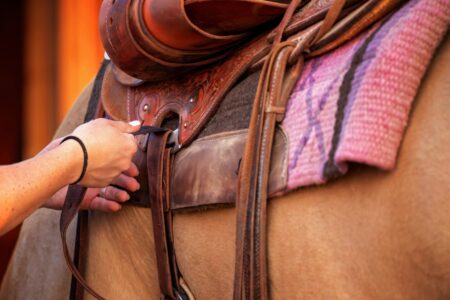
In the context of polo, the saddle cloth sits beneath the saddle and displays the player’s number. The piping around its edges is traditionally done in the team’s secondary color – often a sharp contrast to the field, like navy on cream, or red on white. It serves a functional purpose on the field, making numbers legible at speed and distance. That utility is part of what makes the aesthetic so clean: nothing decorative that does not also do a job.
The construction itself is simple. A narrow tube of fabric, sometimes cord-filled for a raised effect, is sandwiched into the seam allowance before the layers are joined. It takes a skilled hand to execute without puckering, and that difficulty is part of why piping signals quality in tailored garments. A coat with clean piping is a coat made by someone who knows what they are doing.
The color contrast is where the polo reference becomes legible. Most tailored outerwear piping historically matched the garment – think of the subtle self-piping on traditional blazers. Saddle cloth piping breaks that convention with intention, running a distinctly different color around the seam. The reference to equestrian sport is there for those who know it, invisible to those who do not. That dual readability is exactly the kind of design decision that makes a detail feel sophisticated rather than costumed.

A Quiet Shift in the Equestrian Reference
Equestrian dressing has cycled through fashion so many times that the obvious signals – the riding boot, the quilted vest, the hacking jacket – have become almost too familiar. What is different now is the move toward extracting single construction details from the equestrian world rather than transplanting entire silhouettes. Saddle cloth piping fits that approach precisely because it is a technique, not a garment.
This sits alongside other small borrowings from the polo aesthetic that have been appearing in accessories and ready-to-wear. The saddle flap structure has been seaming its way into midi silhouettes with similar restraint, using construction vocabulary rather than costume imagery to connect fashion to the polo field. Both approaches share the same underlying logic: reference through craft, not through literal translation.
Why Outerwear Is the Right Canvas
Outerwear is where this detail lands with the most authority, and the reason is structural. Coats and jackets have long seam runs – at the collar, the front facing, the hem, the sleeve cuff – that give piping real estate to establish a visual line across the entire garment. A single narrow strip of contrast piping running from the collar notch down the front facing to the hem hem creates a kind of graphic architecture that nothing else achieves with the same economy of means.
The weight of outerwear fabric also matters here. Saddle cloth piping on a jersey or a lightweight blouse would feel fussy. On a structured wool melton, a double-face cashmere, or a dense cavalry twill, the piping reads as a genuine structural element because the fabric around it has the body to hold the line. The stiffness of the base material is what lets the contrast trim do its work without the whole thing collapsing into decoration.
Color selection is the variable that determines whether this reads as equestrian or simply as elevated tailoring. The polo world tends toward primary contrasts – red on navy, white on green – and those combinations bring the sport reference close to the surface. Designers working with more tonal contrasts, say, tobacco piping on a deep brown coat or ivory on oatmeal, use the same construction while pulling the reference back toward something that feels more like bespoke heritage tailoring than club kit. Both are valid choices, and the distance between them is simply a matter of how visible you want the source material to be.
What neither approach can fake is the quality of the execution. Piping reveals the maker. Run your eye along any piped seam and you will see immediately whether the tension is consistent, whether the corners are crisp, whether the cord inside is filling the tube evenly. On a garment retailing at a serious price point, this is exactly the kind of detail that justifies the cost – not because customers can name what they are looking at, but because they can feel the difference between a seam that holds its line and one that does not.

The question hanging over any equestrian-derived detail is longevity. Riding aesthetics have a habit of saturating a season and then retreating entirely, leaving wardrobes full of very specific signifiers with a short window of relevance. Saddle cloth piping may avoid that trap precisely because it does not look like a trend to most people who encounter it. It looks like craft.