

A single row of saddle-stitch thread along the back vent of a midi skirt does not sound like a fashion statement. Yet that precise detail – borrowed directly from polo club saddle flap construction – is showing up with increasing frequency on structured midi silhouettes from emerging ateliers and heritage sportswear labels alike. The technique is small, deliberate, and already changing how the back of a skirt moves and holds its shape.
Where the Stitch Comes From
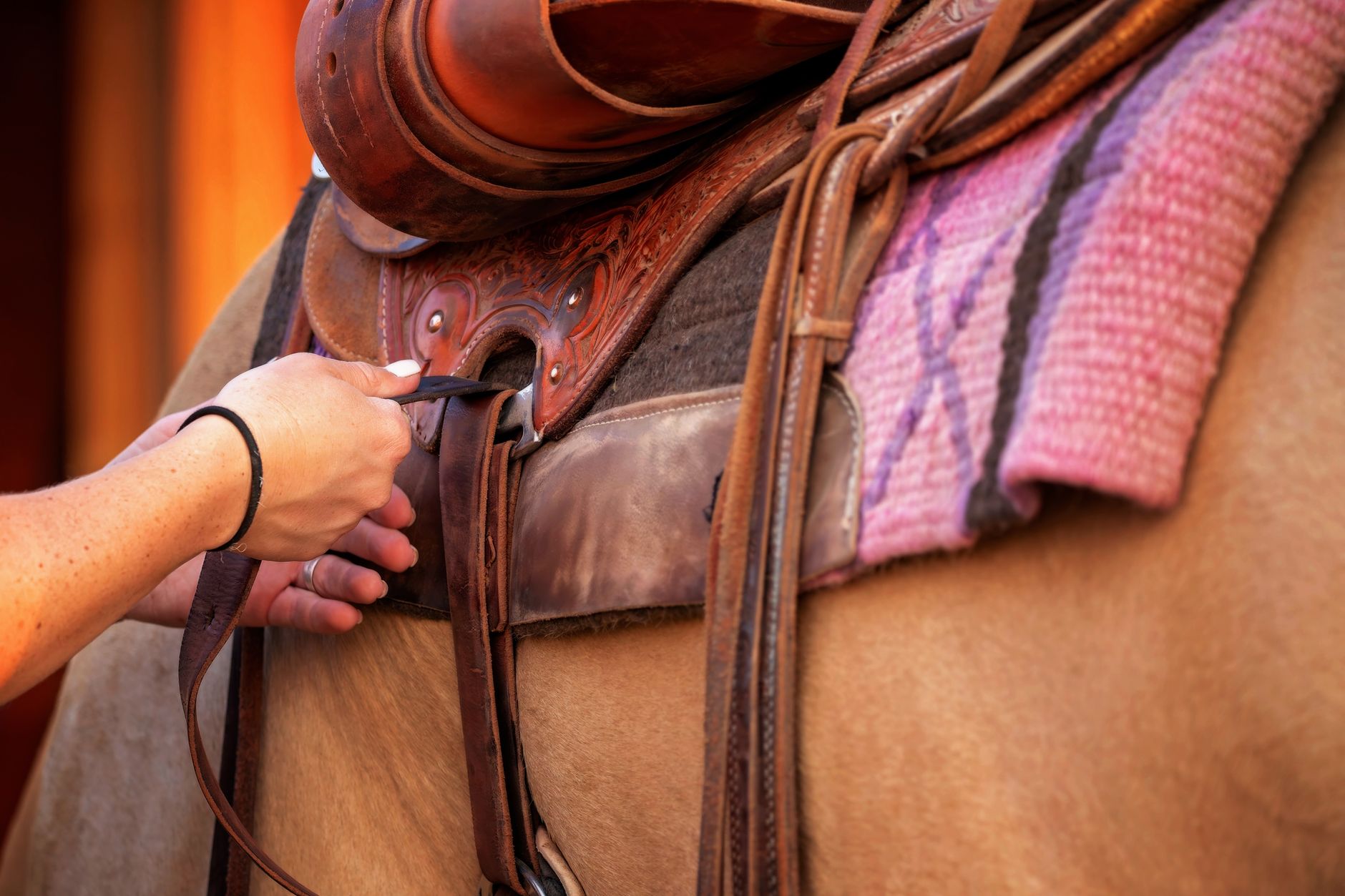
Saddle flap vent stitching originates in equestrian tack, specifically the reinforced seaming along the cut edges of a saddle flap where leather panels meet and flex under riding pressure. The stitching is not decorative at its source – it exists to prevent fraying, distribute tension, and maintain the flat, controlled drape of the leather across the rider’s leg. Every stitch is load-bearing. Every interval is calculated. That utilitarian precision is exactly what makes it so interesting when lifted into womenswear tailoring.
The polo aesthetic has been feeding into fashion collections for years, but most of that influence has stayed above the waist – the collar, the button placket, the contrast piping. The saddle flap detail is different because it addresses structure from the back, a zone that tailors have historically treated as secondary to the front silhouette. Borrowing the vent stitching from equestrian leather goods and applying it to woven fabrics creates a visible seam language that reads as both athletic and rigorous.
Technically, the stitch itself is a hand-pulled or machine-replicated saddle stitch, a two-needle technique that produces a tighter, more durable seam than a standard lockstitch. When applied to the back vent of a midi skirt – typically the 8 to 12 inch slit that allows walking movement – it secures the overlapping panels with enough tension to prevent the vent from splaying open while still allowing controlled flex with each stride. The result is a back that stays intentional rather than accidental.
This is distinct from simple topstitching, which sits on the surface for visual effect. Saddle flap stitching penetrates through multiple layers and is spaced at wider, more deliberate intervals – usually 4 to 6 millimeters between each stitch rather than the tighter 2 to 3 millimeter spacing of conventional topstitching. That wider interval creates a rhythm that is visible from a distance, giving the back vent an almost architectural quality.
How It Reshapes the Midi Back
The midi length – typically falling between the knee and mid-calf – creates a specific structural challenge that shorter hemlines do not face. A knee-length vent only needs to accommodate a small range of motion. A midi vent, by contrast, must work across a longer panel of fabric where even slight distortion becomes visible, especially in heavier materials like wool crepe, ponte, or structured cotton twill. Without controlled stitching, a midi back vent tends to bow outward at the top of the slit or twist slightly off-grain over the course of a day’s wear. The saddle flap stitching fixes the panel relationship at consistent intervals, keeping the overlap flat and the vent line clean.
The visual effect is more pronounced in solid-color fabrics, where the stitch line becomes a graphic element rather than a hidden construction note. In camel wool or ivory twill, a row of contrast stitching in dark thread along the vent creates a vertical line that extends the length of the back, visually elongating the leg even when the hem hits mid-calf. Some current interpretations are using matching thread for a more subtle tone-on-tone result, where the structure reads as texture rather than color contrast. Both approaches are valid and serve different silhouettes.
Beyond the visual, the stitch changes how the skirt sits when the wearer is stationary. A conventional midi vent hangs with a slight natural opening at the bottom – fabric weight and gravity pull the overlapping panels apart. The saddle flap stitching holds them in a closer, more controlled relationship, so the back reads as a unified panel rather than two separate pieces that happen to overlap. The overall effect is closer to trouser tailoring than to traditional skirt construction, which is likely why it is landing so strongly in collections that position themselves between sportswear and suiting. For a closer look at how polo club saddle flap billet straps are influencing structured trouser tabs, the same cross-category tailoring logic applies.
Fabric weight is a significant variable in how well the technique translates. In lighter materials – silk charmeuse, viscose crepe, or fluid jersey – the stitching creates too much tension and can cause the fabric to pucker along the seam line. The technique performs best in fabrics with enough body to absorb the stitch tension without distorting: medium-weight wool blends, structured cotton, and technical canvas-weave fabrics used in contemporary sportswear tailoring. This is not a detail that works universally, which is part of why it remains a specialist choice rather than a mass-market staple.
Some designers are extending the stitching beyond the vent itself, running the saddle stitch up the center back seam of the skirt as a continuous line from waist to hem. This creates a strong vertical axis that holds the back panel in almost rigid alignment – effective in structured suiting fabrics, but demanding in terms of fit precision. If the center back seam is even slightly off-plumb, the continuous stitch line will make that deviation visible in a way that conventional construction would not. It is a technique that rewards meticulous pattern-cutting and punishes shortcuts.
The Styling Logic
Because the detail lives on the back of the garment, it functions as a private statement – something seen when you leave a room rather than when you enter one. That restraint suits the current mood in structured dressing, where construction details are doing the work that surface embellishment used to do. A saddle-stitched vent communicates craft and intention without requiring the wearer to announce it. It rewards proximity and attention, the fashion equivalent of a well-made shoe sole.

Pairing logic follows naturally from the equestrian source. The stitched midi back reads cleanest against simple upper halves – a tucked poplin shirt, a fitted ribbed knit, a tailored jacket with minimal ornamentation. Anything that draws the eye upward lets the back vent do its work without competition. The real question for the coming season is whether the technique stays confined to the vent or migrates to other structural seams – the princess line, the side panel, the hip yoke – where the same load-bearing logic could reshape the front of a skirt just as quietly as it has already reshaped the back.
Frequently Asked Questions
What is saddle flap vent stitching on a midi skirt?
It is a two-needle saddle stitch technique borrowed from equestrian tack, applied along the back vent of a midi skirt to control panel overlap, prevent splaying, and maintain a clean structured silhouette.
What fabrics work best with saddle flap vent stitching?
Medium-weight fabrics with inherent body – wool blends, structured cotton, and technical canvas-weave materials – absorb stitch tension best. Lightweight silks or jersey can pucker under the same technique.