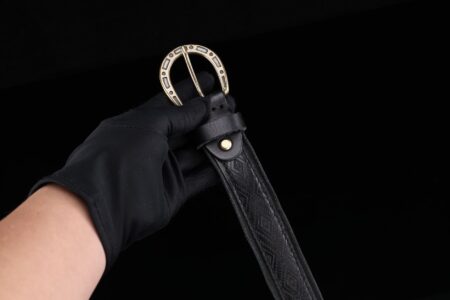


Equestrian hardware has a long history of migrating from the stable to the street, but the snaffle bit cheekpiece – the lateral bar that frames a horse’s bit on either side – is doing something more specific right now. It is showing up in the geometry of high-end earring design, lending its elongated, articulated silhouette to a jewellery moment that is more about structure than sparkle.

The Architecture of the Cheekpiece
The snaffle bit cheekpiece is not the bit itself – that is the distinction most people miss. While the bit sits in the horse’s mouth and commands attention as the central hardware, the cheekpiece is the vertical connector: a flat or slightly curved bar that runs along the face, linking the bit to the bridle’s headstall. In polo specifically, where bridles are adjusted quickly and precision matters, these pieces tend to be cleanly machined, with minimal ornamentation and a strong linear profile. That restraint is exactly what makes the form so adaptable.
Jewellery designers working in sculptural modes – those prioritising form over stones or precious metals – have been gravitating toward elongated, bilateral shapes for several seasons. The ear as a canvas has expanded well beyond the lobe: climbers, cuffs, and architectural drops now treat the entire outer ear as a vertical surface. The cheekpiece mirrors this logic almost exactly. It frames rather than fills. It draws the eye along a vertical axis. And when rendered in sterling, oxidised brass, or matte gold, it reads as considered rather than decorative.
What polo club aesthetics bring to this conversation is a specific register of formality – not the red-carpet kind, but the outdoors-meets-privilege kind that has been circulating through ready-to-wear for several years. Think stiff collar shirts worn loose, grosgrain ribbon detailing, and a colour palette anchored in navy, white, and cognac. Within that context, earrings that reference equestrian hardware carry a coded message about belonging to a certain tradition, even when the wearer has never set foot near a polo field.
The silhouette itself is relatively simple to produce at various price points, which is part of why it is spreading beyond fine jewellery into contemporary and even mass-market categories. A flat bar with a slight curve, finished cleanly at the terminals and hung from a small post or hoop attachment, can be manufactured affordably without losing the essential form. That accessibility is accelerating the trend considerably.
How the Form Is Being Interpreted Across the Market
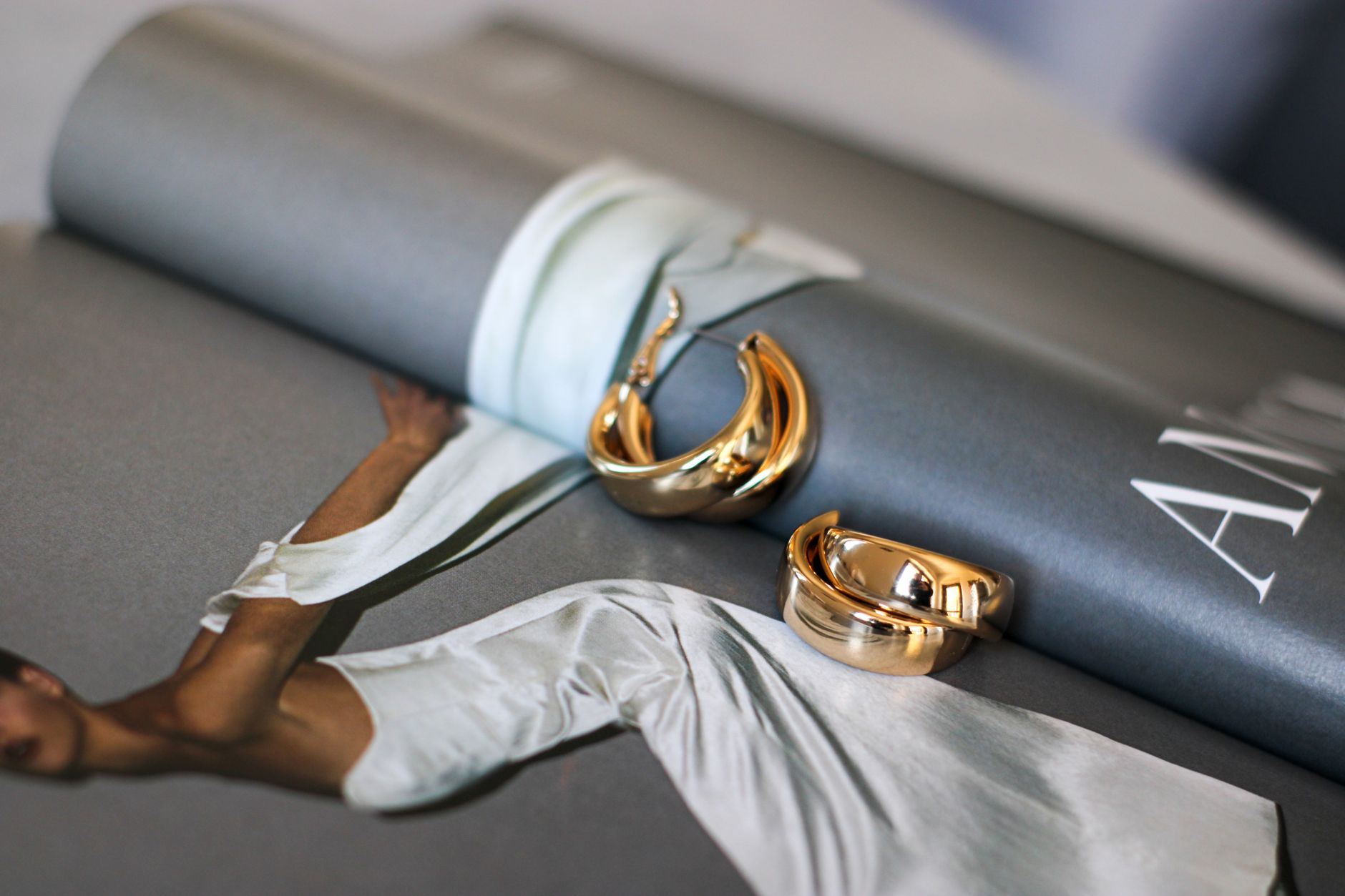
Fine jewellery studios working in the sculptural space are treating the cheekpiece form as a starting point for more complex constructions. The base shape – that lateral bar – becomes a spine from which additional elements extend: small rings, textured sections, or subtle curves that reference the articulation points where real cheekpieces connect to rings and shanks. The result is an earring that appears almost technical in its logic, as if it were engineered for a function it no longer performs.
At the contemporary price point, brands are keeping the interpretation flatter and more graphic. A single bar, perhaps 4 to 6 centimetres in length, sits flush against the jaw or hangs just below the earlobe with enough weight to drop cleanly. Some versions incorporate the D-ring or O-ring detail that appears where a real cheekpiece meets the bit – a small circular element near the bottom terminal that adds visual punctuation without disrupting the overall linearity. This particular detail is borrowed directly from working bridle hardware, and its presence signals that the designer understood the source material rather than simply gesturing at it.
The material choices being made around this form are telling. Oxidised silver and blackened brass are appearing far more often than high-polish gold, which would soften the industrial intent of the shape. Matte finishes preserve the sense that this is a piece of hardware that happens to be worn rather than a jewel that happens to reference hardware. That distinction matters to the consumer who gravitates toward this aesthetic – someone who is drawn to workwear-inflected dressing, to objects that carry the logic of their construction on their surface.
Styling is following suit. These earrings are not appearing alongside delicate necklaces and tennis bracelets. They are being worn with open-collar shirts, chunky knitwear, and tailored outerwear – contexts where the ear is often the only visible jewellery point. That isolation gives the cheekpiece earring room to read as a statement without competing with other pieces. It is a jewellery choice that understands negative space.
There is also a gender-fluid dimension to how this form is being received. The equestrian hardware reference carries neither a strongly feminine nor strongly masculine association in contemporary styling – it reads as functional, which places it in a category that a broad range of wearers find approachable. Longer bar earrings worn by men in editorial contexts have normalised the format enough that the cheekpiece shape enters that space without friction. Some designers are sizing up specifically for this, offering the same form in a longer proportion that sits differently on a fuller earlobe or a cartilage piercing placed higher on the ear.
The Bridle Aesthetic in a Broader Moment
Equestrian detail in jewellery is not new, but previous iterations leaned heavily on the central bit form – the snaffle or Pelham rendered as a pendant or cuff hardware, heavily associated with certain luxury houses that built entire accessory categories around it. The cheekpiece represents a move toward a more peripheral, less branded reference point. It takes the part of the bridle that most people would not immediately identify and makes it the subject, which requires a level of specificity that feels genuinely current.

The trend connects naturally to a wider appetite for jewellery that rewards close looking – pieces where the interest is in the construction logic rather than the material value. Equestrian hardware has that quality because it is designed to work, and working objects carry an inherent visual honesty that purely decorative objects often cannot replicate. Whether the cheekpiece form can sustain that honesty as it scales through the market, or whether broader adoption will strip away the specificity that makes it interesting in the first place, is the real question following this trend forward.