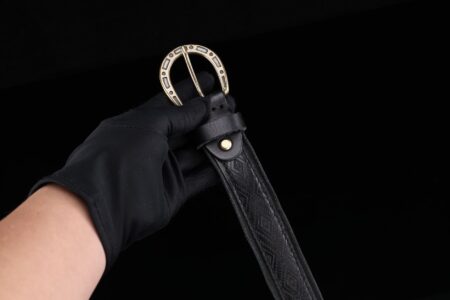
The Equestrian Hardware Making Its Way Onto Your Wrist
Polo club gear has never been subtle. The sport’s equipment carries a visual language built around function – tight stitching, reinforced buckles, layered leather straps designed to hold fast under pressure. The throat lash billet, a narrow tongue of leather that secures the bridle beneath a horse’s jaw, looks almost architectural in its simplicity. It is precisely that quality – restrained, purposeful, slightly severe – that has caught the attention of accessory designers working in the layered cuff space.
The translation is not literal. No one is ripping hardware directly off a bridle and stitching it to a wristband. What is happening instead is a structural borrowing – the way a throat lash billet sits flat against a wider strap, threading through a small keeper loop and anchoring at a single point – that logic is now showing up in how cuff tabs are being constructed and stacked.
This is equestrian influence operating at its most precise.

What Makes the Billet a Natural Reference Point
The throat lash billet is a study in proportion. It runs narrower than the main cheekpiece of a bridle, and its job is to lie clean and flat while still bearing tension. Designers working on layered cuffs have been drawn to exactly that combination – a secondary strap element that adds visual complexity without bulk. When a cuff tab is built on this principle, it sits against the primary band like a shadow layer, visible and intentional but never competing for dominance.
What makes this work in wearable form is the keeper. In bridle construction, the keeper loop holds the billet tongue in place once it has passed through the buckle, preventing any flap or shift during movement. Cuff makers are applying that same logic by building small leather or metal loops directly into the tab structure, so the layering stays locked rather than sliding around the wrist. The result is a cuff that looks deliberately assembled rather than casually stacked – closer to tack room craftsmanship than to the pile-on aesthetic that dominated arm candy a few seasons ago.
The material choices reinforce the connection. Vegetable-tanned leather in cognac, havana, and dark chocolate browns is appearing alongside bridle-weight straps that have a slight waxy finish – the kind of surface that comes from oils pressed deep into the hide, not from a surface coating. That finish behaves like polo leather behaves: it marks with use, it develops a patina, and it signals that the object was made to be worn repeatedly rather than rotated through a trend cycle.
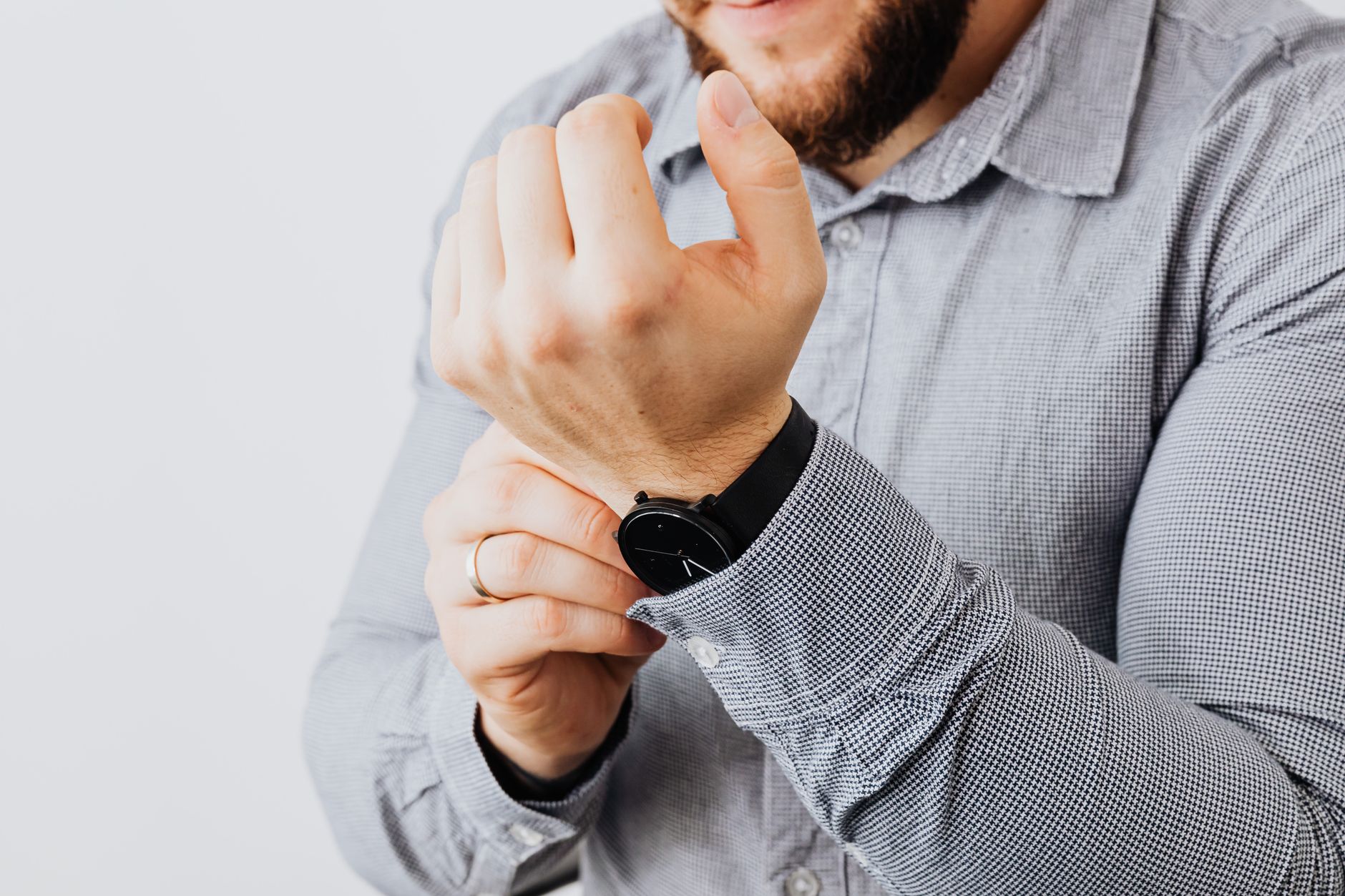
How the Layered Cuff Tab Is Actually Being Built
The construction process separates the throat lash-influenced cuff from standard stacked leather bracelets. A standard stack relies on independent pieces worn together. The throat lash billet approach builds the secondary tab directly into the base cuff – skived thin at the edges, attached at one end, and left free at the other to run through a keeper and lie flat. The tab does not move independently. It is part of the object.
Some versions use a secondary closure on the tab itself – a small Chicago screw or a riveted snap that anchors the free end after threading. Others let the keeper do all the work, relying on tension from the wrist’s natural circumference to hold everything in place. Both approaches produce a profile that reads as layered from a distance but resolves into a single structured piece up close, which is a considerable design achievement in a category where most layering involves simply wearing more things at once.
Hardware is being kept deliberately minimal in the most refined versions – a single solid brass roller buckle on the main strap, and nothing more than a flat keeper on the tab. The restraint tracks with how polo tack is fitted at competition level, where any excess hardware represents a failure of function rather than an abundance of style. Accessory designers pulling from this tradition are making the same calculation: every element on the cuff has to justify its presence.
Where This Lands in the Broader Cuff Conversation
Layered cuffs have been building momentum in the accessory market for several seasons, with wrapped ankle boot construction influencing how strapping elements translate from equestrian gear into wearable form. The throat lash billet approach represents a more specific and technically demanding step in that direction – one that requires understanding how tack actually functions, not just what it looks like on a mood board.
The market positioning is interesting. These are not entry-level pieces. The construction labor involved in skiving the tab, setting the keeper loop correctly, and finishing the edges to polo-standard smoothness is significant. That pushes retail prices into a range that puts them alongside serious leather goods rather than fashion accessories, which changes who is buying them and how they are being worn. The buyers drawn to this construction are generally the same buyers who already own bridle leather belts and saddle-stitched card cases – people who read the details and know what they are looking at.

The throat lash billet cuff tab is not a trend that announces itself. It rewards closeness – the kind of inspection you do when someone extends their wrist and you actually look. That quality of quiet technical authority is exactly what makes it hold: in a market flooded with surface-level equestrian references, a piece built on real tack logic reads differently the moment you pick it up and feel the weight of the keeper holding everything exactly where it belongs.