


Rowing club hardware – the nuts, bolts, and brackets that hold a rigger arm to the shell of a racing boat – has spent over a century in near-total obscurity. Now a small but growing number of jacket designers are pulling that aesthetic directly off the boathouse wall and onto finished outerwear.

The Rigger Bracket as Design Object
To understand why rigger bracket hardware is landing on jackets, it helps to look at what the hardware actually does. A rowing rigger – the metal arm extending outward from the boat’s gunwale to hold the oarlock – is attached to the shell through a series of precision bolts, often in stainless steel or marine-grade aluminum. These bolts are countersunk, flanged, or fitted with wide hex heads to distribute force evenly across a carbon fiber or wooden hull under serious mechanical load. The result is hardware that looks intentional and structural at the same time, because it is.
That combination of visual weight and functional precision is exactly what jacket designers have been chasing in hardware for years. The problem with conventional jacket buttons, snaps, and zippers is that they tend to read as either purely utilitarian or purely decorative. Rigger-style hardware sidesteps that divide entirely. A wide-flange stainless bolt centered on a minimalist bomber jacket chest panel communicates engineering without shouting it. There is no ornamentation on the surface, only the geometry of a fastener doing structural work.
The jackets showing this influence are not workwear pieces dressed up with technical details. They are intentionally spare outerwear – often in matte black, raw white, or undyed cotton canvas – where the hardware is carrying the full visual load of the garment. A single row of four countersunk bolts down a jacket’s front placket replaces a zip entirely in some samples circulating in early collection previews. Others use a rigger-style hex bracket at the shoulder seam as a visible anchor point for detachable sleeves, making the mechanical logic of attachment literally legible on the garment’s surface.
This is a different proposition than industrial or military hardware, which has cycled through fashion repeatedly and tends to bring associations with cargo pockets and surplus stores. Rowing hardware carries a different cultural weight – one tied to elite amateur sport, British club traditions, and Henley Regatta aesthetics. The bolts are not rough. They are machined, torqued to specification, and designed to hold under conditions where failure is not an option. That precision is part of what translates.
Why Minimalism Needs This Kind of Hardware
Minimalist outerwear has been in a quiet design crisis for several seasons. When a jacket removes all surface decoration – no visible topstitching, no patch pockets, no logo hardware – it becomes extraordinarily dependent on the quality and character of its closures. A plain zipper reads as generic. A standard snap reads as casual. What minimalist construction actually needs is a fastener that holds its own visual ground without becoming a statement piece.
Rigger bracket bolts solve this problem structurally. The wide hex head or flanged countersunk profile gives a jacket front enough visual interruption to feel finished, while the stainless or anodized aluminum surface stays neutral against almost any fabric color. The hardware does not compete with the garment. It completes it, in the same way that a well-chosen button on a tailored coat resolves the eye without drawing attention to itself.
There is also a proportionality argument. Most jacket hardware – snaps, rivets, standard bolts – is scaled for finger operation. Rigger bracket hardware is scaled for tools. That larger scale reads dramatically better on outerwear, where the eye is processing a garment from across a room rather than up close in hand. A 14mm hex-head bolt on a jacket front is visible at a distance. A standard snap is not. For designers working in minimalist vocabularies where every element has to carry weight, that scale advantage is not a small thing.
Some designers are sourcing actual marine hardware rather than fashion reproductions of it, and the difference shows on the finished garment. Marine-grade stainless has a particular finish quality – neither as shiny as polished fashion hardware nor as matte as industrial hardware – that sits comfortably in the middle register that minimalist jackets occupy. A growing number of outerwear samples are using genuine rigger hardware from marine supply sources, modified slightly for textile attachment but otherwise unchanged from what you would find in a boathouse or on a racing shell.
The structural vocabulary here connects to a broader movement in jacket hardware that has been building for a few seasons. Throat lash billets from equestrian tack made a similar crossing into layered cuff tabs – where the logic of equestrian hardware translating to fashion closures followed nearly the same arc. Niche sport hardware, designed under conditions of mechanical stress and repetitive use, simply performs better as fashion hardware than hardware designed from the beginning to be decorative. It holds its finish longer, operates more cleanly, and reads as more considered because the design decisions behind it were not aesthetic to begin with.
The silhouettes that suit this hardware best tend to be boxy or straight-cut – the architectural jacket shapes where a fastener on the front panel is essentially a focal element in a composition, not a detail buried in a complex garment. An oversized matte canvas blouson with four rigger bolts down its front placket functions almost like a piece of wearable industrial design. The spareness of the jacket makes the hardware legible, and the hardware makes the spareness feel resolved.
What This Means for Outerwear Going Forward
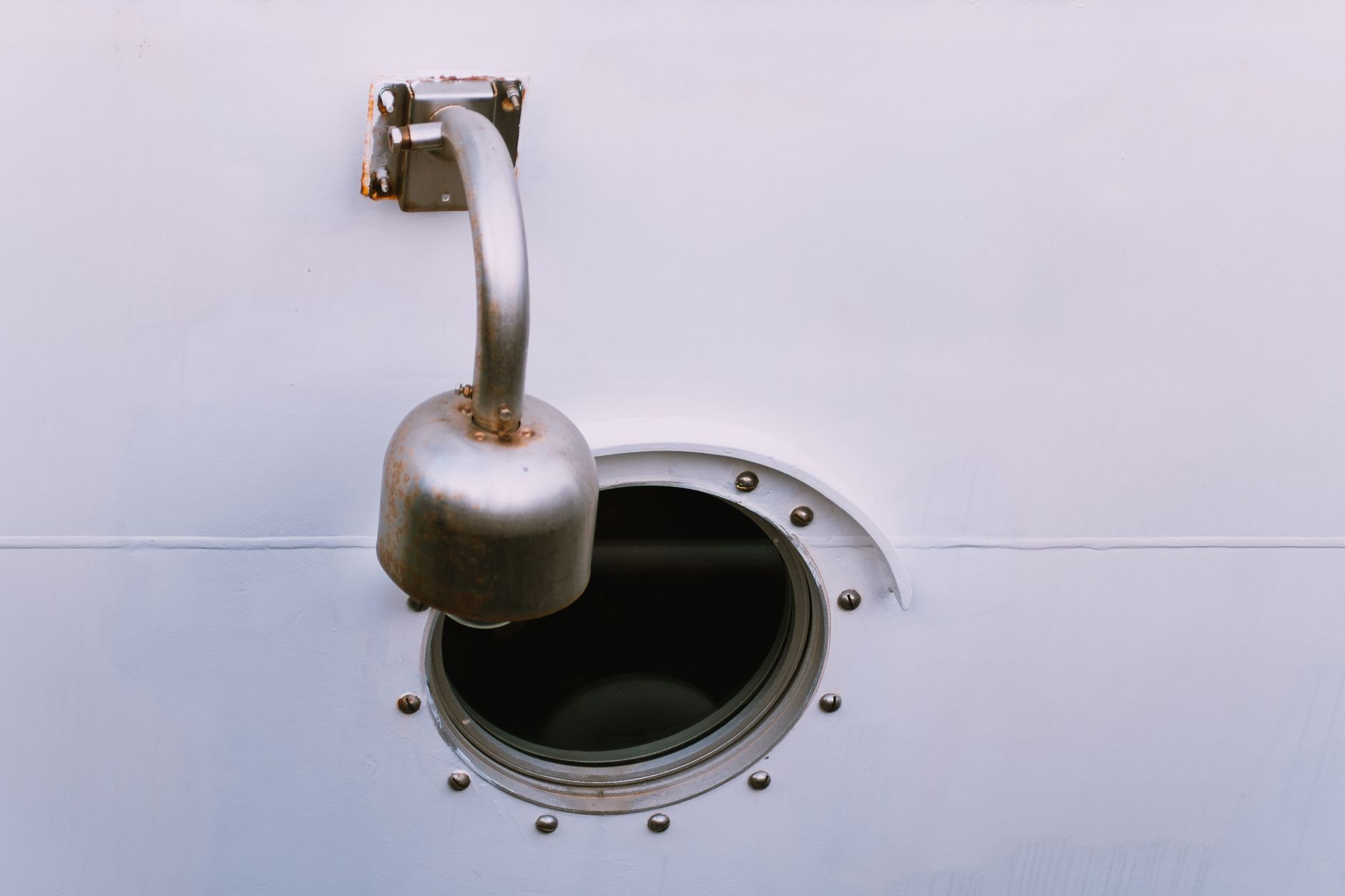
The practical barrier to wider adoption is sourcing. Marine hardware is not typically stocked through fashion supply chains, and the bolt heads and bracket plates used in rigger assemblies require modification before they can attach cleanly to woven fabric without damaging it. Some smaller outerwear labels are working directly with marine hardware suppliers to develop textile-adapted versions of standard rigger bolts, keeping the visual profile and material finish while adding a backing plate system suited to jacket construction. That development work takes time and minimum order commitments that favor established labels over emerging ones.
There is also a question of how far this aesthetic can travel without losing what makes it interesting. Rigger hardware reads the way it reads precisely because it is not fashion hardware – its geometry came from engineering requirements, not trend boards. Once reproductions of it flood the market, the specificity that makes an actual stainless rigger bolt compelling on a jacket front will be harder to read. That tension between discovery and dilution is where this trend is sitting right now, and the window for using genuine marine hardware before the reproductions catch up may be shorter than designers working in this space would prefer.
Frequently Asked Questions
What is rigger bracket hardware in the context of fashion?
Rigger bracket hardware refers to the stainless steel or marine aluminum bolts and flanged fasteners used to attach rowing rigger arms to boat shells, now being adapted for use as closures and details on minimalist jackets.
Why is marine hardware appealing for minimalist jacket design?
Marine hardware is larger in scale, more precisely finished, and visually neutral enough to anchor a spare jacket design without becoming decorative, solving a longstanding problem in minimalist outerwear construction.