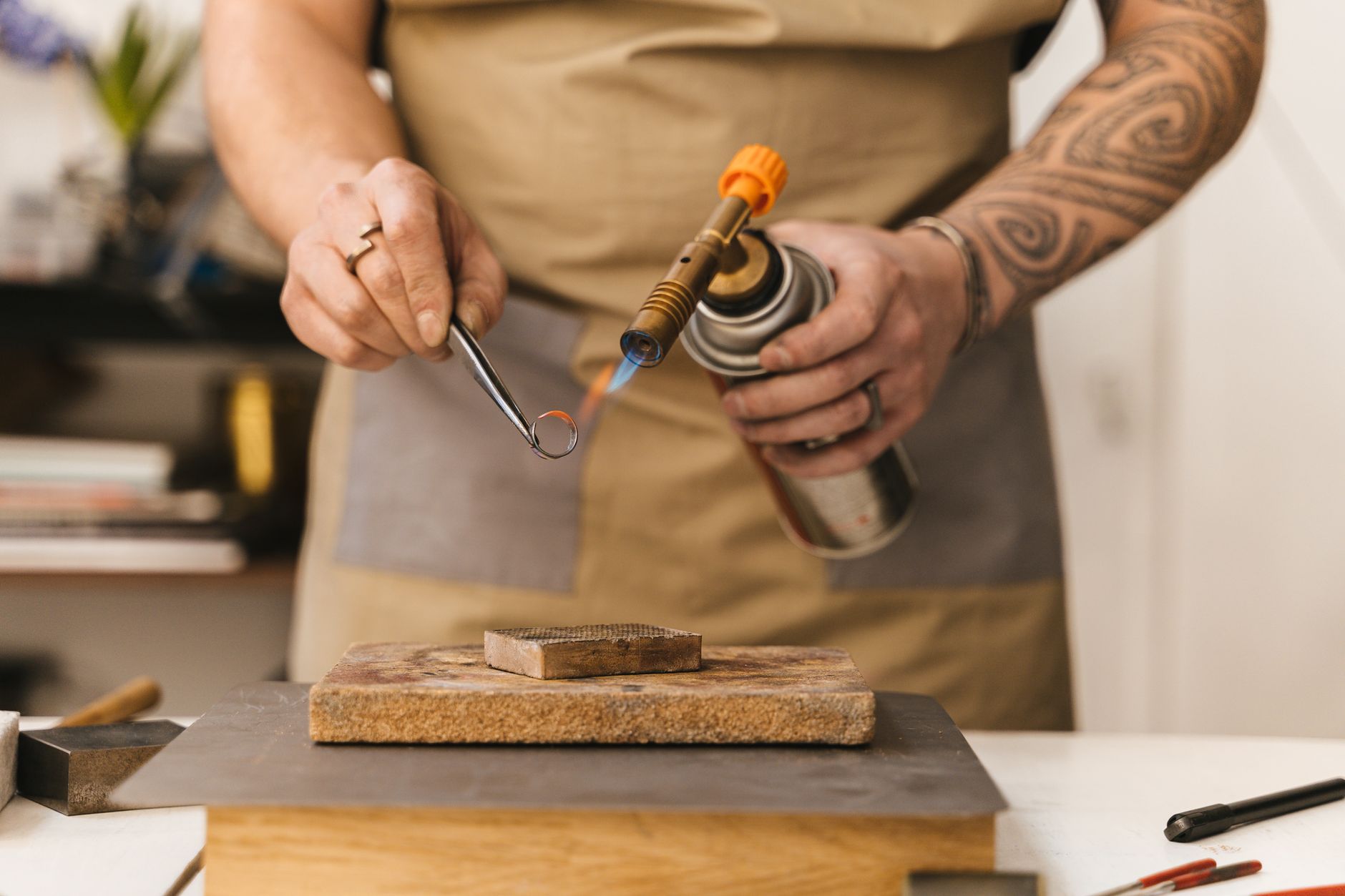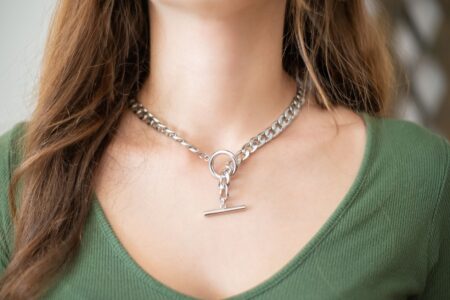


Thole pin sockets – the small, cylindrical hardware pieces that lock oars into rowing shells – were never meant to leave the boathouse. Now they are showing up on fingers, cast in oxidized silver and brushed brass, sold alongside stacking rings and signet bands in jewelry cases that once held nothing more nautical than a compass rose charm.

From Oarlock to Ornament: How Rowing Hardware Found Its Moment
The thole pin socket is a deceptively simple object. It is a short tube, often with a flanged rim and a small locking collar, designed to hold a wooden or metal pin in place under serious physical stress. On a racing shell or a traditional wooden rowing skiff, it absorbs lateral force every time a blade catches water. That functional geometry – the clean cylinder, the precise lip, the deliberate proportions – turns out to translate remarkably well into ring form.
Jewelry designers working in industrial-adjacent aesthetics have been mining maritime hardware catalogs for a few seasons now. Cleats became clasps. Shackles became pendants. Rivet heads showed up on cuff bracelets. The thole pin socket is a later arrival to this conversation, partly because it is a more obscure piece of equipment than a cleat or a pulley block, and partly because its tubular geometry requires a more confident design hand to render as wearable hardware without simply looking like a plumbing fitting on a chain.
What separates the better executions is proportion. Rings that directly replicate the socket’s industrial dimensions – wide, deep, with a visible interior collar – read as intentional rather than accidental. The flanged rim becomes a design feature rather than a remnant. A few independent jewelers working in sterling and oxidized bronze have leaned into that collar detail specifically, letting it serve the same visual function as a bezel setting on a stone ring: framing, weight, definition.
The rowing club connection matters to this trend beyond pure aesthetics. Rowing as a sport carries a specific cultural code in fashion – preppy but not aggressively so, athletic but associated with discipline and early mornings rather than stadium spectacle. The hardware of the sport inherits some of that code. A thole pin socket ring does not read like a nautical souvenir. It reads like something a person who actually rows might wear, which gives it a credibility that a generic anchor motif does not have.
The Design Logic Behind Hardware-Derived Minimalism
Minimalist ring design has been living in a particular tension for the past few seasons. The clean-band aesthetic that dominated early in the decade has started to feel finished – not wrong, but complete. Designers and their customers are looking for the next degree of restraint, something that adds visual information without adding ornament in the traditional sense. Hardware-derived forms answer that precisely because they carry meaning through function rather than decoration.
A thole pin socket rendered as a ring says something without requiring a gemstone or an engraving to say it. The cylinder has a reason for being cylindrical. The collar has a reason for existing at the rim. That functional legibility is what makes hardware jewelry feel different from abstract sculptural rings, even when the two might occupy a similar visual register from a distance. Up close, the thole pin socket has a grammar that a purely sculptural form does not.
Finish choices are doing significant work in this category. Oxidized silver versions read darkly industrial, closer to the blackened metal of actual rowing hardware. Brushed brass versions warm the form considerably, moving it toward something that might sit beside vintage equestrian pieces – a direction that connects to a broader pattern of sport-specific hardware crossing into fashion accessories, the way equestrian D-ring details have worked their way into bag hardware over recent seasons. High-polish sterling versions are the most conventional, but they also lose some of what makes the form interesting – the rawness that justifies borrowing from a boathouse in the first place.
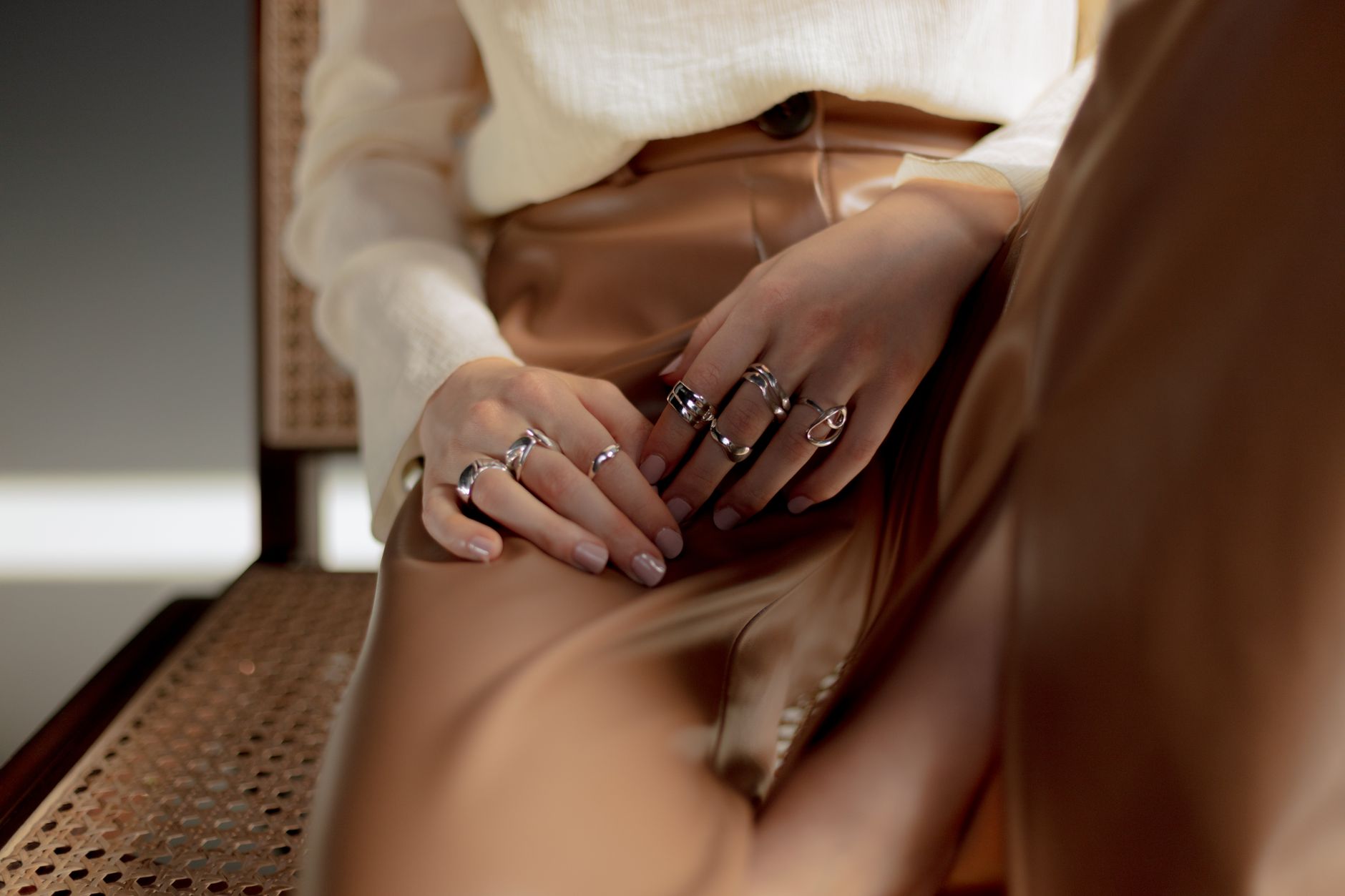
Stacking is where the thole pin socket ring earns its keep in an actual wardrobe. A single socket-profile ring reads as a considered choice. Three stacked together, particularly in mixed finishes or slightly varied widths, start to look like a collection of genuine hardware components – which is exactly the effect a growing number of minimalist ring wearers are after. The modularity is not accidental. Jewelry designers working in this register are thinking explicitly about how each piece functions within a set.
There is also the question of weight. Functional hardware is built to resist force, and rings derived from that hardware tend to carry that sense of substance even when they are not structurally overbuilt. A thole pin socket ring in sterling silver has a satisfying physical presence that a stamped thin-band ring does not. That heft is increasingly a selling point rather than a drawback – particularly for customers who have grown tired of rings that feel disposable at the price point they are paying.
Where the Trend Is Landing
The strongest market for thole pin socket rings right now appears to be independent jewelry makers selling through studio websites and craft-focused marketplaces, where the design backstory can be told in full and where customers tend to be buying into a concept as much as an object. The form has not yet made significant inroads into larger jewelry retail, partly because the aesthetic is specific enough that it requires some explanation, and partly because the hardware reference is obscure enough that it does not communicate instantly in a display case the way a signet or a band does.
That obscurity may be exactly what sustains the appeal. Once a hardware-derived jewelry form becomes legible enough to appear in a major retailer’s seasonal lookbook, it tends to lose the quality that made it interesting – the sense that the wearer found something rather than purchased a trend. The thole pin socket is currently sitting at a useful position: recognizable enough to those who know rowing equipment, strange enough to everyone else that it generates genuine curiosity. Whether that position holds depends entirely on how quickly the form gets replicated at scale.