


The Unlikely Blueprint
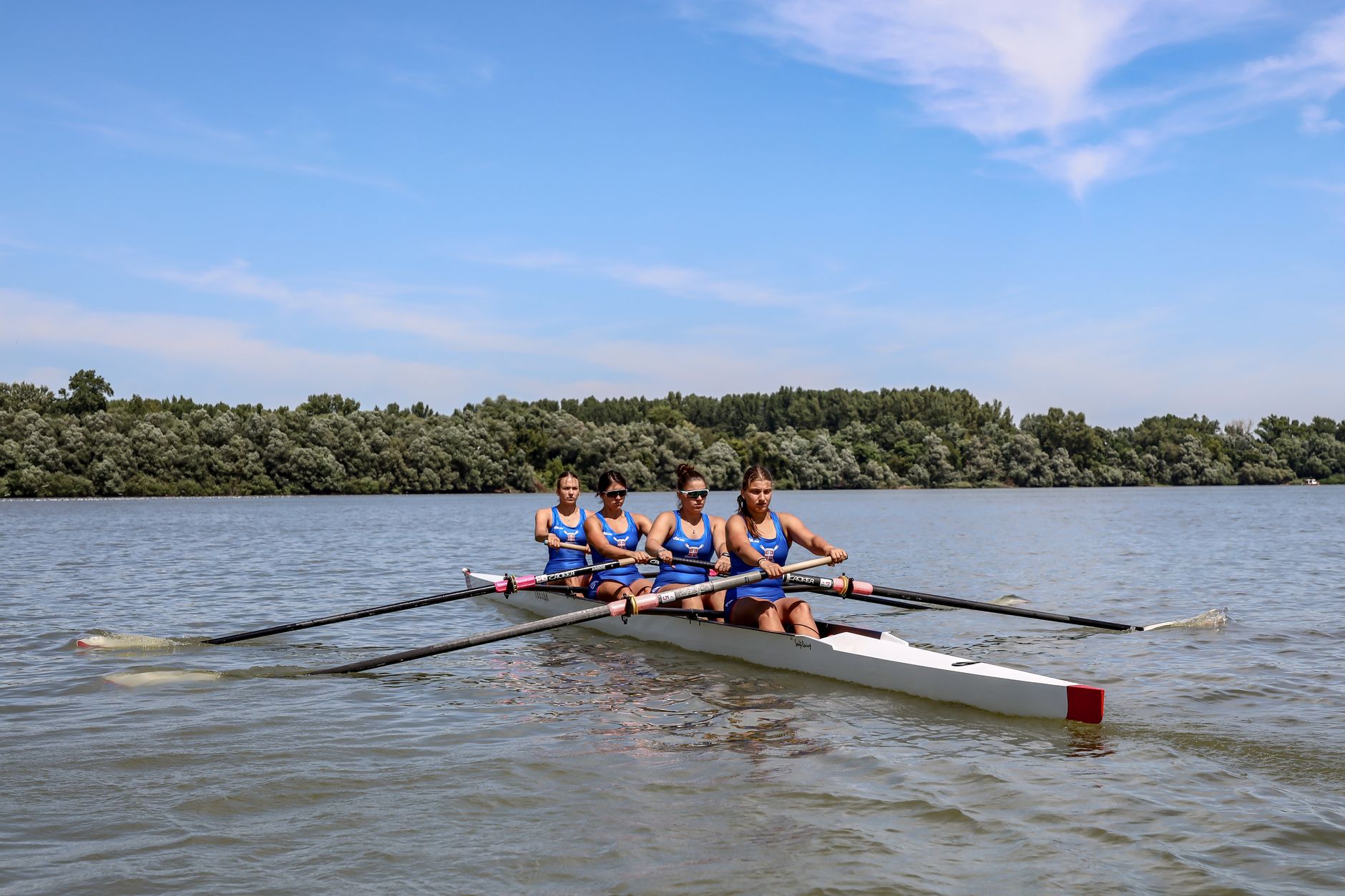
Rowing shorts were never designed with aesthetics in mind. Developed for competitive rowers who needed freedom of movement, minimal drag, and fabric that would survive violent contact with water and wooden seats, the Eton College rowing short is a utilitarian object first and a garment second. Its defining characteristics – a high-cut leg, a slightly elongated inseam, a structured waistband that sits firmly above the hip, and a body-skimming fit that neither clings nor billows – were born from performance demands, not runway logic. That origin story is exactly why fashion has started paying attention.
A quiet borrowing is underway. Swim and resort wear designers are pulling specific construction details directly from the Eton rowing silhouette and folding them into tailored swimwear collections. The result is something genuinely new in the category: swim shorts that carry the authority of a well-cut trouser without the formality of one, and that manage to look structured at the pool deck without sacrificing the looseness that makes resort dressing comfortable. This is not a costume reference or a heritage marketing play. It is a technical borrowing, and the garments it produces are measurably different from what came before.
What Makes the Eton Short Distinctive
The Eton rowing short operates within strict parameters. Fabric weight is kept low to reduce water absorption, but the cut compensates with precision – a higher inseam than a standard athletic short, a waistband wide enough to stay flat under pressure, and side seams that are placed slightly forward to prevent the leg from twisting during the rowing stroke. That forward seam placement does something unexpected on land: it creates a visual line that lengthens the leg and straightens the silhouette in a way that ordinary boardshorts or swim trunks simply do not. The leg opening is narrow, the hem sits close to the mid-thigh, and none of this is accidental.
The waistband construction is where the real structural intelligence lives. Unlike the drawstring-and-elastic arrangements that dominate casual swimwear, the Eton rowing waistband is typically cut from a firmer tape or grosgrain-backed fabric, sewn flat and wide to distribute pressure evenly across the torso. It does not bunch, it does not roll, and it holds its position whether the wearer is sitting, standing, or in full extension. Designers working in tailored swim are adapting this construction directly – replacing elastic-only waistbands with woven-back panels that replicate the rowing short’s rigid stability.
The seaming logic also matters. Rowing shorts frequently use flat-felled seams or bonded joins to prevent chafing and to keep the silhouette clean under water pressure. Those same techniques, when applied to woven swim fabric, produce a garment with a sleekness that reads as tailored rather than athletic – a distinction that the resort wear market has been chasing for years without quite landing on the right technical route.

Why Tailored Swim Needed a New Reference Point
The tailored swim category has spent roughly a decade trying to resolve a problem that is fundamentally about construction. A swim short made from woven fabric – as opposed to knit or stretch-blend – needs an internal architecture that allows movement while maintaining its shape. Most attempts at this solution borrowed from menswear trousers, adding internal canvas or lining structures that worked beautifully on dry land but became heavy and slow-drying in actual water. The Eton rowing short offers a different answer: build the structure into the cut, not the material.
This is why the influence is spreading. A growing number of swim and resort labels are experimenting with high-leg, mid-thigh lengths derived from rowing cuts, paired with waistband constructions that use woven backing rather than added internal structure. The combination produces something lighter than a lined swim short and more composed than an unlined one. Several collections arriving for resort 2025 show this directly – shorts with a clean, elevated line at the thigh, a flat waistband with no visible drawstring, and a fit that would not look out of place in a tailored setting even when the fabric is printed or brightly colored.
The Construction Details Crossing Over
Three specific details from the Eton rowing short are appearing most consistently in tailored swim collections. The first is the forward-rotated side seam, which creates a longer visual line on the leg and prevents the fabric from pulling toward the body’s natural center of gravity during movement. Swim fabric, which is lighter than athletic or rowing fabric, tends to drift and wrinkle without this correction. Rotating the seam forward by two to four centimeters – the standard adjustment in rowing cuts – keeps the silhouette aligned even when the wearer is in and out of water repeatedly.
The second detail is the waistband width. Eton rowing shorts typically carry a waistband of four to five centimeters, which is considerably wider than the average casual swim short but narrower than a trouser waistband. That specific range hits a structural sweet spot: wide enough to stay flat without rolling, narrow enough to avoid the visual bulk of a belt. Tailored swim designers adopting this proportion find that it anchors the shorts at the natural waist rather than allowing them to drift to the hip – a small positional difference that has a significant effect on the overall silhouette.
The third is hem engineering. Rowing shorts use a minimal, often bound hem that does not curl or fray after repeated water exposure. Applied to woven swim fabric, this produces an edge that stays crisp rather than softening or fluting over a season of use. That crispness is what separates a well-made tailored swim short from one that merely aspires to the category – the hem is the last place where the construction either holds or gives way, and the Eton approach holds.

What is worth watching now is whether the waistband innovation travels beyond shorts into other swim categories. Some labels are already applying the woven-back flat waistband principle to one-piece suits and swim skirts, using the same grosgrain-backed construction to create a waist definition that does not rely on boning or elastic cinching. That is a direct extension of rowing-short logic into garments that have never had a rowing reference before. The Eton short did not set out to shape swimwear. It set out to win races. That the two goals have turned out to share a technical language is the kind of accident that produces genuinely lasting style shifts – and the tailored swim category is still working out exactly how far that language can travel.