The Equestrian Detail Making Its Way Off the Horse
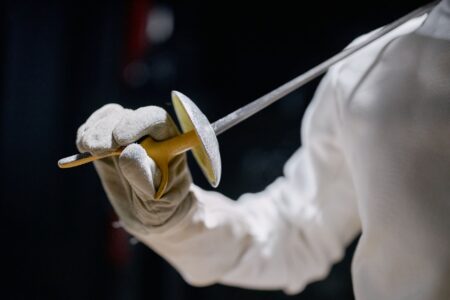
Fencing breeches were never designed with runway ambitions in mind. Built for grip, durability, and the friction demands of competitive swordsmanship, their reinforced leather knee patches were a purely functional solution to a specific athletic problem. Now those same patches are appearing on tailored trousers far removed from any piste – stitched into suiting panels, structured wide-legs, and even formal separates by designers who see texture where athletes saw protection.
Why Equestrian and Athletic Reinforcement Details Keep Crossing Into Tailoring
The appeal of technical sportswear details in tailoring is not new. Riding breeches, military uniforms, workwear, and athletic kit have long fed formal dressing with their most durable details – contrast stitching, reinforced seams, padded panels, and material insets that began as practical interventions and eventually became aesthetic signatures. The leather knee patch specifically carries a visual weight that other reinforcement details do not. It is large enough to read as a design statement, geometrically clean, and positioned at a joint that draws the eye naturally when someone is seated or in motion.
Fencing breeches use suede or grippy leather at the knee for a very direct reason: the fabric resists slipping against a lunging pad or practice dummy, and it withstands repeated abrasion better than woven performance fabric alone. When that logic is stripped away and only the material contrast remains, what is left is a panel of leather or leather-like fabric set into a structured textile ground – which is, from a purely visual standpoint, an interesting seaming technique. The patch creates a shadow line around its edge, a dimensional shift between surfaces, and a color break that can be subtle or stark depending on material choices.
Tailored trousers have historically been reluctant to accept surface interruption. The clean line of a well-cut trouser was the point – no pockets breaking the hip, no seams disrupting the fall. That conservatism made sense within its own logic, but it also left formal trousering with almost no textural vocabulary beyond weave. The leather knee patch imports an entire textural grammar from a completely different dressing tradition. It says structured and athletic simultaneously, which is exactly the tension that interests designers working in the space between performance and ceremony.
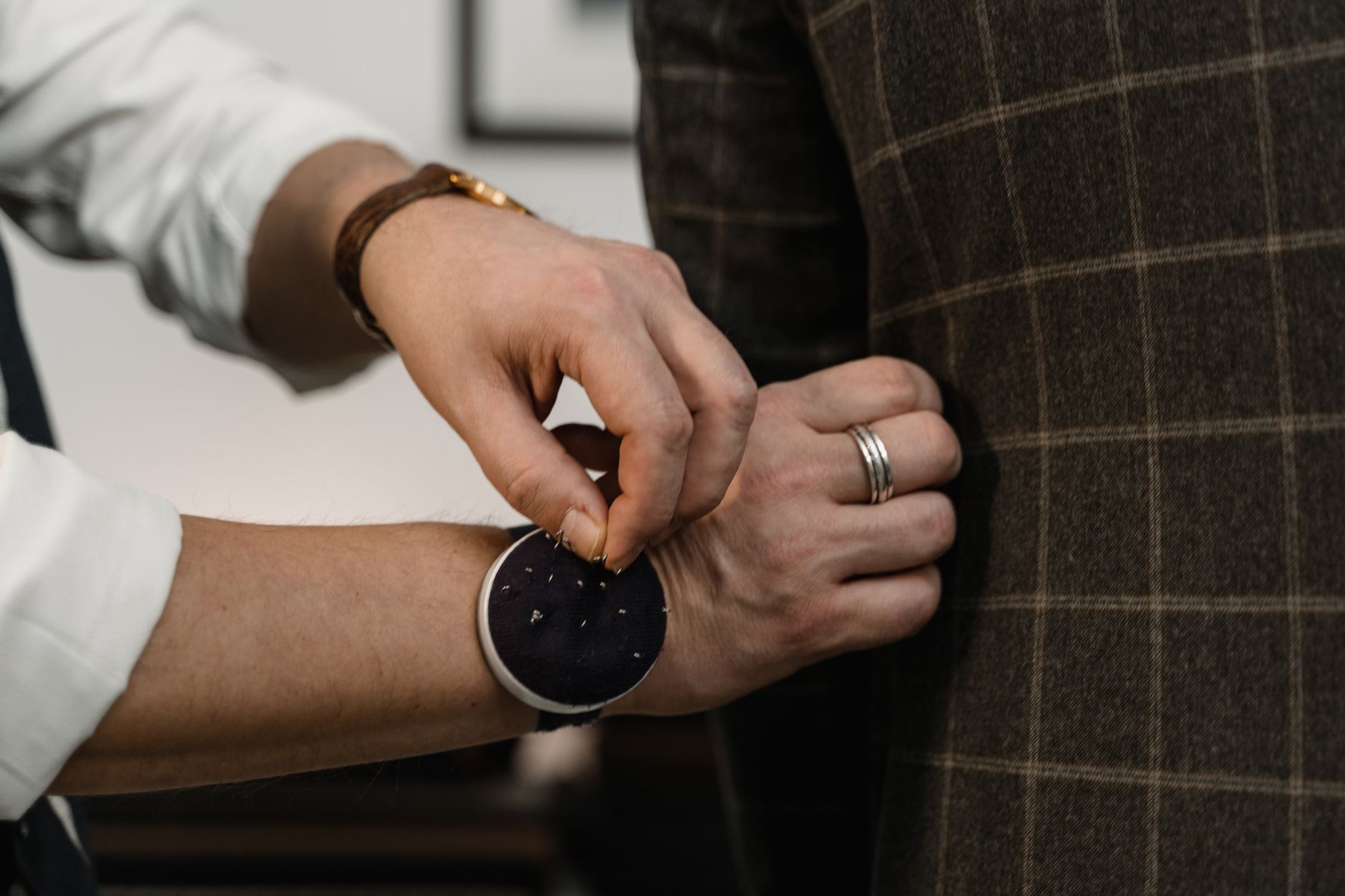
The construction involved is not especially complex, but it requires precision. The patch must be cut to follow the trouser’s grain and seam structure, or it will pull and distort the surrounding fabric. Leather and woven textiles behave differently under tension, expand differently with body heat, and require different pressing and finishing approaches. A poorly executed patch will bubble or create stress lines radiating from its corners. A well-executed one sits flush and appears almost inevitable, as though the trouser was always meant to have this panel. That technical difficulty is part of why the detail reads as considered rather than casual when it appears in a refined tailoring context.
How the Detail Is Actually Being Executed Across Price Points and Aesthetics
The execution varies considerably depending on where in the market the piece sits. At the higher end of tailoring, the patches tend toward matte, vegetable-tanned leather in tonal shades – a dark brown set into charcoal wool, a sand-colored patch on cream linen, a black leather inset into a black crepe trouser where the distinction is purely textural rather than chromatic. This restraint keeps the detail firmly in the territory of classical tailoring, the kind of dressing that rewards close inspection rather than announcing itself across a room.
Streetwear-adjacent interpretations take the opposite approach. Oversized patches in contrasting or deliberately mismatched leathers, visible stitching in contrasting thread colors, patches that extend above and below the knee to reshape the trouser’s silhouette entirely. Here the fencing reference is less disguised – the functional origin is worn openly, and the athletic ancestry is part of the aesthetic statement rather than something to be refined away. Both readings are valid, and neither invalidates the other.
Material substitutions matter enormously in this context. Genuine leather carries a specific patina and weight that shapes how the panel reads over time – it creases differently than the surrounding trouser fabric, develops its own aging pattern, and interacts with the body’s movement in ways that woven materials do not. Vegan leather alternatives offer more consistent behavior and ethical advantages, but they can also flatten the textural conversation by behaving too similarly to the trouser fabric itself. The most successful executions in non-leather materials tend to use highly textured or finished surfaces – a brushed suede-effect fabric, a lacquered panel, a heavy boiled wool inset – that preserve the material contrast even without animal-derived leather.
Color and placement decisions define the range of effects available. A single knee-width patch centered on each leg reads as a direct sportswear reference – clean, legible, and close to the fencing breeches origin. Extending the patch into a broader thigh panel moves toward riding breeches territory, which connects to the longer conversation around equestrian detailing in structured trousers more broadly. Fragmenting the patch into asymmetric or angled panels is a more abstract interpretation that uses the material contrast for compositional effect rather than functional reference.
Styling these trousers requires attention to weight above the waist. Because the leg already carries considerable visual information – the panel, the seaming, the textural break – the upper body generally works best in something that doesn’t compete. A clean shirt, a minimal blazer in matching or closely toned fabric, or even a fine-gauge knit that reads as background rather than statement. The trousers are doing the talking. Overloading the look with additional textural detail above the waist turns the patch from an intentional focal point into visual noise.
The Specific Problem These Trousers Are Solving
Tailored trousers have long struggled to feel current without departing from the proportions and construction that make them work in formal contexts. Wide-leg silhouettes offered one answer – volume as modernity. Cropped hems offered another. But both of those solutions are about shape, not surface. The leather knee patch is a surface intervention, which means it can be applied to almost any trouser silhouette without altering its structural logic. A classic straight-leg trouser with a leather knee panel is still a classic straight-leg trouser – it simply has a material conversation happening below the knee that nothing in conventional tailoring provides.
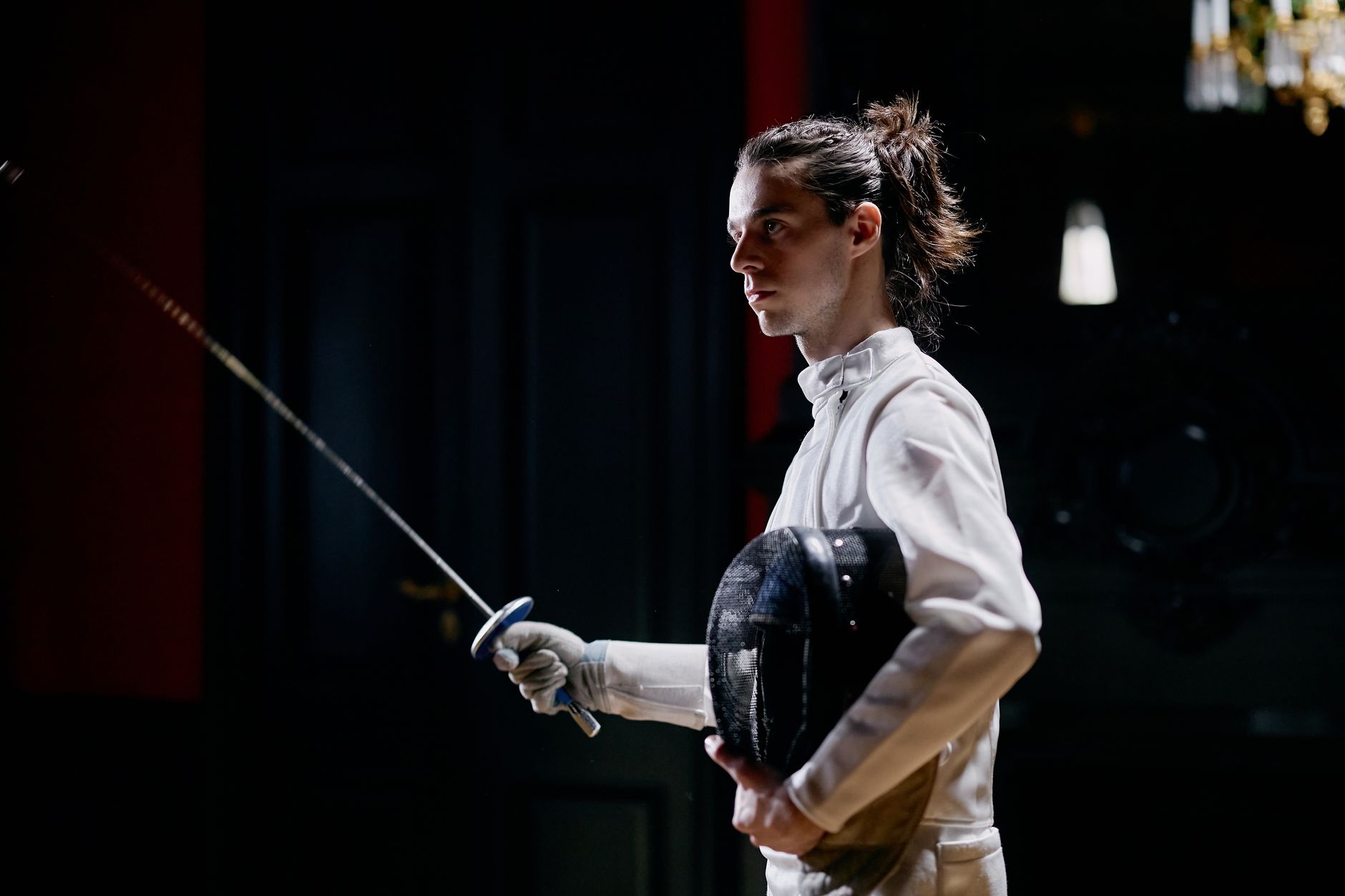
What makes the fencing origin specifically interesting rather than just any leather panel is the precision of the patch’s shape. Fencing breeches patches are cut to wrap cleanly around a bent knee, which gives them a slightly curved lower edge and a geometric clarity that a casually applied panel would not have. That specificity of form is what separates a design-conscious execution from something that simply looks like a repair. The patch is not hiding anything. It is announcing that the trouser was built around it.
Frequently Asked Questions
What are fencing breeches leather knee patches?
They are reinforced leather or suede panels stitched onto the knees of fencing breeches to reduce friction and resist abrasion during athletic movement.
How are leather knee patches being used in fashion tailoring?
Designers are applying the panel technique to structured trousers, using tonal or contrasting leather insets at the knee to add textural depth without altering the trouser’s silhouette.