

When Equestrian Function Meets Street-Level Style
Boot pull straps – those looped leather or woven tabs stitched to the interior shaft of polo and riding boots – were engineered for a single, unglamorous purpose: getting a tight boot on without wrecking your back. For generations, they lived entirely inside the sport, invisible to anyone who wasn’t standing in a barn at dawn. That narrow existence is ending. Designers working in the utilitarian accessories space are pulling the boot strap out of its equestrian context and applying its logic – strong loop, anchored stitch, functional grip – to bags, belts, outerwear hardware, and even footwear that has never seen a polo field.
The appeal isn’t nostalgia for polo culture or a sudden fashion obsession with equestrian life. It’s more mechanical than that. The pull strap solves a real problem: how do you add a handle, a grip point, or a carrying assist to a stiff object without adding bulk or compromising structure? Polo club boot straps answer that question with a loop that’s load-bearing, minimal, and visually honest about what it does. That combination – function you can see, material you can trust – is exactly what the current utilitarian accessories moment is chasing.
The Anatomy of a Pull Strap and Why It Translates
A traditional polo boot pull strap is constructed to handle real force. Riders are pulling against a boot that fits like a second skin – the strap needs to absorb that tension without tearing free from the leather shaft. The result is a piece of hardware that’s deceptively simple: a folded tab, double-stitched through multiple layers, with a loop sized for two or three fingers. Some versions use braided cotton or nylon webbing rather than leather, particularly in sport-focused polo clubs where wet conditions are a factor. That material versatility is part of what makes the detail so adaptable.
When you apply that construction logic to a structured tote or a heavy canvas messenger bag, the translation is almost immediate. A pull strap at the top of a bag gusset gives the carrier a secondary grip point that distributes weight differently than a shoulder strap – useful when pulling the bag from an overhead compartment or lifting it from a car floor. The stitch pattern doesn’t change. The function shifts slightly, but the engineering rationale stays intact. That continuity is what separates a genuine design borrowing from a purely decorative one.

How the Detail Is Moving Across Categories
Bags are the most obvious landing spot. A growing number of independent leather goods makers are integrating pull-tab loops at the spine of structured briefcases and at the base of boot bags – a bit of irony there, given the origin. The tab sits flush when unused and opens into a grip handle when needed, adding function without adding hardware clutter. Some makers are using raw-edge leather loops with visible contrast stitching, leaning into the visible craft rather than hiding it behind a clean seam.
Outerwear is picking up the detail through a different mechanism. Pull straps are appearing at the hem of waxed cotton and heavy canvas jackets, functioning as hem tensioners that can be gripped to pull the jacket down over layers. The loop sits at the side seam, often in a contrasting webbing, and the construction mirrors the boot strap almost exactly – folded tab, bartack stitch, loop sized for a gloved hand. It’s a working detail, not a trim decision, and it reads that way on the garment.
Footwear outside the equestrian world is the most direct application. Some boot makers – particularly those producing work-adjacent or military-influenced styles – have started adding interior pull straps modeled directly on polo boot construction rather than the thinner, often decorative pull tabs common on fashion boots. The difference is tactile: a real pull strap gives you actual mechanical advantage when pulling on a stiff boot, while a decorative tab mostly tears off if you use it seriously. The gap between those two things is where the polo club construction earns its keep.
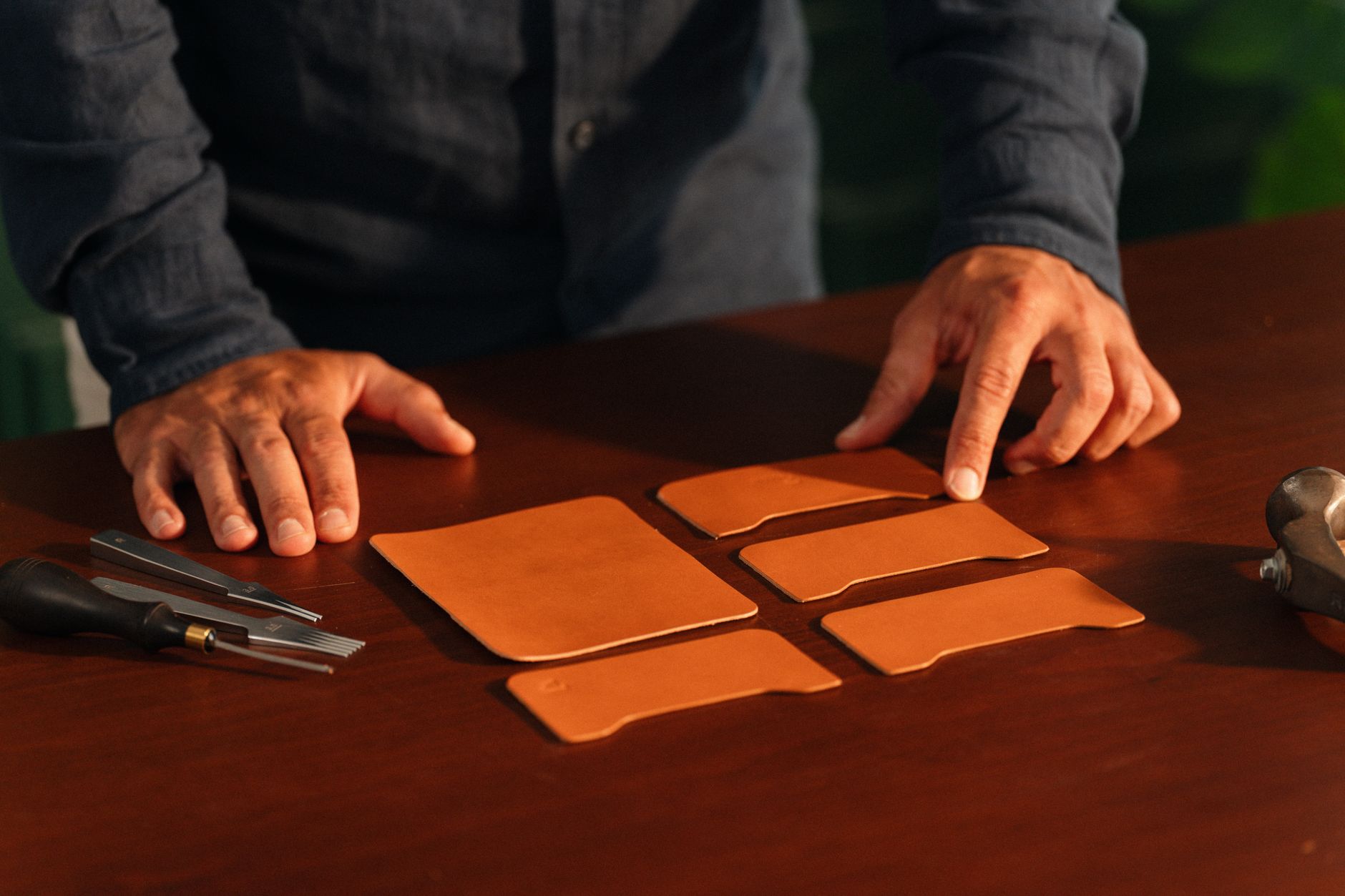
Belts and small leather goods are a quieter frontier. A pull strap loop at the end of a belt – beyond the last hole – functions as a tucking assist and keeps the tail from flopping loose. It’s a minor addition, but it’s the kind of considered detail that signals a maker who has thought about how the object is actually used. The same logic applies to journal covers, tool rolls, and knife sheaths, where a pull tab at the spine or the closed end gives you a one-hand opening grip. These are small categories, but they’re where the detail is spreading most organically.
Material Choices Driving the Trend
The materials conversation around pull straps is more interesting than it might appear. Leather pull straps carry an obvious heritage signal, but woven webbing – particularly nylon mil-spec tape and cotton canvas in natural or dyed finishes – is becoming the more common choice in bags and outerwear. Webbing is lighter, easier to stitch through multiple material layers, and it ages differently: where leather develops a patina, webbing shows wear through fraying and fading in ways that some buyers actively prefer.
Brass and stainless hardware sometimes accompanies the strap, with a sewn-on D-ring or bar-tack loop adding a metal element that reinforces the utilitarian read. But plenty of makers are choosing to skip metal entirely, keeping the pull strap as a pure textile detail – loop, stitch, nothing else. That restraint tends to produce a cleaner result on minimalist bags and jackets where hardware would feel like noise.
The Broader Utilitarian Accessories Shift
What’s happening with polo boot pull straps fits a wider pattern in accessories design – a preference for details that justify themselves through use rather than aesthetics. Working hardware from sport, military, and industrial contexts has been feeding into fashion accessories for several years now, with structural borrowings from sport equipment showing up in bag architecture across the market. The pull strap is a natural next step: it’s small, it’s honest, and it has a clear story.
The design challenge, as with any functional borrowing, is keeping the detail from becoming costume. A pull strap that’s scaled wrong, stitched too lightly, or made from materials that can’t handle real use reads as decoration pretending to be function. Buyers in this space tend to notice – and they tend to test things. The makers who get this right are the ones who start with the original construction and adapt it faithfully, rather than referencing the shape without understanding the engineering behind it.
What to Watch Going Forward
Color is the next variable. Traditional polo boot straps run in neutral leathers and dark webbings because the context demanded invisibility. As the detail moves into streetwear-adjacent bags and outerwear, there’s room for pull straps in contrast colors, printed canvas, or dyed leather that makes the loop a deliberate accent rather than a working part you’re not supposed to notice. A few small makers are already experimenting with this, using pull tabs in orange, olive, and burgundy against dark canvas bodies.
Sizing is being reconsidered as well. Boot straps are sized for a gloved hand working against a tight boot – larger than most bag pull tabs, which are sized for fingers in a light-load context. Some makers are staying with the larger scale, arguing that a bigger loop is simply more useful. Others are scaling down to keep the proportions tidy on smaller bags and journal covers.
The question the category hasn’t fully settled is whether the polo origin matters to buyers – whether “this came from the tack room” is a selling point, a neutral fact, or something designers should reference explicitly in product language. Brands that have leaned into the equestrian lineage are finding receptive audiences, but the detail is also selling cleanly when the heritage is never mentioned at all.