The Equestrian Detail Making Jewelry Feel Architectural
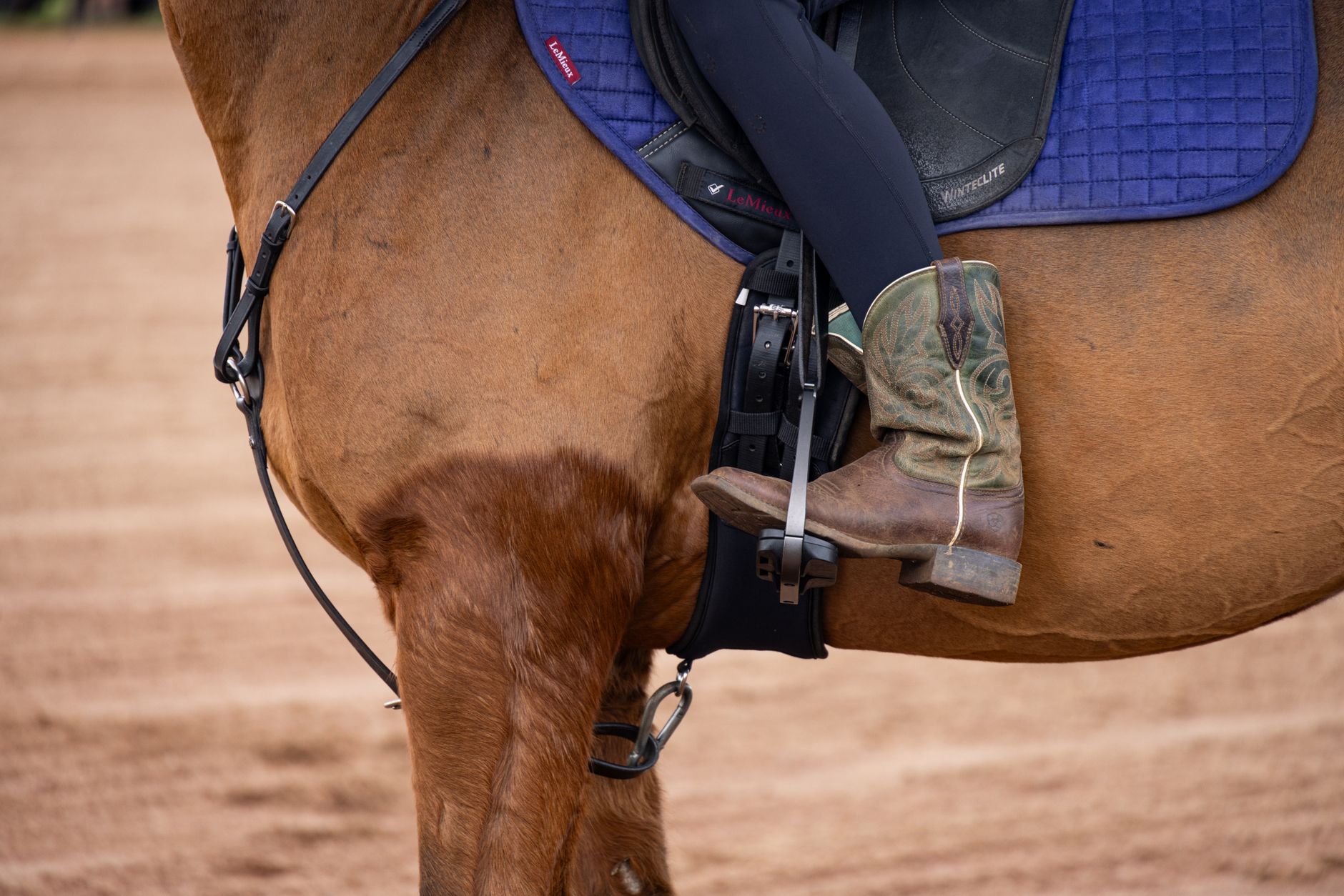
Breastplate bibs on polo horses serve a single utilitarian purpose: to keep the saddle from sliding back during hard turns and gallop bursts. The stitching that holds them together – tight, parallel rows across a stiff leather panel – is functional first, decorative never. Which makes it all the more interesting that jewelry designers have been studying exactly that construction and translating it into rigid bib necklaces that sit against the collarbone like a second skin.
The crossover is not accidental. Equestrian detailing has been circulating through accessories for several seasons now, moving from bridles to belt hardware to earring forms. But the breastplate bib specifically carries a structural logic that most equestrian references do not – it is a flat, wide panel meant to distribute pressure evenly, and that geometry maps directly onto the bib necklace silhouette in a way that feels less like borrowing an aesthetic and more like borrowing an engineering principle.
How the Construction Translates Into Metal and Textile
The defining characteristic of polo breastplate stitching is density. Rows run close together, creating a surface that looks almost woven rather than sewn. When jewelry designers replicate this in metal, the technique typically involves pierced or etched paneling where parallel channels are cut or stamped into a rigid base, giving the impression of stitching without using thread at all. In textile-forward bib necklaces – those built on a stiffened fabric ground – actual stitching is used, often in tonal or contrasting thread weights, to create that same dense, uniform pattern across the bib’s face.
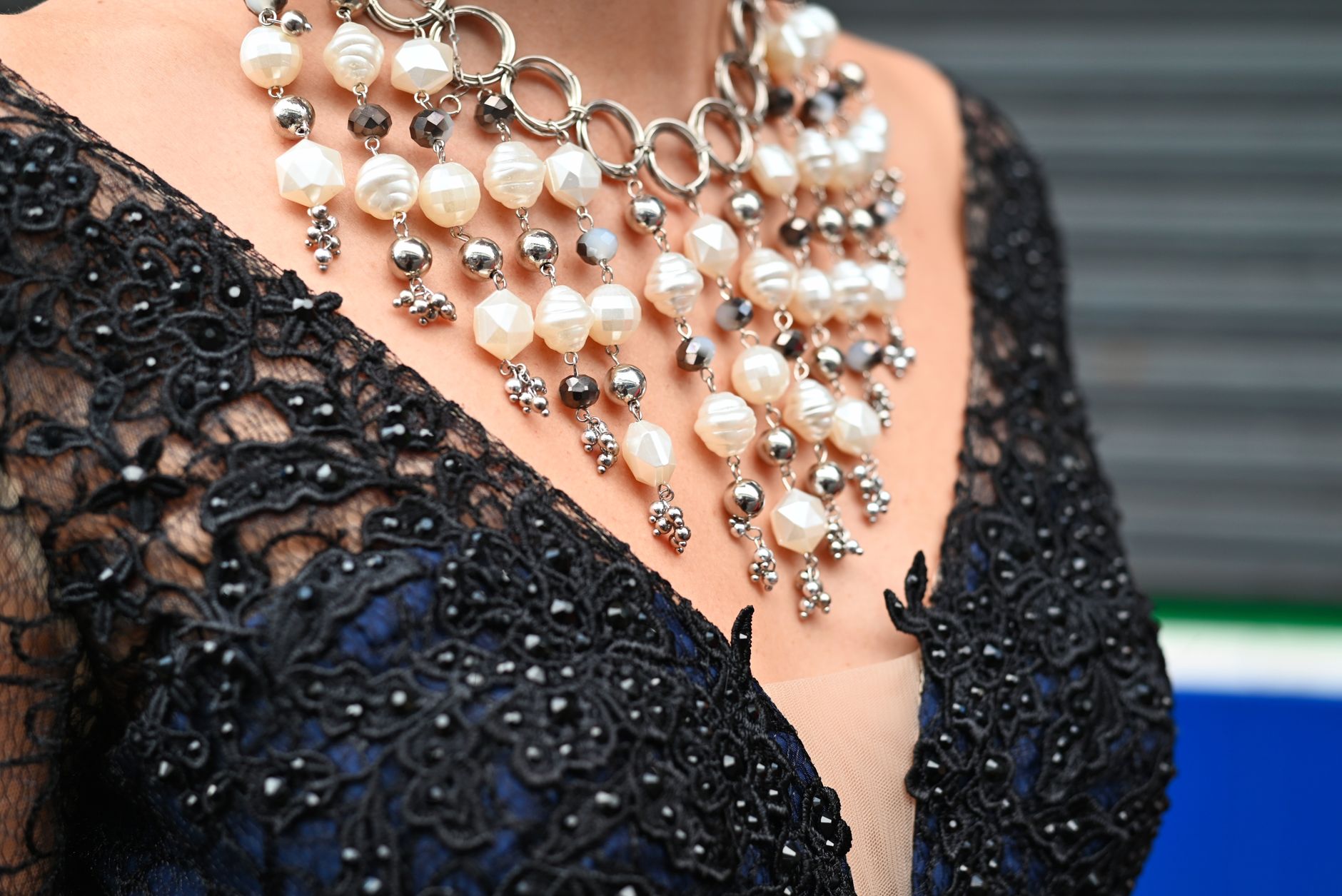
What makes the reference legible is not necessarily the stitching pattern itself but the way the bib sits. Polo breastplates do not drape – they hold their shape against the horse’s chest because the leather is thick and the stitching consolidates it into a rigid panel. Bib necklaces working with this reference are deliberately structured, using internal boning, resin backing, or layered metal to ensure the piece stays flat and upright against the wearer’s sternum. The stitching detail becomes the surface texture of something that already has architectural intent.
Where It’s Appearing and Who’s Wearing It
The silhouette is turning up most visibly in resort and pre-fall collections, where designers working in the space between dressed-up and dressed-down have found the structured bib necklace to be a reliable anchor piece. It adds formality to a simple shirt without requiring a full jewelry stack.
Wearers gravitating toward this look tend to be treating the necklace the way previous generations treated a statement brooch – as the single piece that does the work of an entire outfit. Paired with a high-neck blouse or a collarless jacket, the bib necklace with breastplate stitching sits in exactly the right position to read as intentional rather than decorative. It does not compete with earrings so much as make them unnecessary.
The Design Logic Behind Borrowing From Horse Gear
Equestrian gear is designed to solve real problems under physical stress, which means every element of its construction has been refined over decades of practical use. When fashion borrows from that vocabulary, it is often pulling from a design tradition that has already done the work of eliminating excess. Polo breastplate stitching, in that context, is not ornamentation – it is load distribution made visible, and there is a visual honesty to it that purely decorative surface treatments rarely achieve.
Bib necklaces have historically struggled with a flatness problem – they lie against the chest without much dimension, which can make them look more like a collar than a jewelry piece. The introduction of breastplate-style stitching resolves this by giving the surface topography. The parallel rows cast micro-shadows at the right light angle, making the bib appear three-dimensional even when it is technically flat. That optical effect is a direct consequence of borrowing a functional stitching density rather than a decorative one.
Designers working in this space are also pulling from the way polo gear handles the junction between the bib panel and its connecting straps. On a horse, the breastplate is stitched to its neck strap and girth loops at reinforced stress points – doubled or tripled stitching at corners, metal rings at key joints. Jewelry translations of this are showing up as visible hardware at the clasp points and shoulder connections of bib necklaces: small D-rings, riveted tabs, or exposed bar closures that echo the utilitarian joinery of the original object. This is where the reference stops being surface-level and starts being structural. The throat lash billet construction that’s been showing up in layered cuff tabs operates on the same joinery logic – equestrian hardware translated into wearable form by treating the connection point as the design detail rather than hiding it.

What keeps this from reading as costume is proportion. Polo breastplates are wide relative to the horse’s chest, but the stitching panels are not enormous – they are scaled to be functional without being overwhelming. Bib necklaces working with this reference are holding to a similar discipline: wide enough to cover the upper sternum and collarbone area, no wider. The stitching detail does not need to be scaled up to read. At the right density, it reads clearly even on a piece that sits within the normal range of bib necklace proportions. That restraint is what separates the pieces that work from those that tip into theatricality – and right now, the better executions are landing squarely on the functional side of that line.