

The Equestrian Detail That Fashion Borrowed Without Asking
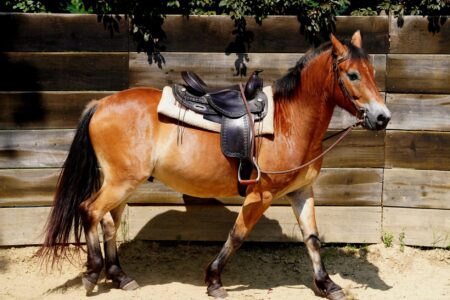
Browband stitching has always been a language spoken between horse and rider – the tight, repeating stitch patterns that run across a polo pony’s browband are functional first, decorative second, and virtually invisible to anyone outside the sport. That invisibility is exactly what made them appealing to a new audience. Accessories designers, particularly those working in small-batch leather goods, have spent the last several seasons studying the geometry of equestrian tack with unusual seriousness, and the result is beginning to show up on wrists rather than foreheads.
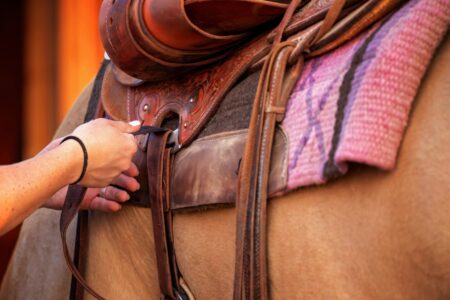
The translation from browband to cuff is not as lateral as it sounds. Both objects share a fundamental structure: a narrow band meant to lie flat against a curved surface, decorated with stitch work that has to withstand tension and movement without losing its form. What polo equipment engineers solved out of necessity, leather artisans are now solving out of aesthetic ambition. The embossed leather cuff, long a staple of western and bohemian accessory traditions, is being quietly rebuilt around a tighter, more technical stitch vocabulary borrowed directly from equestrian construction.
How Browband Geometry Translates to Wrist-Wear
Traditional polo browbands feature a repeating diamond or chevron stitch pattern, often in contrasting thread, running along a strip of bridle leather. The stitch density is high – sometimes twelve or more passes per inch – because the browband has to hold its shape under the pressure of a horse’s movement. That density creates a textured surface that catches light differently at every angle. When this pattern is lifted and applied to leather cuffs through embossing rather than stitching, the result is a surface that reads as intricate without requiring hand-stitching on every unit.
Embossing allows the stitch illusion to be pressed directly into the grain of the leather at a die level, meaning the visual complexity of browband construction can be reproduced with a consistency that hand-stitching cannot always guarantee. This is not a shortcut – embossing high-quality vegetable-tanned leather requires significant pressure and precision tooling, and the relief detail can be as fine as actual thread work when done well. The stitch pattern becomes part of the leather’s surface rather than sitting on top of it, giving the cuff a sculptural quality that flat embossing lacks.
The color conventions are also making the crossing. Polo equipment traditionally uses earthy bridle leathers – tan, chestnut, dark mahogany – with white or cream thread contrast. Accessories collections picking up this vocabulary are staying close to that palette, rejecting the high-gloss finishes associated with fashion leather goods in favor of matte, burnished surfaces that develop patina with wear. A dark tan cuff with cream embossed browband stitching reads as quietly luxurious in a way that does not announce its origins to anyone who does not know where to look.
Buckle construction is another borrowed element. Polo browbands fasten with small, flat roller buckles designed to sit flush against the headstall – they cannot protrude because any projection would risk discomfort or injury. Cuff designers working in this language are adopting the same low-profile hardware, often in antique brass or oxidized silver, which reinforces the functional-origin aesthetic of the piece without making it look like costume. The same polo hardware logic that has been reshaping structured belt design is now operating at the wrist scale as well.

Why the Timing Makes Sense
Fashion’s appetite for sport-derived craft has been running hot for several years, but the references being mined have largely been athletic – cycling, running, technical climbing. Equestrian craft represents a different lane: it is aristocratic in association but intensely functional in execution, and that combination is currently very bankable. A browband-stitched leather cuff carries the same signal as a well-worn paddock boot – it suggests a person who knows how things are made and chooses quality on that basis, not on brand name recognition alone.
There is also a craft credibility argument. Leather embossing at the level of detail that browband stitch patterns require is a skill set that very few manufacturers maintain. Brands working in this space are not mass-market operations. The cuffs appearing in this vocabulary are coming from small ateliers, often with equestrian supply backgrounds, where the tooling knowledge already existed and is simply being redirected toward fashion accessories. The result has an authenticity that cannot be easily replicated by larger houses without significant investment in specialized equipment and technique.
The Styling Logic Behind the Cuff’s Rise
Leather cuffs as a category have moved in and out of fashion relevance for decades, usually anchored to either rock-and-roll styling or festival aesthetics. The browband-stitched version is doing something different: it is entering tailored contexts. A single wide cuff in tan embossed leather, worn over the cuff of a cream dress shirt or beneath the sleeve of a structured blazer, functions as punctuation rather than statement. It adds texture and material contrast without disrupting the line of an outfit.
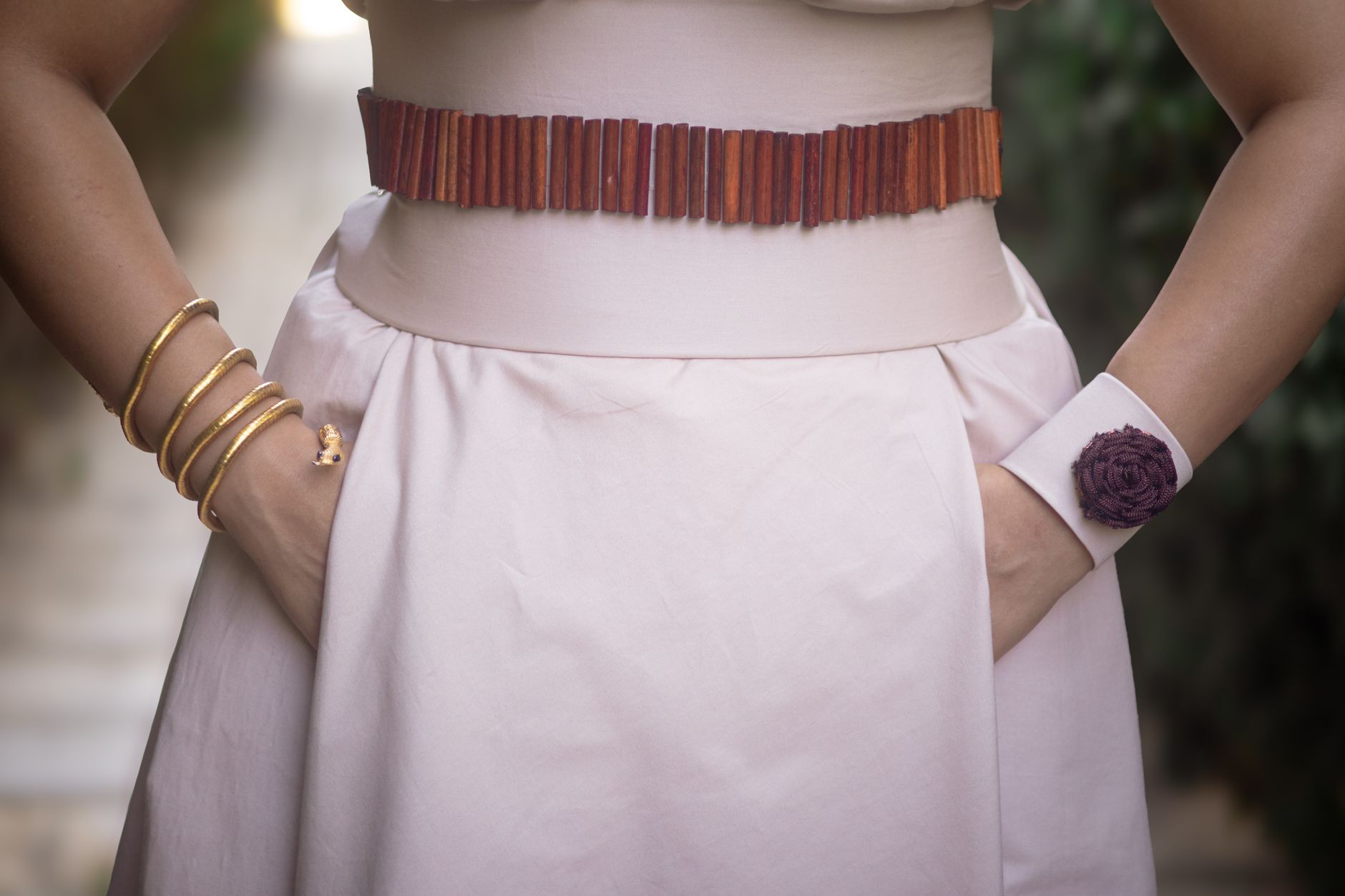
The width of these cuffs matters significantly. Narrower versions – roughly two to three centimeters – are the most versatile, sitting close to watch-width and therefore readable as refined rather than decorative. Wider cuffs, four centimeters and above, are making their way into evening contexts, often worn alone on one wrist as a structural counterpoint to minimalist jewelry on the other. The embossed surface of the browband pattern catches candlelight or low ambient lighting in a way that polished metal cannot, making the piece perform differently across settings.
Layering is a consistent styling choice among early adopters of this look. The cuff worn alongside a fine-link chain bracelet and a simple watch creates a material conversation – smooth metal, knitted metal, embossed leather – that reads as considered without being coordinated. The browband stitching provides enough visual detail that the cuff does not disappear in the stack, but the matte leather surface keeps it from competing aggressively with shinier pieces. That balance is difficult to achieve with most embossed leather goods, which tend to either dominate or vanish depending on their finish.
Where This Is Heading
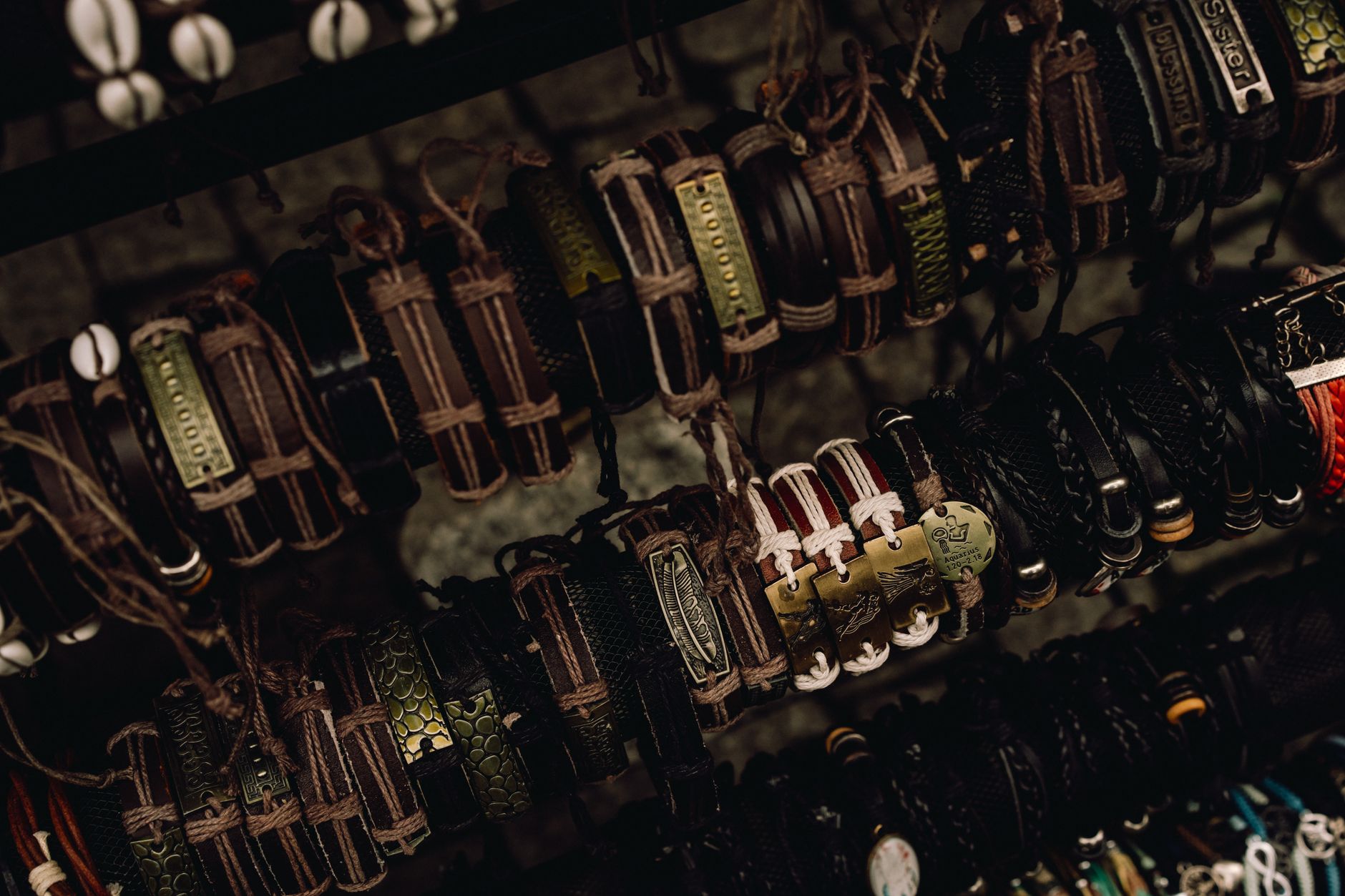
The logic of browband stitching does not stop at cuffs. The same stitch geometry is already appearing on watch straps, collar details, and narrow belts within the collections that pioneered the cuff work. Each application uses the embossed pattern slightly differently – on a watch strap, the diamond repeat runs along the center; on a collar, it frames the edge – but the source vocabulary is consistent enough to read as a coherent design language rather than a series of disconnected decisions.
What makes this trend genuinely sustainable rather than seasonal is the depth of the source material. Polo browband construction has centuries of variation – regional stitch patterns, different leather grades, different buckle traditions across British, Argentine, and American equestrian cultures. Designers working in this space have not come close to exhausting what is available to borrow and reinterpret. The Argentine polo tradition alone, with its distinct braiding and tooling conventions, represents a substantial body of craft that has barely been touched by fashion accessories at any scale.
The real question is whether the fine leather goods houses with the resources to scale this work will move into the space before the small ateliers that developed it have had time to establish themselves. A browband-stitched cuff from a workshop with genuine tack-making heritage carries a completely different weight than the same embossed pattern produced on a factory line in a fashion hub. If the larger players arrive with faster production and broader distribution, the original context that gives the design its meaning may be the first thing to get left behind.
Frequently Asked Questions
What is browband stitching and why is it relevant to fashion?
Browband stitching refers to the dense, geometric stitch patterns on polo pony browbands. Its structured geometry and matte leather aesthetic translate naturally into refined accessories design.
How are browband patterns applied to leather cuffs?
Designers use high-pressure embossing to press the stitch pattern directly into vegetable-tanned leather, creating a sculptural surface that replicates the look of hand-stitched tack work.