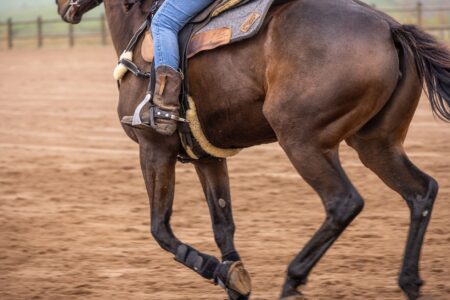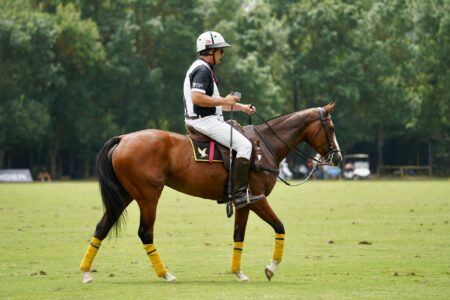


Riding breeches have always occupied a specific corner of tailoring history – functional garments built for grip, movement, and the particular demands of the saddle. Now, the polo club aesthetic is pulling one of the most technical details from that tradition into everyday structured dressing: the saddle knee block welt, a reinforced seam construction running along the inner thigh and knee panel, is showing up on tailored trousers that have never been anywhere near a horse.
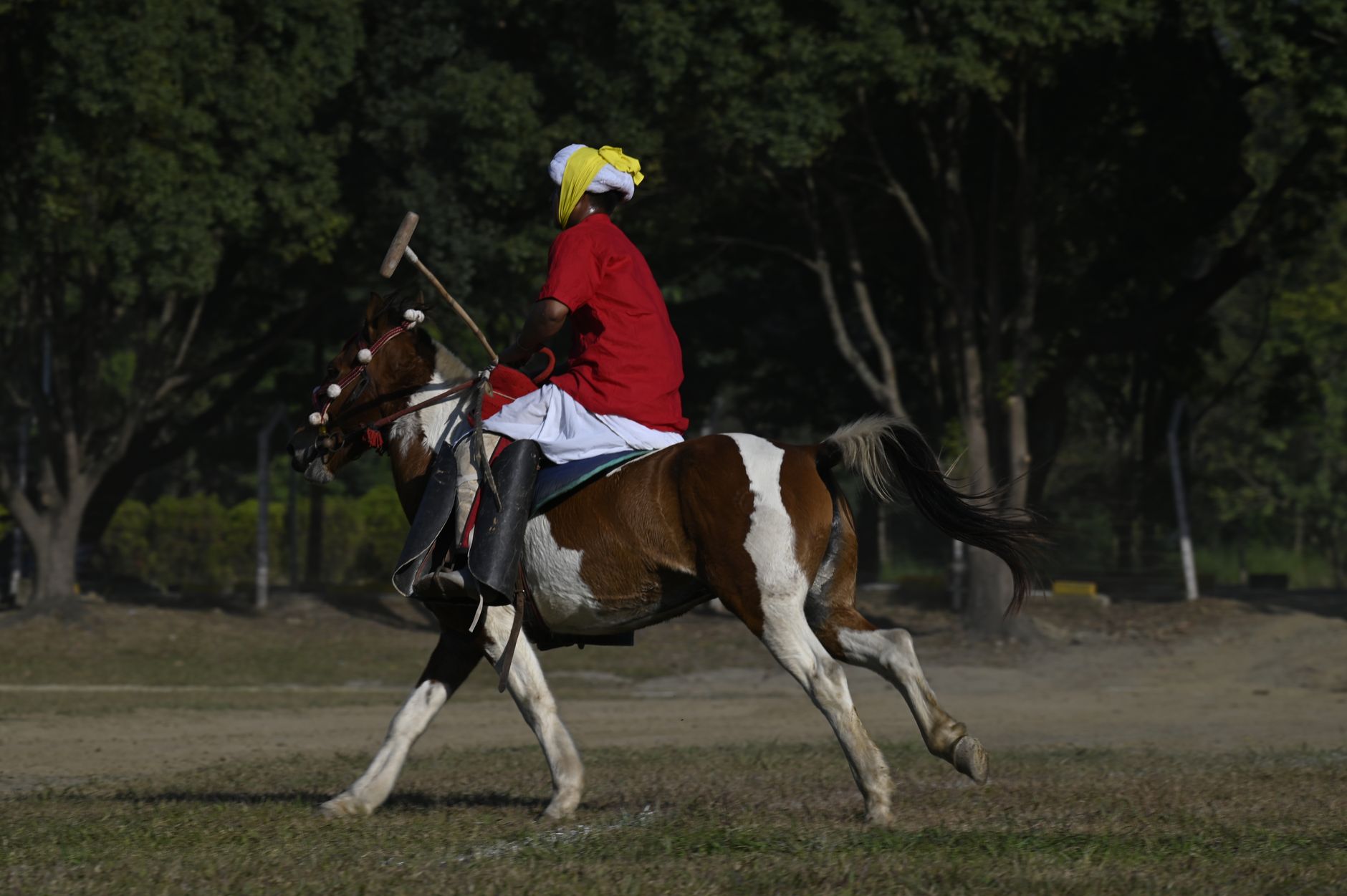
The Detail That Built a Sport Is Now Building a Look
The saddle knee block welt is not decorative by origin. In traditional polo breeches and riding jodhpurs, the inner knee and thigh panels are reinforced with a raised welt seam – sometimes a double-stitched ridge, sometimes a piped edge – that keeps the fabric from wearing through under the friction of stirrup leather and saddle contact. The construction also slightly stiffens that panel, which stabilizes the leg position in the saddle without restricting hip movement. It is engineering dressed up as tailoring.
What makes this detail interesting outside of equestrian context is the silhouette it creates. The knee block panel – that inset of contrasting or matching fabric running from mid-thigh to just below the knee on the inner leg – gives structured trousers a visual architecture that standard flat-front or pleated cuts simply do not produce. The thigh reads as more substantial, more shaped, without the bulk that comes from pleats or the tightness that comes from a slim cut. It occupies the middle ground between sculptural and wearable in a way that is genuinely difficult to achieve through other construction methods.
The welt seam itself is the critical element. A plain panel seam would create the same shape but without the visual weight. The raised welt – typically two to three millimeters of folded fabric stitched flat against the surface – draws a line along the inner leg that the eye reads as intentional structure rather than construction necessity. On a mid-grey flannel or a cavalry twill, that line catches light differently than the surrounding fabric. On a cream or ivory trouser, it reads almost as a tonal stripe running vertically down the inner thigh. Neither effect is accidental.
The sporting codes that inform this detail are very specific. Polo club dress is not the same as general equestrian or country-house style. Polo has its own sharp, slightly military formality – white breeches, knee-high boots, the tight tuck of a jersey into a waistband. The club aesthetic carries that precision into off-pitch dress: the trousers are clean, the shoes are polished, and every seam does visible work. That is the energy the saddle knee block welt brings to structured tailoring when designers lift it from the riding context.
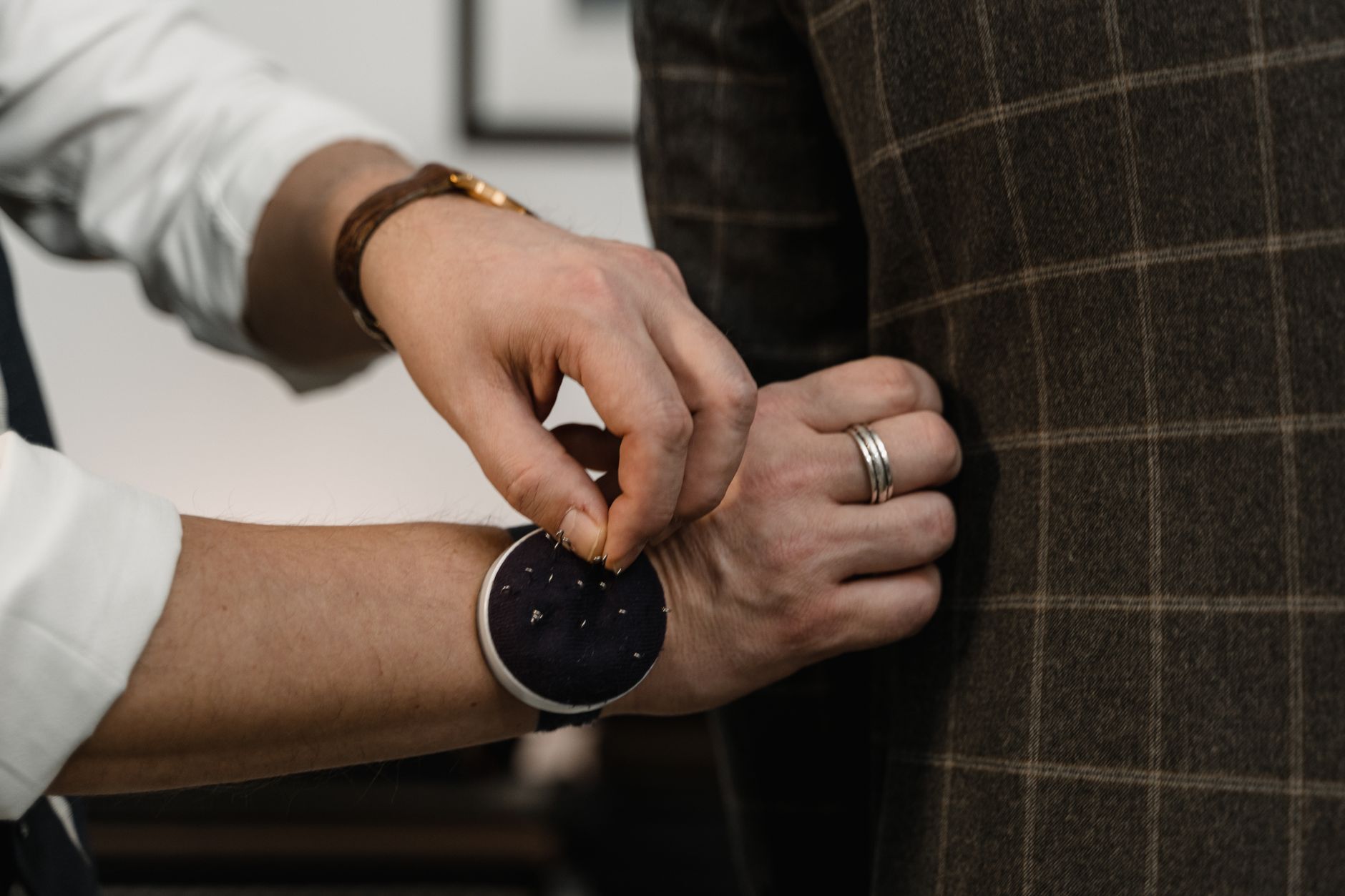
How the Construction Reads on a Modern Tailored Trouser
When the saddle knee block welt appears on a trouser built for town rather than turf, a few things change and a few things stay the same. The panel fabric is almost always the same as the main cloth – no contrast patch, no suede insert like you’d find on a working breech. This is the polo club version, not the stables version. The welt itself is stitched in matching thread, which means the detail reads as structure rather than decoration. You notice the shadow it casts before you notice the seam itself.
The cut of the trouser body matters enormously for this to work. A very slim leg diminishes the block panel because there is not enough inner thigh fabric to create the shaped inset. A very wide leg swallows the welt in excess cloth. The sweet spot is a medium to full thigh with a tapered knee – essentially the same proportions that make the original riding breech functional. The trouser needs enough volume through the upper leg to allow the panel to read as its own architectural element rather than just a seam.
Fabric choice amplifies or mutes the effect considerably. Heavier cloths – thick worsteds, dense cavalry twills, substantial flannels – give the welt its clearest expression because the raised seam holds its shape against the structure of the fabric. Lighter or softer cloths, like fine tropical wool or silk blends, can still carry the detail, but the welt sits less crisply and the panel tends to move with the leg rather than hold a defined line. For a first encounter with the detail, a medium-weight cloth in the 280 to 340 gram range is where the construction shows best.
There is also the question of where the panel terminates. In a working riding breech, the knee block extends well below the knee to protect the area that contacts the stirrup leather. On a tailored trouser, the lower edge of the panel typically ends at or just below the knee break – the point where the trouser creases when the wearer is seated. This keeps the architectural element within the visible thigh-to-knee zone when standing, which is where it matters most for how the trouser reads as a garment.
Pairing logic for this silhouette follows a simple rule: the trouser is already doing something interesting, so everything above the waist should be relatively quiet. A plain white shirt or a fine-gauge roll-neck reads well against the structural lower half. A heavily textured jacket competes. The saddle knee block welt works best when the viewer’s eye can travel down the trouser leg and register what is happening there, which means the upper half of the outfit should not be pulling attention upward. This is a bottom-half detail, and styling should respect that hierarchy.
Why This Is the Trouser Conversation Worth Having Right Now
Structured tailoring has been searching for a way to evolve beyond the expected variables – pleat count, rise height, fabric weight – without abandoning the logic of traditional construction. The saddle knee block welt offers something different: a detail with genuine functional history that translates into visual interest without requiring any departure from how a trouser is built and worn. It does not change the silhouette from the outside in the way a dramatic cut would. It changes the interior architecture and lets that show through the surface.
The more interesting question is whether this detail can sustain interest once it moves past the early-adopter stage. The risk with any tailoring detail lifted from sporting tradition is that it tips from considered to costumed – that the polo club reference becomes too literal and the trouser starts to feel like it needs boots and a mallet to complete. The welt works precisely because it is subtle enough that most people cannot immediately name the reference. Once it becomes recognizable shorthand, that subtlety disappears, and with it the detail’s most appealing quality.