

The Saddle Shop Influence No One Saw Coming
Polo club equipment is not where most people expect fashion to find its next obsession. Yet the stirrup bar slot – that narrow, functional channel cut into a saddle’s panel to anchor a leather strap without bulk or overlap – has become a quiet reference point for footwear designers working in minimalist territory. The detail is almost invisible in its original context, which is precisely what makes it so useful when translated to shoes.
The appeal is structural rather than decorative. A stirrup bar slot does one job with no excess: it holds, aligns, and disappears. When applied to a sandal strap or a low mule fastening, the same principle produces a clean horizontal line where once there would have been a buckle tongue, a punched hole series, or a visible rivet. The result reads as restraint, and restraint is exactly what minimalist footwear has been chasing for several seasons.
What the Original Hardware Actually Does
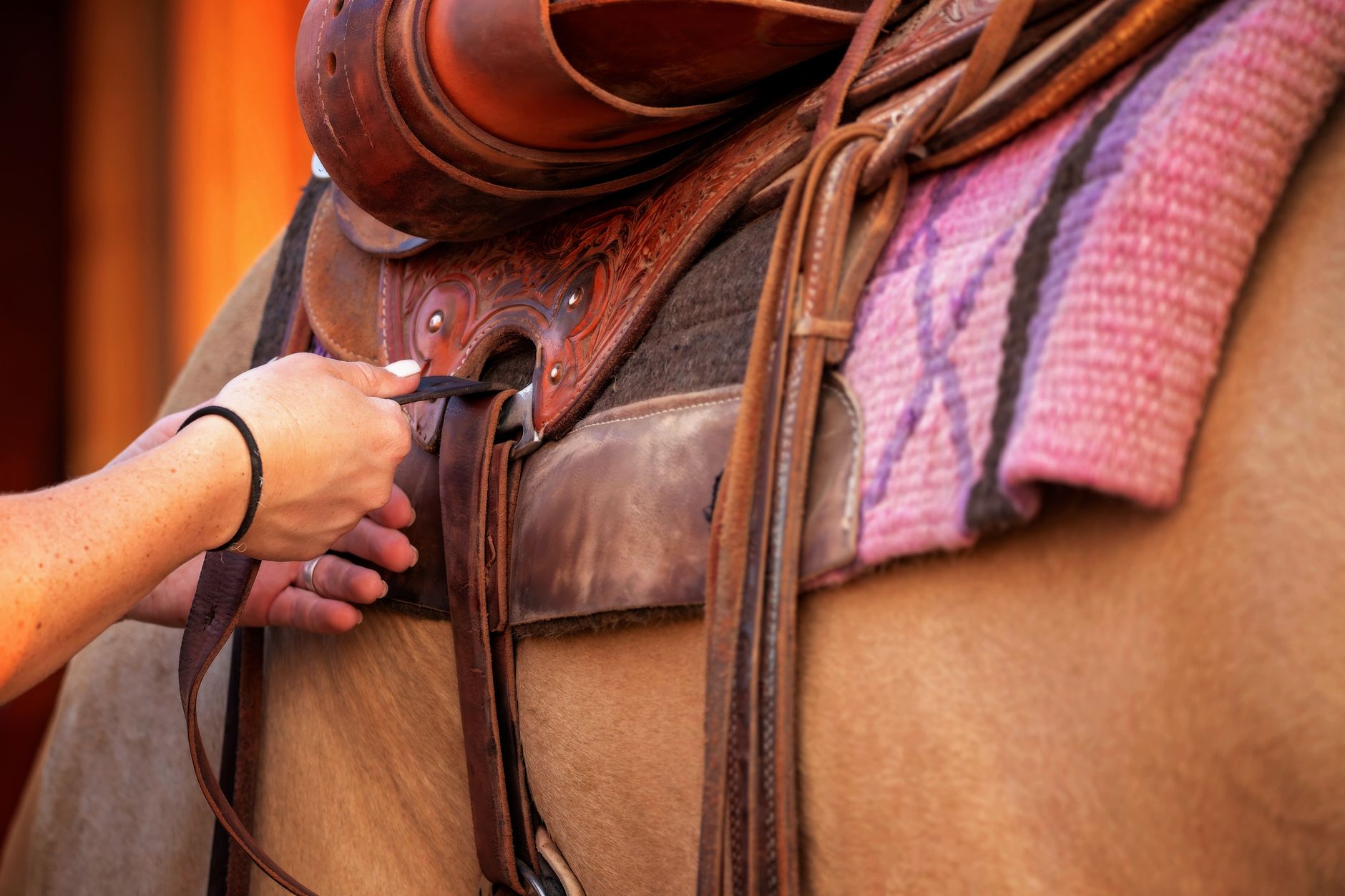
In the saddle, a stirrup bar is a hinged metal bar fixed beneath the skirt of the saddle tree. The leather stirrup leather threads through a slot beside it, lying flat against the saddle flap. The slot’s dimensions are precise – narrow enough to grip the leather under tension, wide enough to allow swift adjustment. There is no ornament involved. Every element of the detail exists to reduce friction, distribute load, and keep the surface smooth under a rider’s leg.
That functional logic transfers directly to shoe design. A strap slot cut into a leather upper or a structured midsole wall performs the same three tasks: it grips, adjusts, and flattens the profile. Where a traditional shoe buckle creates a raised hardware point – a visual interruption across the foot – a slot-fed strap keeps the eye moving along an unbroken horizontal. Designers working with very thin straps, often two to five millimeters wide, find slots more reliable than buckle pins at that scale, because the leather or webbing sits under compression rather than resting on a pivot point that can shift or squeak.
How the Detail Is Moving Through Footwear Collections
The translation from tack room to shoe shelf has happened gradually, without a single obvious announcement. A growing number of independent footwear labels have begun experimenting with internal slot hardware on straps that would traditionally terminate in a visible closure. The slot is cut directly into the upper material or into a thin metal or resin bar stitched flush to the shoe’s edge, and the strap end feeds through and folds back on itself, secured by a single bar tack or a small dot of adhesive. From the outside, the strap appears to simply pass through the shoe’s body and return – clean, low, uninterrupted.
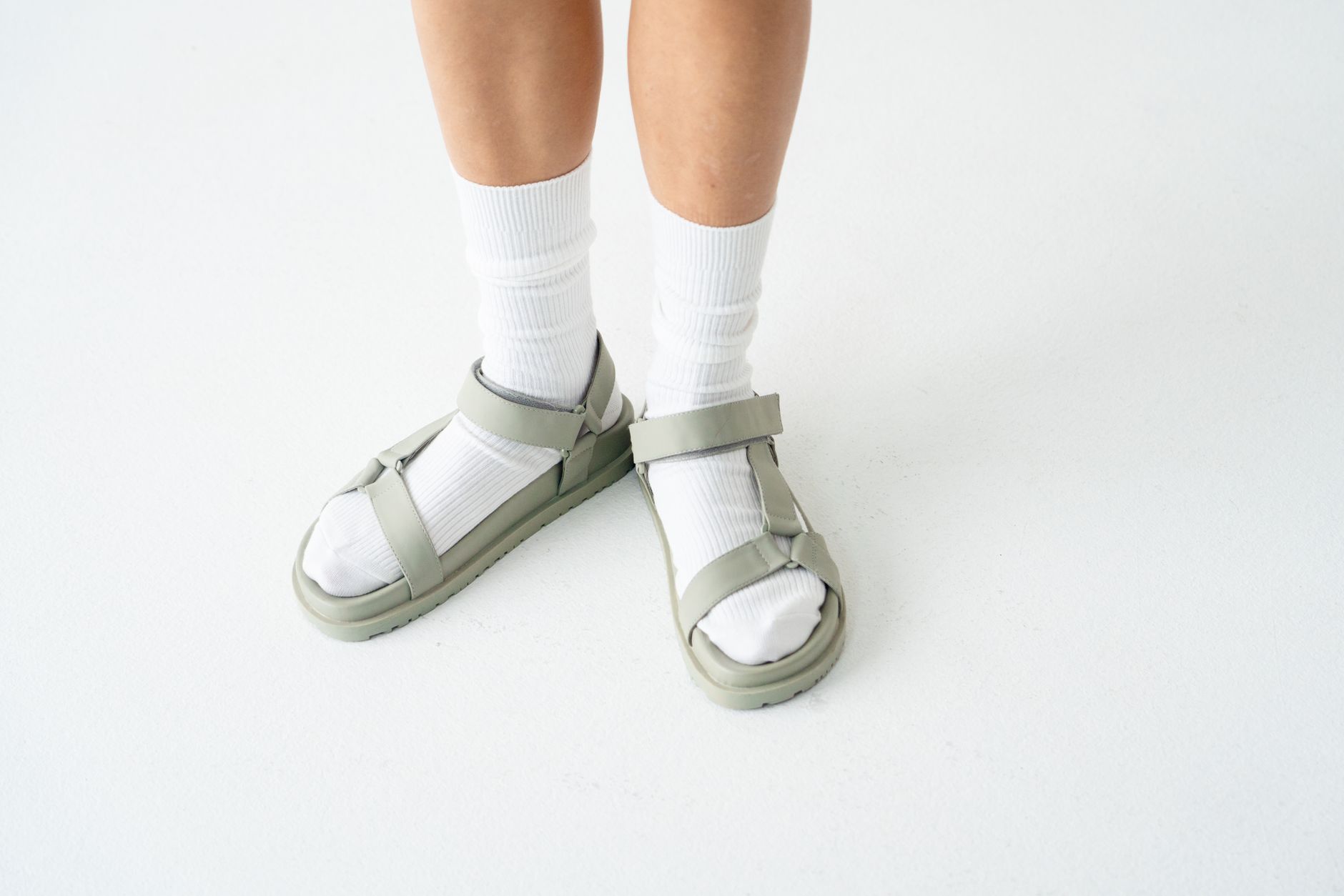
The most common applications so far are in slides and sandals where a single anterior strap crosses the foot at the metatarsal line. This is structurally the most load-bearing position on a sandal, which means the slot detail is not cosmetic – it needs to perform. Slot-fed strap systems at this position distribute pull forces across the full width of the inserted leather rather than concentrating stress at a single buckle hole, which is one reason why the hardware has attracted interest beyond aesthetics alone.
Mules with a low back strap have also adopted the approach, particularly styles built on a rigid footbed where a conventional buckle would sit proud of the heel counter and create pressure points. When the heel strap feeds through a bar slot flush to the counter’s inner face, the fit tightens without any protrusion, and the outside profile remains a single curved line. This matters especially in shoes made from vegetable-tanned leathers or suedes that mark easily under hardware edges.
There is also a growing use of the slot format in ankle-strap styles, where designers are threading the strap through a recessed channel rather than routing it through a D-ring or around a conventional bar. The ankle sits against smooth leather rather than a metal edge, which changes the wearing experience substantially over long periods. Equestrian and sport-adjacent references have been working their way through structured garments as well, suggesting that hardware logic borrowed from performance contexts has broader momentum across categories.
The Visual Effect on Minimalist Silhouettes
Minimalist footwear has long relied on negative space – the absence of detail as detail itself. But negative space alone can tip into blankness, especially in flat shoes where there is little sculptural drama from a heel to compensate. The stirrup bar slot solves this by introducing a single geometric element without adding visual weight. The slot’s opening is typically rectangular and precisely cut, and at the scale of a shoe strap, it reads as a subtle interruption that gives the eye a place to rest without making a declaration.
The difference between a slotted strap and a buckled strap in photography and retail presentation is immediately apparent. A buckled closure creates a highlight point – the metal catches light, the tongue creates shadow, the holes form a dotted line. A slotted strap creates none of those events. The foot reads as a surface crossed by a quiet line, and the shoe’s overall silhouette remains the primary visual fact.
Material Choices That Make the Detail Work
Not every strap material suits a slot system. Thick or stiff leathers resist the fold-back required to secure the strap end inside the slot, which is why designers working with this hardware tend to favor vegetable-tanned calf leather at a thickness between 0.8 and 1.2 millimeters, or flat-woven technical webbing that takes a crease cleanly. Rigid or heavily treated leathers can crack at the fold point over time, undoing the structural promise of the hardware choice.
Metal bar inserts for the slots are typically brass or stainless steel, finished to match the strap edge or left raw for contrast. Resin versions are appearing in warmer-weather collections, particularly in styles aimed at beachwear adjacent contexts where metal corrosion is a concern. The resin bar slot sits slightly warmer against skin than metal, which is a small but noticed difference in a sandal worn for hours.
The slot’s interior dimensions require precision that buckle systems do not. A slot cut too wide loses grip and the strap pulls through under load. Cut too narrow, and the fold-back cannot seat properly, causing the strap to bunch visibly at the entry point. This tolerance requirement has kept the detail in the hands of smaller production runs and independent makers, where fit can be tested strap by strap – which may be exactly why it still reads as a considered choice rather than a mass-market feature.