

The Equestrian Edge Comes to Footwear
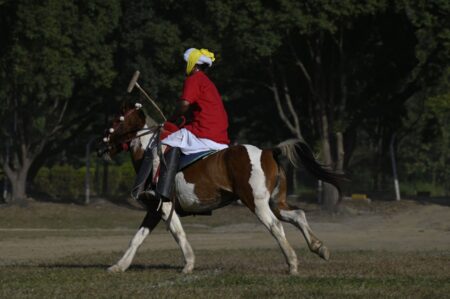
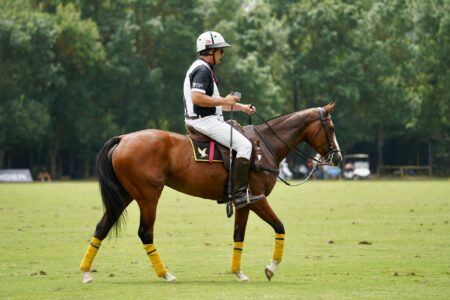
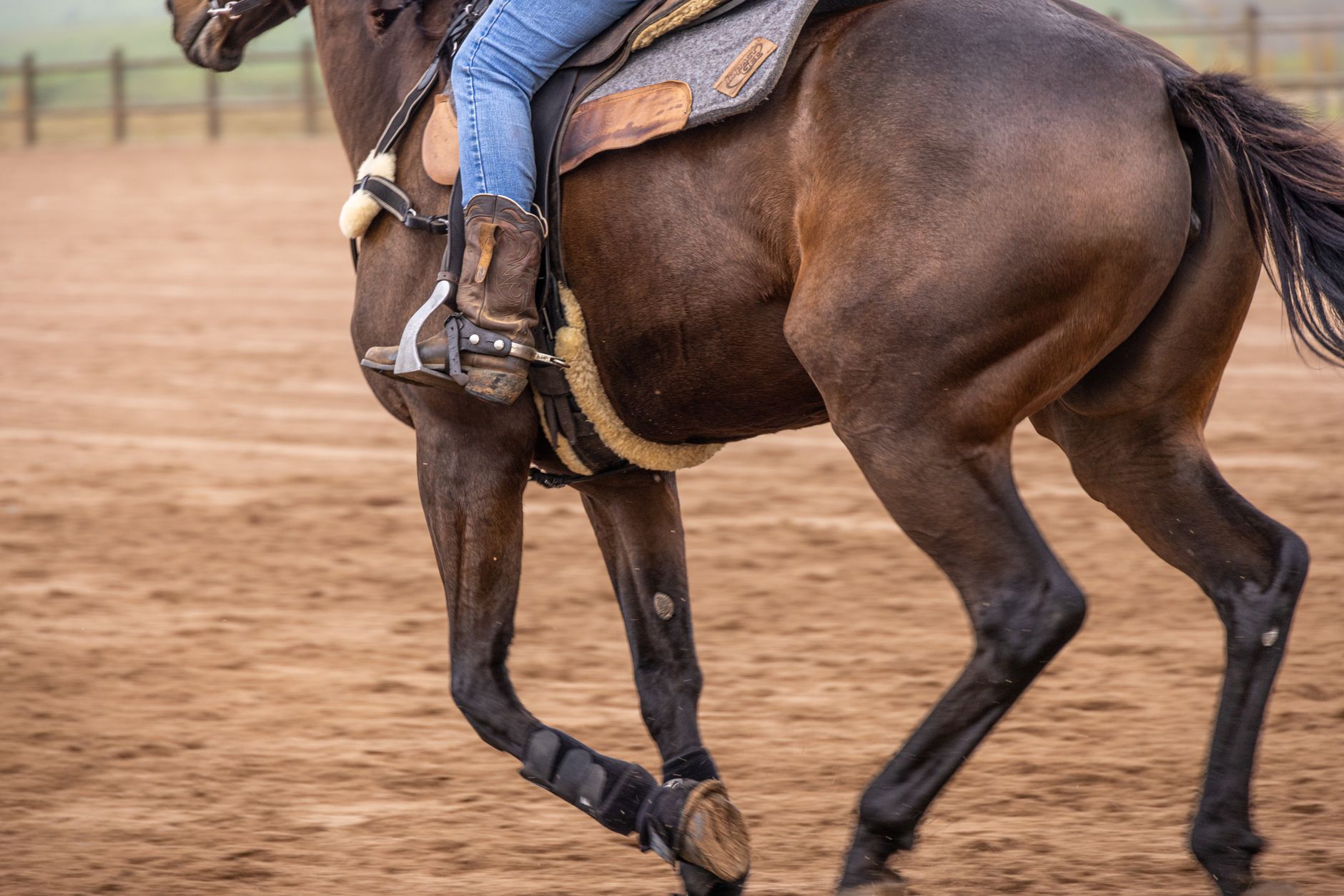
Polo club aesthetics have always carried a particular kind of authority – the kind that comes from function rather than fashion. The saddle stirrup iron, that cold-forged loop of stainless steel that absorbs the weight of a rider mid-gallop, was never designed to be decorative. Yet the hardware logic of the stirrup – its side bars, its lateral framing, its deliberate geometry – is now appearing along the inner and outer shanks of minimalist mules, reinterpreting a working mechanism as a design language for one of fashion’s most restrained silhouettes.
This is not a case of costume borrowing or theme dressing. Designers are pulling the structural grammar of equestrian hardware – specifically the side bar detail, the flat rail that connects stirrup tread to eye – and applying it as an architectural element to the shank, the narrow bridge of sole between heel and toe that defines a mule’s entire visual weight. The result is a shoe that reads as stripped-down but carries the suggestion of serious craft history in its framing.
Why the Shank Became the Canvas
The shank is the most underexamined part of any mule. It sits between the functional zones – the footbed above, the outsole below – and for years it was treated as invisible infrastructure. Minimalist mule design changed that by removing ornamentation everywhere else. When a shoe has no buckle, no toe cap, no ankle strap, the shank becomes the one place where visual intention can be communicated without disturbing the silhouette’s overall calm.
The side bar of a stirrup iron runs vertically along both lateral edges of the stirrup body, creating a clean rectangular containment. Applied to a shank, that same principle – two parallel vertical lines framing a negative space – gives the profile of a flat or low-heeled mule a kind of architectural credibility it previously lacked. The shank stops reading as an afterthought and starts reading as a considered structure.
A growing number of footwear designers working in the quiet luxury space are experimenting with precisely this detail. Metal insets, molded side rails, and contrast-stitched vertical bands along the shank create the same visual effect without requiring literal hardware. The reference is felt rather than stated, which is exactly how equestrian influence tends to work best in ready-to-wear.
Polo Club Heritage and the Minimalist Moment
Polo club dressing occupies a specific cultural register – wealth that assumes physicality, elegance that is also athletic. That register sits very close to the current appetite for minimalism that does not read as austere. The saddle stirrup iron, with its lack of decoration and its obvious purpose, fits naturally into a design vocabulary that values restraint. There is no ornament on a stirrup that does not serve the function of keeping a rider’s foot secure at speed.
That functional confidence is what transfers. A mule shank framed with stirrup-inspired side bars carries an implied narrative about usefulness – about a design decision made because it works, not because it fills space. In an environment where fashion’s most talked-about pieces often argue loudest against their own practicality, that implied utility is a distinct counter-position.
Construction, Material, and the Details That Matter
The material choices in this trend are doing significant work. Brushed stainless steel inserts along the shank reference the cold steel of actual polo stirrups without the weight. Vegetable-tanned leather side bars stitched flush with the outsole edge carry the same visual rhythm in a softer register. Some shoe construction uses a raised lateral welt – a strip of leather that runs the shank’s length – that creates the side-bar shadow line without any added hardware at all.
The geometry has to be precise for this to land correctly. If the side bars are too thick, the mule reads as clunky rather than architectural. If they are too fine, the reference disappears entirely and the detail becomes ambiguous. The most successful executions use a bar width that mirrors the actual proportions of a standard polo stirrup iron – roughly the same visual weight as the edge of a good leather belt. That proportion connects the shoe, however subtly, to a recognizable object without requiring the viewer to identify the source consciously.
Color choices reinforce the connection. Cognac and dark chestnut leathers against a natural rubber or raw leather outsole edge recall the tack room palette – the combination of oiled leather and polished metal that defines the look of well-maintained polo equipment. Black-on-black versions push the detail toward urban minimalism while retaining the structural logic. Neither reading is wrong; the reference is flexible enough to hold both.
The mule silhouette itself amplifies all of this because it eliminates competing information. Without a heel counter, without an ankle enclosure, the eye travels the full length of the shoe and the shank framing becomes the visual anchor. A detail that would be lost on a boot or obscured by a lace-up becomes the defining line of the entire shoe. That is the specific logic of why the stirrup side bar works here and not everywhere – the mule’s openness creates the negative space the detail needs to register. Whether that is enough to sustain the trend beyond a single season depends on whether the construction technique becomes standardized or stays in the hands of the designers currently treating it as a point of difference.