

Polo club surcingle belts have always carried a certain visual authority – flat, tightly woven, striped in the colours of a club or regiment, and buckled with no-nonsense hardware. For most of their history, they existed as equestrian accessories, worn over breeches or riding trousers where a traditional leather belt would only get in the way. The design logic was purely functional: keep the jacket in place, signal affiliation, survive the wear of a saddle and a long afternoon on the field.
Now that same webbing construction is migrating into something far more deliberate. Designers working across tailoring, workwear, and contemporary suiting are pulling the surcingle’s characteristic flat-weave structure directly into belt loop architecture – building the woven strap into trouser waistbands as a fixed or adjustable element rather than threading a separate belt through.
The change is subtle enough that most people won’t notice it at first glance.
What Surcingle Construction Actually Brings to the Waistband
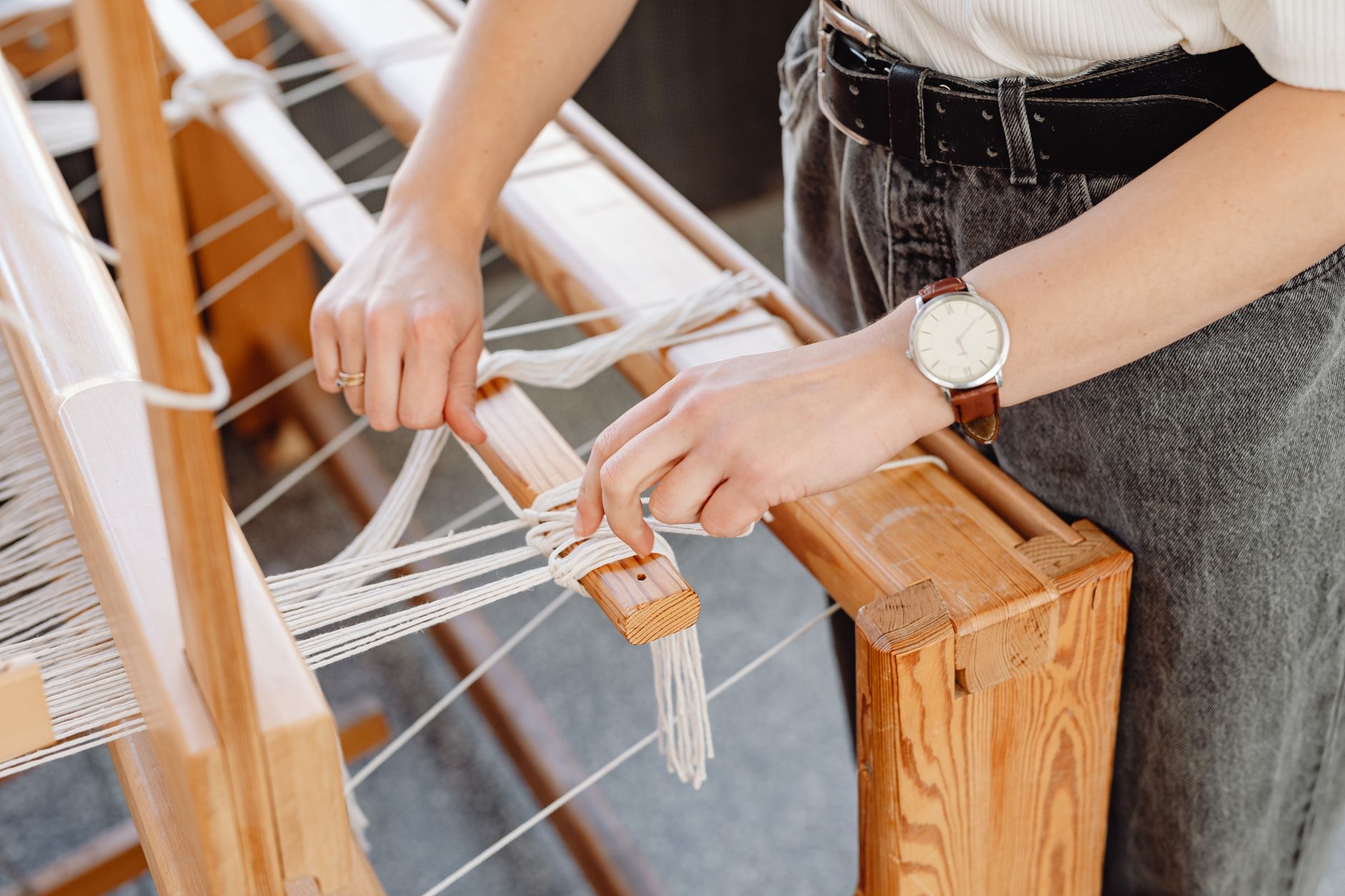
A surcingle’s defining feature is its rigidity without bulk. The woven webbing – traditionally cotton, wool, or a cotton-nylon blend – lies completely flat against the body because it has no folded edges, no stitching seam running down its length, and no leather layering underneath. When you press that structure into a trouser’s belt loop system, you get a waistband that holds its shape through the day without creating the familiar ridge that leather belts press into shirting fabric.
The structural benefit goes further than comfort. Standard belt loops are essentially passive – small fabric tunnels that only do anything once a belt is inserted. When the surcingle webbing is woven into the loop itself or runs as a continuous band across the back panel of a trouser, the waistband becomes self-supporting. The trouser’s silhouette is locked from the inside out. This is particularly relevant for unlined trousers or lightweight summer tailoring where waistband sag has always been a problem on hot days or after long wear.
There is also the question of surface texture. Woven webbing – especially in a multi-colour regimental stripe – adds visual information to a trouser that plain fabric loops cannot. A pair of navy wool trousers with cream and burgundy surcingle webbing threaded through the back two loops reads as intentional and specific in a way that a solid fabric loop simply never could. The detail rewards close inspection without demanding it.

How the Trend Is Moving Through Different Dressing Registers
The surcingle’s migration into belt loops is not playing out the same way across every corner of fashion. In British tailoring – where the equestrian reference feels genuinely native – some bespoke and made-to-measure houses have been threading flat webbing through the back adjusters of trousers for several seasons, treating it as a natural extension of the country-dress vocabulary rather than a borrowed trend. The connection to structured trouser details in that world runs deep; the same sensibility that produces buckle tabs on trouser waistbands finds the surcingle loop detail entirely logical.
Streetwear and workwear labels are approaching the same detail from a different angle. Here, the webbing loop is often wider, heavier, and more overtly technical – closer to military or utility webbing than to club-stripe polo tape. Brands experimenting with this interpretation tend to run the strap as a visible external brace across the front of the trouser rather than nesting it inside the waistband. The result looks more like a harness element than an equestrian one, which serves a completely different customer while drawing on the same basic construction principle.
Contemporary tailoring labels sitting between those two poles – the ones dressing people who want a suit that functions across a full workday and an evening without a change – have found the surcingle loop useful precisely because it avoids looking like either. A single stripe of dark webbing threading through carefully placed loops at the trouser’s quarter-back position reads as a quiet technical flourish. It does not shout polo field or construction site. It just holds the trouser better than anything else at that thickness.
The Material Question and Why It Matters
Not all webbing performs the same way inside a belt loop. Cotton webbing breathes and softens with wear but can lose tension after repeated washing. Nylon webbing holds its shape indefinitely and comes in finer weights that sit closer to tailoring-grade tape, but it does not take dye with the same depth or consistency as natural fibre, which matters when the stripe pattern is part of the visual point. Wool webbing – the closest material to traditional polo surcingle tape – is the most expensive and the most difficult to source in the narrow widths that belt loop construction requires.
Some labels are solving this by blending fibres, running a cotton-nylon core with a wool-faced surface that takes colour well and maintains its profile across a trouser’s life. Others are sourcing directly from saddlery webbing suppliers, which produces a product that looks almost exactly like the original polo application because it comes from the same supply chain. That sourcing decision has a secondary effect: the hardware. Saddlery-grade webbing is cut to work with brass and nickel fastenings that are thicker and more precisely finished than most trouser hardware. When those buckles show up at a trouser’s side adjuster, the upgrade in quality is immediately tactile.
Weight is the final variable, and the one designers seem to be negotiating most carefully. Webbing that is heavy enough to anchor a saddle will distort a lightweight wool-linen trouser. The sweet spot for belt loop integration appears to be webbing in the range used for briefcase straps or military cap chinstraps – substantial enough to read as structural, light enough not to pull the waistband out of line.

The surcingle’s move from equestrian function to trouser architecture is not about nostalgia for the polo field – it is about a construction detail that solves a real problem in a way that also looks like something. Once that combination works, it tends to stay.
Frequently Asked Questions
What is a polo club surcingle belt?
A surcingle is a flat woven webbing belt traditionally worn in equestrian sports to secure a jacket over breeches, typically striped in club or regimental colours with simple buckle hardware.
How is surcingle webbing being used in modern trouser design?
Designers are integrating the flat woven webbing directly into belt loop architecture and back waistband adjusters, creating self-supporting trouser silhouettes that hold their shape without a separate leather belt.