

From the Polo Field to the Wrist
Tail bandages – those tightly wound strips of stretchy fabric traditionally used to smooth and protect a horse’s tail before competition – are making an unlikely crossing into jewelry and accessories. The material logic is simple: consistent tension, uniform wrapping, tactile texture. What polo grooms have known for decades, minimalist designers are only just beginning to work with.
The Anatomy of a Trend Nobody Saw Coming
Polo tail bandages are distinct from standard leg wraps. They’re narrower, lighter, and wound with a specific overlapping spiral technique that creates a clean, ridged surface. That visual – a dense, structured coil – is exactly what draws designers toward them. Wrapped around a wrist, the effect sits somewhere between a tension bracelet and a sculptural cuff, with none of the coldness of metal and none of the softness of leather.
The color palette already available in equestrian supply lines happens to align almost perfectly with the neutral, earthy tones dominating accessories right now. White, navy, forest green, burgundy, and a flat oatmeal beige are standard catalog offerings from equestrian brands. None of these required rebranding. They arrived pre-matched to what fashion’s quieter end was already reaching for. A growing number of small accessories labels are sourcing the raw fabric directly from equestrian wholesale suppliers, bypassing the development stage entirely.
Wrist wrapping as an aesthetic concept isn’t new – athletic taping, kinesiology strips, and martial arts wraps have cycled through fashion references before. What makes the polo tail bandage version different is the finish. The fabric has a slight sheen from its synthetic or cotton-blend construction, and the overlapping wrap technique creates a three-dimensional ridge pattern that photographs with unusual depth. On screen, it reads as structured and intentional rather than athletic or medical.
This trend connects naturally to the broader conversation happening around polo club leg wraps moving into textural scarf territory – the equestrian supply chain is becoming a genuine material source for fashion, not just a mood board reference. The bandage itself costs very little at the wholesale level, which makes it attractive to independent designers working with tight margins. The value isn’t in the raw material; it’s entirely in the application.
How Designers Are Actually Wearing This
The most direct interpretation involves wrapping a single tail bandage – typically cut to a custom length – around the wrist three to five times, securing it with a small metal hook closure or a tucked fold. The result is a wide, layered cuff that sits flat against the skin. Some designers are leaving the edges raw for a deliberate unfinished quality; others are heat-sealing the ends or adding minimal hardware to signal intentionality. Neither approach reads as equestrian unless you already know the source material.
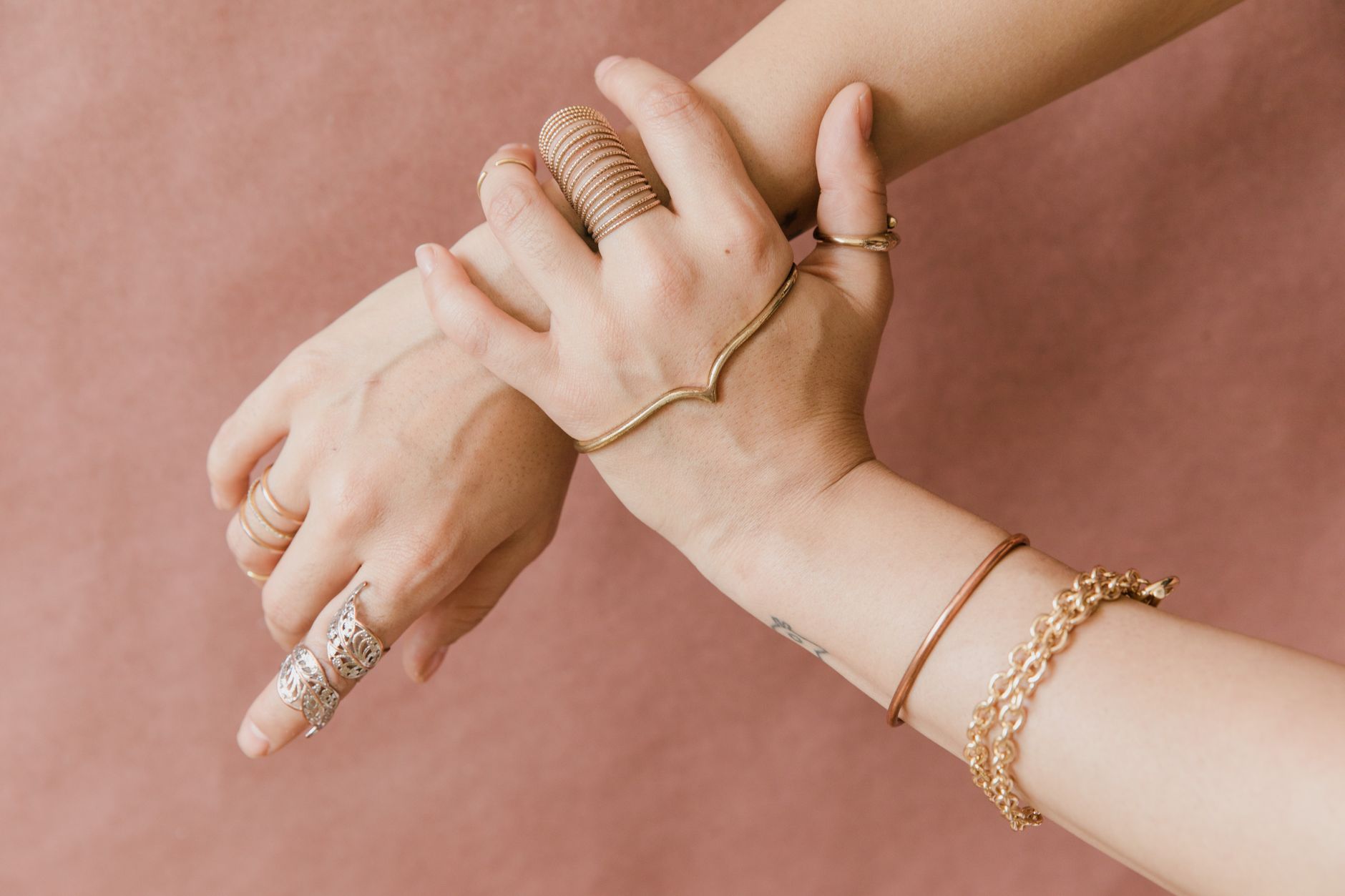
A second approach uses the bandage as part of a stacked wrist configuration – paired with fine chains, resin beads, or thin leather cord. The bulk of the wrapped bandage provides contrast against the delicate lines of more conventional jewelry. This layering logic is why the trend works particularly well for people who already build their wrist stack incrementally. The bandage functions as an anchor piece: wide enough to ground everything else without competing for visual dominance.
Color blocking is emerging as a specific application. Some makers are working with two bandages in contrasting colors – wrapping them in alternating passes rather than solid blocks – to create a gradient or chevron effect along the wrist’s length. This approach requires significantly more precision in the wrapping process, and the finished pieces are selling at a markup that reflects the labor rather than the materials. The technique is difficult to replicate without practice, which adds a handcraft dimension that mass production hasn’t caught up to yet.
There are also wearers taking an entirely DIY route. The bandages are widely available through equestrian supply retailers at low cost, and tutorials showing how to wrap, secure, and customize them have started appearing across short-form video platforms. This self-assembly dimension gives the trend a participatory quality that polished retail versions don’t have. Part of the appeal is showing the source – explaining, when asked, that the bracelet came from a horse supply catalog.
The tactile experience matters more here than with most accessories. Unlike a bangle or a beaded bracelet, the wrapped bandage moves with the wrist, breathes slightly, and can be adjusted in tension. It warms to body temperature quickly. For people who find rigid metal bracelets uncomfortable or who remove jewelry instinctively, the softness of the wrap format is a genuine functional advantage, not just a stylistic one.
The Minimalist Case for Equestrian Material
Minimalism in accessories has long meant reduction: fewer pieces, cleaner lines, quieter finishes. What the tail bandage brings is a different kind of minimalism – one based on material honesty rather than absence. The bandage doesn’t pretend to be something it isn’t. It’s a wrap. The wrapping is visible. The construction is the design. That transparency of form is consistent with the broader appetite for objects that show how they’re made rather than concealing it.
The question that remains unresolved is longevity – not of the trend, but of the object itself. Polo tail bandages are designed to be washed, re-rolled, and reused in a stable context, not worn daily against skin, cosmetics, and weather. How the fabric holds its structure and color after weeks of regular wear is something early adopters are still reporting back on. Some wraps are holding perfectly; others are losing tension at the edges after heavy use. That inconsistency hasn’t slowed the interest – if anything, the impermanence makes each piece feel more specific to the person wearing it.