

From the Polo Field to the Fashion Drop
Polo club exercise bandages – those tightly wound, color-coded strips used to protect horses’ legs during warm-up sessions – have quietly found a second life in fashion. Designers and independent labels are borrowing their silhouette, their stretch, and their unmistakable layered bulk to build a new kind of arm warmer that sits somewhere between equestrian utility and street-ready accessory.
The Anatomy of the Crossover
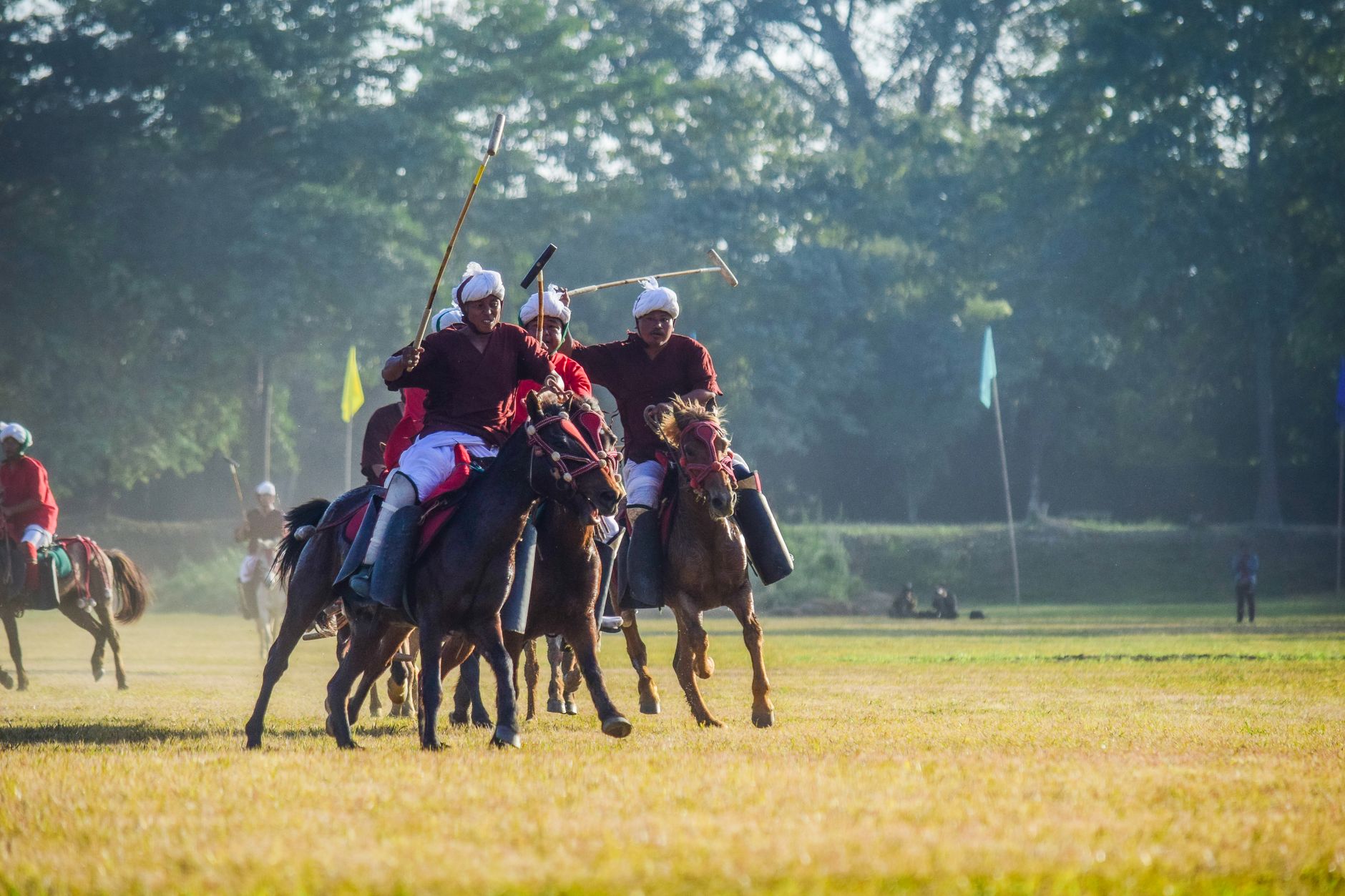
The exercise bandage is not a glamorous object by most definitions. It wraps, it compresses, it protects. A standard polo bandage runs several feet long, often in thick fleece or cotton-blend material, wound in overlapping spirals from just below the knee to the fetlock. The result is a dense, structured column of fabric – functional, yes, but also visually striking in a way that fashion has always found useful to poach from.
What makes this particular object appealing as a reference point is the wrapping logic. Unlike a regular sleeve or a knit tube, the bandage look implies labor, intention, and ritual. Each layer is placed deliberately. That wrapped quality, when translated into a wearable arm warmer, reads as sculptural rather than simple. The arm becomes something architectural, something you notice before anything else in an outfit.
Independent knitwear and accessories labels have been the first to move on this. Rather than reproducing the bandage literally, they are approximating its effect through tightly coiled ribbing, self-wrapping tie systems, and multi-ply construction that builds visible volume from wrist to mid-bicep. Some versions close with ties that hang loose, directly echoing the velcro or self-fastening ends of a real polo bandage. Others stack different yarn weights to recreate that dense, layered column of material.
The color language matters too. Polo bandages have always come in club-specific shades – block colors, two-tone combinations, the occasional stripe – chosen not for aesthetics but for field identification. Those same combinations – dusty navy with cream, hunter green with tan, burgundy with pale gold – translate almost directly into the palette that knitwear designers are pulling for autumn and resort drops. The equestrian reference doesn’t need to be stated. It reads immediately to anyone who has spent time near a polo field, and reads as simply good color sense to everyone else.

Why This Trend Has Legs Beyond the Novelty Cycle
Sportswear-to-fashion crossovers tend to peak fast and fade. The polo bandage reference, though, is attaching to something more durable than a single-season novelty. Arm warmers as a category have been building momentum for several consecutive seasons, driven partly by the layering culture that followed a widespread return to dressing for the outside world, and partly by the renewed interest in accessories that operate as focal points rather than supporting details. The arm warmer is already having its moment. The polo bandage just gives it a sharper point of view.
There is also a tactile argument here. The materials associated with equestrian bandaging – fleece, dense ribbed cotton, wool-blend fabrics with real weight – are exactly the materials consumers have been gravitating toward as a reaction against the thin, barely-there construction that dominated athleisure for years. Wearing something that feels substantial, that wraps and holds and has actual presence on the arm, satisfies a desire for craft that lighter accessories simply cannot. The wrapping format delivers that satisfaction in a visible, physical way.
The polo world itself carries a specific cultural weight that has nothing to do with mass accessibility. It is niche, it is expensive to participate in, and it has its own visual codes that most people recognize without fully understanding. That combination – aspirational, slightly opaque, visually distinct – is exactly what fashion borrows from when it wants to signal something beyond a brand logo. The exercise bandage sits in that sweet spot between obscure reference and immediate visual legibility. You do not need to know polo to understand that something intentional is happening at the wrist.
The styling context for these pieces leans heavily on contrast. Wrapped, dense arm warmers work against bare skin or under oversized shirting, where the structured column of fabric reads against looseness or minimalism. They have been showing up in editorial contexts paired with simple column dresses, with open-back tops, with wide-leg trousers where the arm becomes the only point of visual complexity in an otherwise stripped-back look. The polo reference, worn this way, functions as punctuation rather than costume.
This sits alongside a broader appetite for sport-specific referencing that pulls from the more rarefied end of the sporting world – a direction that rowing club colorways bleeding into resort knitwear have also explored. When the sport in question has its own strict visual identity, the borrowing tends to be more precise and more lasting than when it draws from a sport with no established aesthetic shorthand.
The Drop Format and What Comes Next
The arm warmers working from this reference are arriving almost exclusively in limited drops rather than full-season collections. That format suits the object. A polo bandage-inspired piece is specific enough that it works as a statement within a capsule, where it can carry its own narrative without needing to anchor an entire line. Labels releasing two or three colorways at a time, in small runs, are finding that the deliberate scarcity does exactly what the polo reference implies – this is not mass market, and it is not trying to be.
What remains unresolved is whether the silhouette will hold at the higher end of the market or stay primarily in the independent and emerging label space. The wrapped arm warmer is a surprisingly difficult object to scale without losing what makes it interesting. If production shortcuts flatten the layered volume, or if fast-fashion versions strip out the material weight that makes the tactile argument work, the reference collapses into a novelty pretty quickly. The whole point is that it feels like something wrapped around you with purpose. Without that, it is just a sleeve.
Frequently Asked Questions
What are polo exercise bandages and why are they inspiring fashion?
Polo exercise bandages are thick, tightly wound strips used to protect horses’ legs during warm-up sessions. Their layered, sculptural wrapping and club-specific color combinations have made them a compelling reference for knitwear and accessories designers.
How do polo bandage-inspired arm warmers differ from regular arm warmers?
They emphasize dense, layered volume and deliberate wrapping construction – often using tightly coiled ribbing, multi-ply yarns, or loose tie closures – rather than simple knit tubes, giving the arm a more architectural, structured appearance.