

When Prep School Becomes the New Street Corner
Rowing Blazers built its name on a specific kind of defiance – the kind that wears a club stripe blazer to a dive bar without irony. Founded on the aesthetic language of Ivy League boathouses and British sporting clubs, the brand spent years operating as a knowing insider’s joke: technically traditional, spiritually chaotic. Its blazers were cut correctly, its repp ties were authentic, but the combinations it encouraged were anything but orthodox. That tension – between the rules of tailoring and the refusal to follow them – is now spreading far beyond the brand itself.
What started as a niche obsession among vintage-hunting New Yorkers and prep-adjacent fashion editors has begun filtering into the broader tailoring conversation. Independent menswear stores in cities from Chicago to London are stocking blazers with bolder stripes, brighter lining contrasts, and the kind of mismatched button combinations that once would have gotten you thrown out of a proper club. The Rowing Blazers aesthetic – deliberately over-dressed, gleefully mismatched, unapologetically loud – is no longer a subcultural signal. It is becoming a template.

The Grammar of the Stripe
The stripe blazer is not new. Rugby stripes, school colors, club crests, regimental patterns – these have existed in tailoring for over a century. What Rowing Blazers did was strip out the exclusivity and replace it with accessibility, then push the volume up. A horizontal stripe blazer worn with a floral shirt and mismatched trousers is not a styling accident; it is a very specific statement about knowing the rules well enough to break them visibly. The brand made that kind of studied irreverence feel cool rather than confused.
That framing matters because it changed how mainstream buyers approach the concept. When a stripe blazer reads as chaos, most consumers avoid it. When it reads as confidence, the same garment becomes something to reach for. The shift in how the blazer is marketed and styled – always as a centerpiece rather than a layering piece, always paired with at least one other pattern – is what gave the look its current momentum. Buyers are not just purchasing a garment; they are purchasing a posture.
How Mainstreet Tailoring Is Absorbing the Influence
The more interesting development is not what Rowing Blazers itself is doing, but what mid-market tailoring brands are quietly borrowing. Affordable lines that previously offered only navy and charcoal are experimenting with chalk stripe jackets in rust and cobalt. Suit separates sections in department stores are increasingly stocked with blazers in patterns that would have looked out of place in those aisles three years ago. The visual language has trickled down fast.
Part of what accelerated this is the broader loosening of the office dress code. When tailoring no longer needs to signal corporate compliance, it can carry a different kind of message entirely. A blazer becomes a personality statement rather than a uniform component, and that opens the door for exactly the kind of bold patterning that Rowing Blazers has championed. The formal structure of tailoring – the lapel, the welt pocket, the structured shoulder – remains, but the surface is now available for expression in ways it was not before.
Social media has also compressed what used to be a long trickle-down cycle. The visual shorthand of the club stripe blazer reads immediately on a screen. It photographs well, it contrasts well against plain backgrounds, and it communicates a specific character type – knowledgeable but relaxed, formal but not stiff – that aspirational dressing has always chased. A growing number of smaller brands are leaning directly into this, building entire capsule collections around the stripe blazer as hero piece rather than secondary option.
The styling conventions that Rowing Blazers popularized are also showing up in unexpected places. The pairing of a structured blazer with athletic shorts, which the brand ran in collaborations and lookbooks, now appears in the collections of labels that would never have considered it five years ago. The collision of athletic and tailored has become a recognized styling grammar rather than a stunt, and Rowing Blazers helped write the rulebook.
The Tension Underneath the Trend
There is a complication in this story, and it is one that attaches to any subculture that goes wide. Rowing Blazers’ appeal was always partly built on the sense that the wearer was in on something. The repp tie worn correctly, the school crest worn incorrectly, the institutional blazer worn by someone who has no institutional affiliation – these choices meant something because they required a certain amount of knowledge to execute. When the look becomes a mass-market option, some of that signal noise disappears.
The brand itself has navigated this by staying relentlessly specific – leaning into archival references, limited runs, and collaborations that reward attention. But the mainstream tailoring trend that Rowing Blazers helped ignite does not carry that specificity with it. A stripe blazer from a fast-turnaround retailer is not making the same argument as an original club stripe from a boathouse rack. The surface aesthetic travels; the underlying context mostly does not.

What the Mainstreet Version Actually Looks Like
Walk into a mid-range menswear retailer right now and the evidence is visible. Block-color blazers in terracotta and forest green. Contrast-button single-breasted jackets. Striped lining made visible by the deliberate fold of a pocket square. These are design choices borrowed from a very particular vocabulary, now translated into price points and production runs that a much wider buyer base can reach.
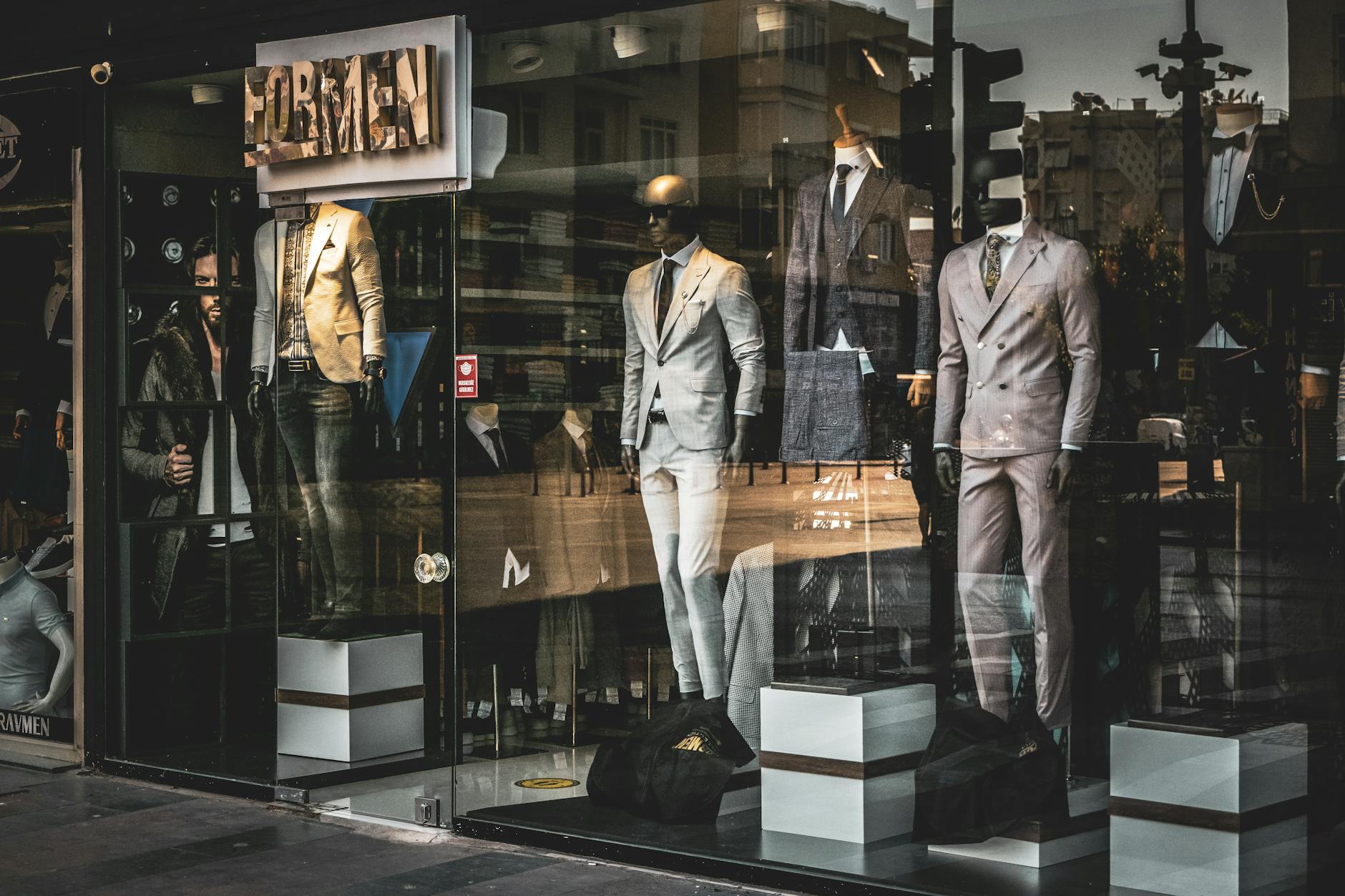
The styling direction offered alongside these pieces has also changed. Where mannequins once showed the blazer over a white shirt and dark trouser, they now show it over a crew-neck knit, or with a printed short-sleeve shirt underneath, or alongside workwear-weight trousers in a contrasting shade. The message from the shop floor is that the blazer no longer requires a matching anything. That is not a natural evolution of retail styling – it is a direct import from how Rowing Blazers has been presenting itself since its early years.
What remains genuinely unclear is whether the casual buyer picking up a stripe blazer at a mid-market price point wants the full weight of the reference, or simply wants the visual energy without the homework. Rowing Blazers built its audience on people who wanted to do the homework. The mainstreet version may not need that commitment – but it also does not quite make the same argument once the homework is removed.