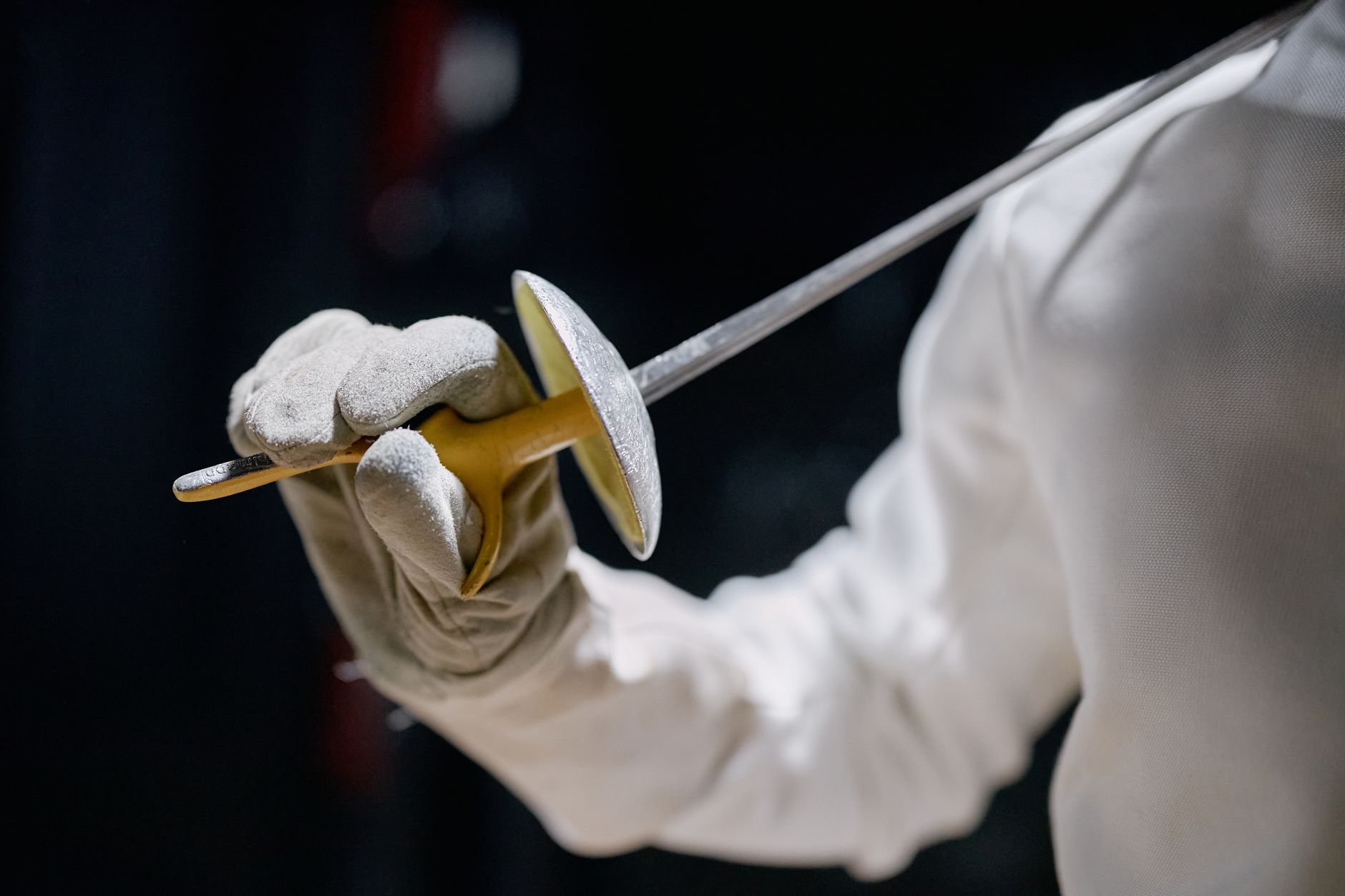
Sport-specific protective gear has a long history of bleeding into everyday dress – and fencing, long overlooked in that conversation, is making its case through one very particular construction detail: the underarm plastron seam.
Where the Plastron Seam Comes From
The underarm plastron is a half-jacket worn beneath the main fencing jacket, designed to double-layer the sword arm and underarm area against blade penetration. Its seams are placed deliberately – angled, reinforced, and cut to allow extreme rotational movement of the shoulder without bunching or binding. The geometry is not an aesthetic choice. It is an engineering one, refined over decades of competitive safety standards in foil, epee, and sabre disciplines.
That geometry, it turns out, solves a problem tailoring has wrestled with for centuries. The underarm of a fitted jacket is among the most structurally demanding zones in clothing construction. Lift your arm, reach across a table, throw a punch – and the average tailored sleeve will pull, crease, or restrict somewhere between the armscye and the side seam. The traditional answer was the gusset: a diamond or triangular insert of fabric sewn into the underarm to add mobility without changing the exterior silhouette of the sleeve.
Gussets have appeared in military uniforms, athletic wear, and bespoke suiting for well over a hundred years. A well-cut gusset in a shooting jacket or a cavalry coat allowed full arm extension without distorting the shoulder line. The problem is that gussets, when poorly executed, create visual bulk – a telltale puff of fabric visible even when the arm is at rest. High-end tailors have managed this for generations by hiding the gusset in shadow or restricting it to working garments. Fashion has generally avoided it in dress wear, accepting range-of-motion limitations as the price of a clean silhouette.
The plastron seam offers a different approach. Rather than inserting a separate piece of fabric, it repositions the seam itself – routing it through the underarm in a curved arc that distributes stress across a longer line. The result is a garment that moves with the wearer without relying on an extra panel. It is a subtraction solution where the gusset was always an addition one.
Why Tailoring Is Taking Notice Now
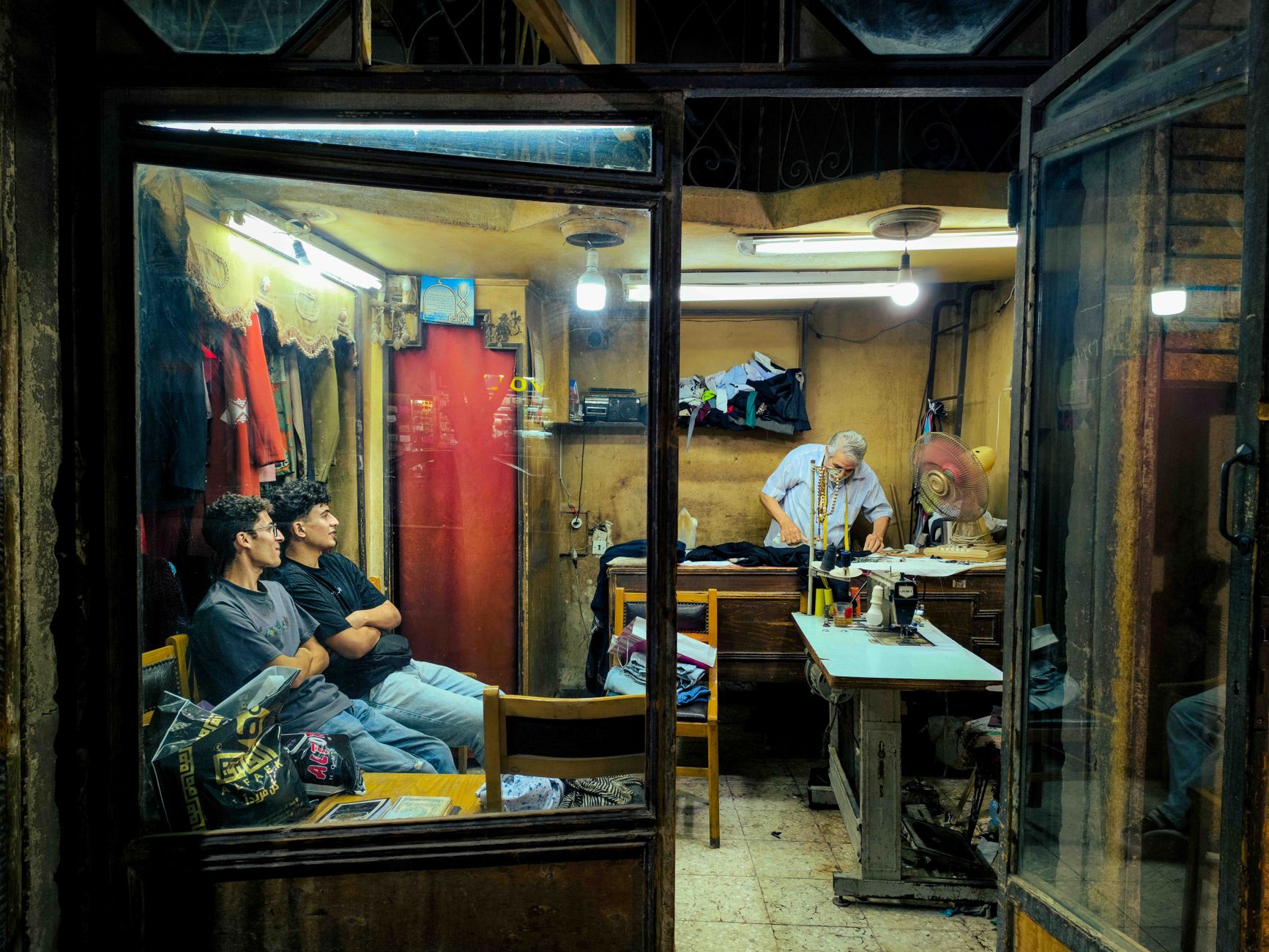
The timing of this crossover is not accidental. Tailoring has been under sustained pressure to deliver garments that perform across contexts – a suit worn at a desk, on a bicycle, in a cab, and through a full evening of standing and socializing. The old compromise was stretch fabric: adding elastane to wool to buy back the mobility that structured cutting had removed. But stretch fabric carries its own penalties in drape, longevity, and the way it ages on the body. A growing number of tailors and ready-to-wear designers are looking at cut geometry instead, asking whether the silhouette can be preserved while the seam placement does the mobility work.
Plastron-influenced seaming addresses exactly that. The angled underarm seam, when adapted for tailoring, routes through the body of the jacket at a pitch that follows the natural crease of arm movement rather than fighting it. The sleeve can rise without pulling the back, and the chest stays flat without the shoulder climbing. For a garment meant to look composed under movement, this is a meaningful functional gain achieved entirely through pattern construction rather than fabric engineering.
The adaptation requires significant pattern adjustment because fencing jackets and tailored suits start from different silhouette assumptions. A plastron is close-fitting across the torso but allows maximum shoulder rotation – it has no lapel, no structured chest canvas, no suppressed waist. Translating the seam logic into a structured jacket means grafting that arc onto a pattern that is simultaneously trying to maintain shoulder definition, chest shape, and a controlled silhouette through the hip. The tailors experimenting with this are doing precise work, not simply copying a seam line from one garment category to another.
Some of this experimentation is happening in the space where equestrian and sport tailoring have long operated – which is also where polo club pad cloth welts have been edging into tailored jacket hems, another instance of sport construction detail solving a structural problem in dress wear. The equestrian and fencing worlds share a concern with formal presentation under physical demand, and their garment constructions have developed parallel solutions to arm mobility that mainstream fashion is only recently beginning to borrow.
What makes the plastron seam particularly interesting to tailors is its invisibility. Unlike a gusset, which requires a separate piece of fabric and a visible insertion point, the rerouted seam reads on the finished garment as simply the way the sleeve joins the body. There is no extra panel to catch the eye or create shadow when the arm is at rest. A client wearing a jacket with plastron-influenced underarm seaming will not know, from looking in the mirror, that anything unusual has been done. They will know from how the jacket moves when they reach for something.

What This Means for the Sleeve Going Forward
The sleeve is arguably the most technically complex element in tailored construction, and it has changed very little in its fundamental architecture for decades. The gusset has existed as a workaround – acknowledged, functional, but never quite accepted into the formal vocabulary of dress tailoring. Plastron seam geometry offers something different: a way to build mobility into the pattern from the start, without the visual or structural compromise of the insert. For any tailor tired of explaining to a client why their custom jacket still pulls when they drive, that is a meaningful proposition.
Whether the approach scales into ready-to-wear production is a real question. Pattern grading across sizes complicates curved seam geometry in ways that straight seams do not, and manufacturing at volume requires consistency that handwork can absorb more forgivingly than machines. The construction detail that works beautifully in a one-off commission may create production headaches at a thousand units. That tension – between the functional intelligence of the plastron seam and the practical constraints of how most clothing is actually made – is where this trend will find its limits, or its next evolution.