

When Equestrian Gear Becomes Evening Wear
The polo breastplate – a piece of tack designed to keep a horse’s saddle from sliding backward during a canter – has no obvious business appearing on a cocktail dress. And yet, the structural yoke that holds that breastplate in place across the horse’s chest is now showing up as one of the more quietly insistent silhouette ideas working through contemporary fashion. Designers are lifting the arched, bib-like geometry of the breastplate yoke and applying it directly to décolleté necklines, creating a look that reads as both armored and exposed at once.
What makes this particular crossover worth watching is the tension it introduces at the neckline. A traditional décolleté line is about softness and openness – it draws attention through absence, through what the fabric gives up. The breastplate yoke does the opposite. It structures, frames, and holds. When you combine both impulses in the same garment, the result is a neckline that feels genuinely new rather than simply archival.
The Anatomy of the Yoke and Why It Translates
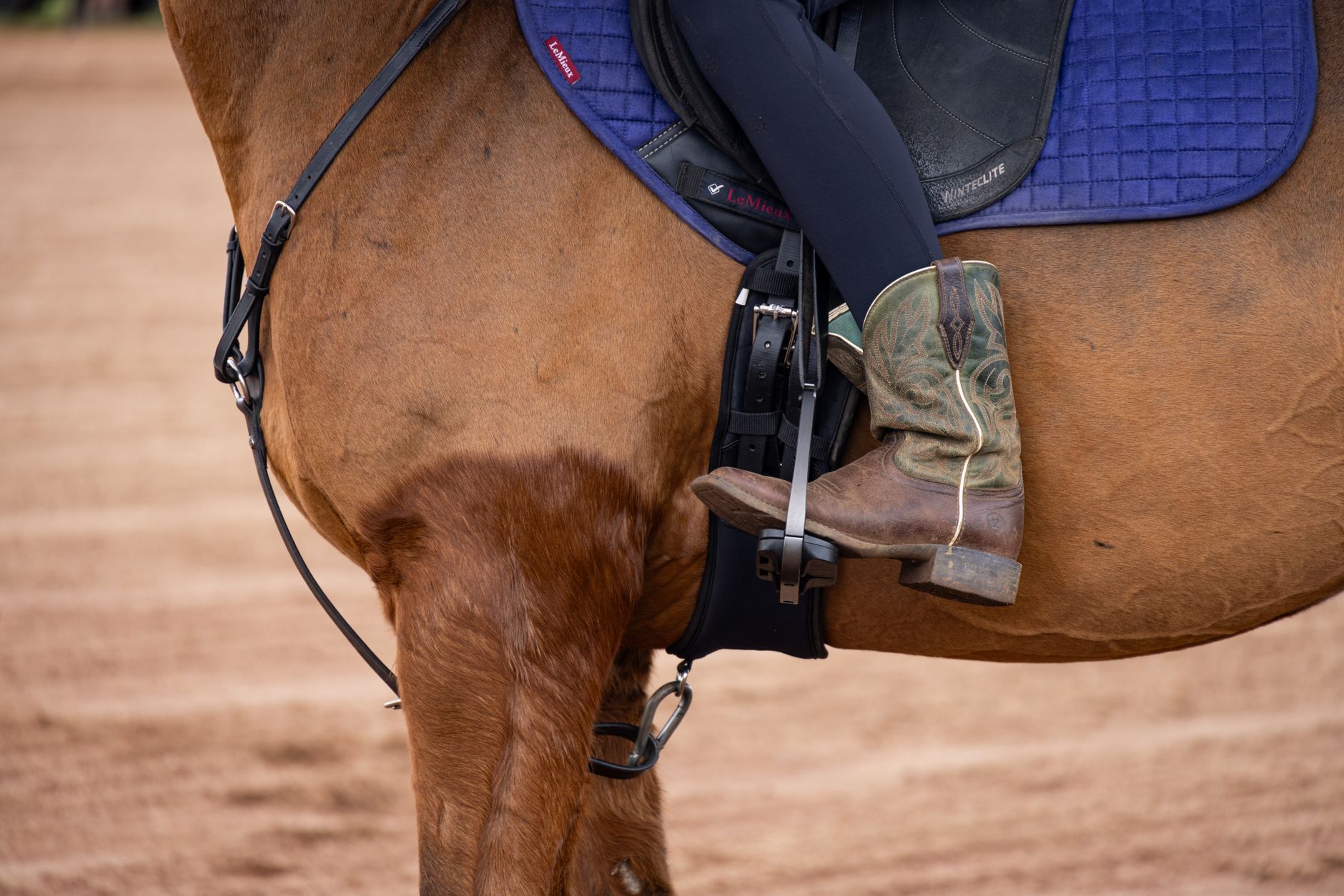
A polo breastplate yoke typically runs in a wide arch from one shoulder, curves down toward the chest, and connects at a central point before mirroring itself back up to the opposite shoulder. The shape is almost lunular – like a crescent pressed flat against the torso. In tack, this arch distributes pressure and allows for the horse’s movement. In fashion, that same arch becomes a graphic element: deliberate, curved, and hard to ignore.
The translation works for a structural reason that has nothing to do with equestrian heritage. The arch of the yoke naturally follows the line of the clavicle, then dips into the sternum, which is almost exactly the path a well-cut décolleté neckline takes. They are anatomically sympathetic shapes. Designers who are working with the yoke reference are not forcing a shape onto the body – they are discovering that the shape was already there, waiting to be outlined rather than invented.

Construction Details That Separate the Strong Versions From the Weak
The difference between a yoke-inspired neckline that reads as thoughtful and one that simply looks like an unusual trim comes down almost entirely to how the arch is built. In the strongest versions, the yoke shape is constructed from a stiffer interfaced layer that sits slightly proud of the main fabric – the same principle that makes a tailored collar stand rather than flop. That subtle lift creates shadow along the edge of the arch, which is what gives the neckline its sculptural presence.
Stitching placement matters just as much. Polo breastplates are typically edged in a double row of stitching that emphasizes the outline of the leather and gives it a clean, defined boundary. Designers borrowing from this detail are running contrast topstitching along the interior edge of the yoke arch – not the outer edge, which would read as conventional piping, but the inner edge, which creates a secondary line that echoes the arch and adds visual depth without adding bulk.
Hardware is the detail that divides the fashion-forward versions from the costume-adjacent ones. Breastplates attach to the saddle and girth via D-rings and quick-release snaps, and some designers are integrating functional or decorative versions of these closures at the center-chest connection point of the yoke. When executed in polished brass or oxidized silver at a small scale, this reads as considered jewelry rather than cosplay. When overscaled or rendered in obviously plastic hardware, the whole reference collapses.
Fabric choice is the final variable. The yoke shape holds its geometry best when the fabric is firm enough to maintain the arch without internal boning – a medium-weight ottoman, a structured crepe, or a bonded wool-silk blend all work. Softer materials like charmeuse or jersey require more aggressive internal structure, which can make the yoke look stiff in an unflattering way rather than architectural in an intentional one. A growing number of emerging designers are solving this by using the yoke itself as a contrast fabric insert – a leather or coated-cotton arch set into a softer ground – which handles the structure problem and adds visual contrast simultaneously.
Where This Is Showing Up Right Now
The yoke neckline is appearing most consistently in two separate contexts that do not obviously share a customer. The first is eveningwear – specifically the kind of cocktail dress or formal top where a conventional neckline would feel expected. Here, the breastplate arch functions as a focal point, replacing the role that embellishment or a dramatic neckline cut would otherwise play. The garment can be relatively quiet in color and surface while the yoke structure does all the visual work.
The second context is daywear suiting, where the yoke is being applied to structured blazers and tailored tops rather than eveningwear. In this setting, the reference reads differently – less about exposure and more about authority. A blazer with a breastplate-yoke front panel has an almost military quality, closer to a cavalry officer’s dress uniform than to an equestrian paddock, which gives it a different kind of formality.

The Décolleté Question – How Much Exposure Works
The interesting design problem is calibrating how much décolleté the yoke reveals. If the arch is high and close to the throat, the neckline reads as modest – structured but covered. If the arch drops low and the space framed by the interior of the yoke opens into a deep V or sweetheart line, the exposure increases and the contrast between the rigid arch and the bare skin becomes the point of the garment. Both approaches work, but they are doing entirely different things emotionally and stylistically.
Some designers are playing with asymmetry here – running the arch at a slight angle so one shoulder sits higher, which breaks the expected symmetry of the breastplate reference and introduces movement into what would otherwise be a static geometric shape. This is the version that takes the longest to look right on different body types, because the asymmetry has to be calibrated for each fit, but when it works, it does something that a symmetrical yoke cannot: it suggests motion, the way a piece of riding equipment would look mid-gallop rather than hanging idle on a rack.
The real test for whether this neckline structure has staying power beyond a single season is whether it can live in both formal and casual registers without losing its identity. A trend that only functions at one end of the dress code spectrum tends to cycle out quickly once that occasion becomes oversaturated. The breastplate yoke’s versatility across eveningwear and tailoring suggests it has enough formal range to avoid that trap. Whether it can make the further jump into weekend separates – a casual top with yoke construction, worn with denim – is the question that will answer how far this particular silhouette actually goes.
Frequently Asked Questions
What is a breastplate yoke in fashion terms?
It refers to the arched, bib-like structure borrowed from polo horse tack, applied as a neckline element that frames the chest and décolleté in a sculptural way.
What fabrics work best for a yoke-structured neckline?
Medium-weight fabrics like ottoman, structured crepe, or bonded wool-silk blends hold the arch shape best without requiring heavy internal boning.