From the Paddock to the Neck
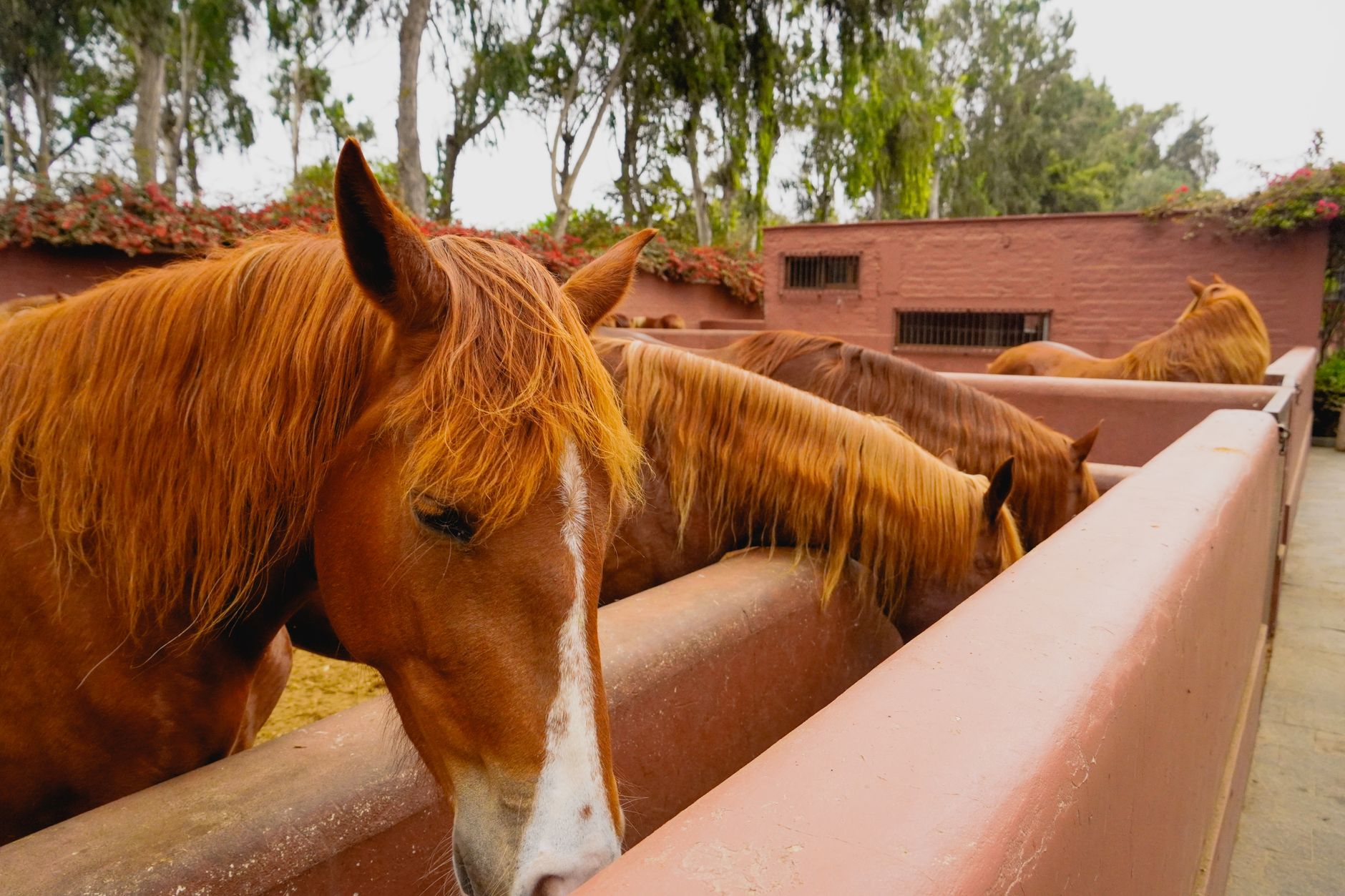
Polo leg wraps – those thick, tightly wound strips of fleece or cotton used to protect a horse’s lower legs during play – have always carried a certain visual weight. They’re bold, utilitarian, and repetitive in their structure, layered in long diagonal bands that follow the contour of the leg with military precision. That same visual logic is now showing up in a completely different context: draped around the neck, knotted at the shoulder, or loosely pooled over a coat collar as a statement scarf.
The crossover isn’t accidental. A growing number of designers are pulling directly from equestrian utility for textile inspiration, and the leg wrap’s specific character – its length, its woven or knitted texture, its lack of ornamentation – makes it particularly well-suited to scarf formats that reward tactile interest over surface decoration. The result is a category of accessories that feel rooted in sport without reading as costume.
What Makes the Leg Wrap Translate
The original polo leg wrap is engineered for function. It needs to stay in place under physical stress, provide cushioning without restricting movement, and layer without bunching. These requirements produce a specific construction – tight weave or knit, medium weight, long enough to wrap multiple times, with just enough elasticity to hold tension. When that construction is lifted out of the stable and interpreted in cashmere, merino, or textured wool, it retains its structural intelligence while acquiring a softness the original never had.
The defining visual element is the wrap itself – not the material, but the implied gesture of winding. Scarves in this category tend to be cut long and narrow, sometimes finished with minimal fringe or a clean raw edge, designed to be looped or layered rather than simply draped. The wrapping motion, repeated across the neck or torso, creates that same diagonal banding effect that makes a leg wrap so visually distinctive on a horse in motion.
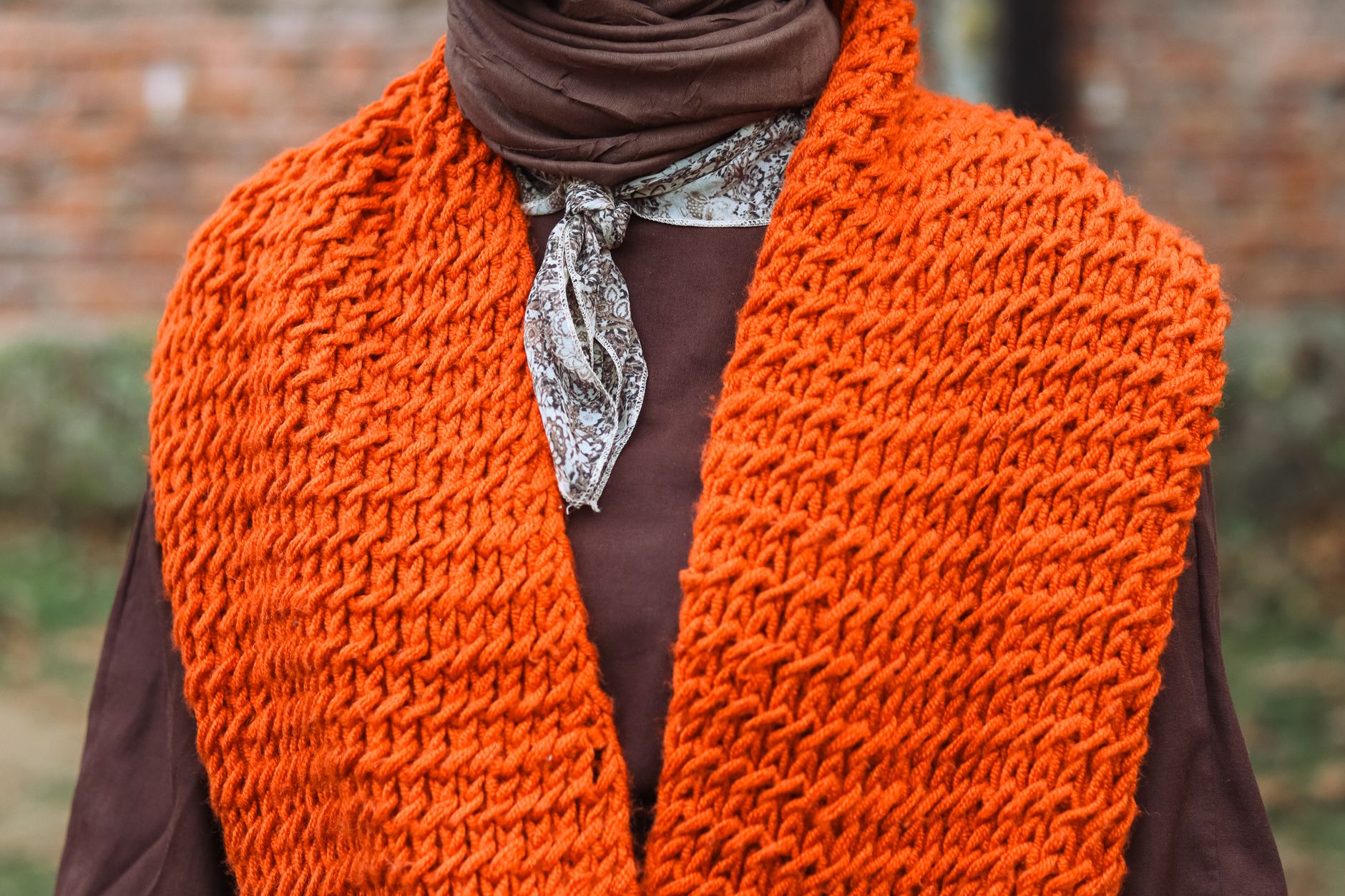
Texture is doing the heavy lifting here. Where traditional luxury scarves often rely on print – silk twill patterns, heritage checks, monogram borders – the leg wrap-inspired version strips that back entirely. The interest comes from the weave structure itself: ribbed columns, tonal variations within a single yarn, the subtle unevenness of handspun fibers. Worn against a smooth wool coat or a crisp shirt collar, the contrast is enough to function as the outfit’s focal point without competing with anything else.
How Designers Are Interpreting the Form
The interpretations vary considerably in how literally they engage with the source material. Some pieces are almost direct translations – long rectangular wraps in natural fleece tones, finished with the same flat, utilitarian edges a stable wrap would have, priced as an object of studied restraint. Others absorb only the proportions and wrapping logic, then apply them to entirely unexpected materials: open-weave linen for warmer months, or densely cabled merino that reads almost architectural when wound around the neck.
Color choices across the category tend to cluster around the palette already associated with equestrian settings – deep navies, forest greens, warm tans, off-whites – but there are departures. Some collections are pushing the format into oxblood, slate, and charcoal, shades that remove the piece entirely from its paddock origins and let it read as pure texture play. The effect works precisely because the construction still carries the weight of something functional, even when the color has drifted toward something more urban.
Styling has been equally inventive. The standard around-the-neck loop is only one option. Worn as a shoulder wrap over a structured blazer, the long narrow format falls with a kind of controlled asymmetry that feels less studied than a traditional shawl. Knotted once at the sternum and left to hang, it occupies the same visual territory as an open scarf but with more presence. A few early adopters have been photographing the format belted over a coat, which pulls the wrap closer to the body and creates something that reads almost like a vertical stripe down the front of the look.
The accessory’s appeal to designers working in what might be called quiet luxury is straightforward: it carries specificity without branding. There’s no need for a logo or a signature print because the form itself communicates a point of view. Anyone who recognizes the reference understands it immediately; anyone who doesn’t still encounters a well-made textile object with obvious craft behind it. That dual legibility – insider and accessible at once – is a difficult balance to achieve, and the leg wrap format manages it without apparent effort.

It’s worth watching where the proportions go from here. The current interpretations tend to stay within a narrow range of widths, but the polo leg wrap’s original format allows for variation – some stable wraps are nearly bandage-width, others broader and more blanket-like. If designers begin exploring that wider end of the spectrum, the scarf category could shift toward something closer to a minimalist belt approach, where the object wraps and cinches rather than simply drapes. The wrapping gesture, after all, works equally well as a waist detail as it does at the collar.
What keeps this trend from tipping into trend-for-trend’s-sake territory is the material honesty at its center. These are not scarves that are pretending to be something else. They’re taking a real object, built for a specific purpose, and asking what it looks like when that purpose is removed but the construction is preserved. The answer, right now, is that it looks like one of the more interesting things happening in accessories – and the question of how far that format can stretch before it loses its identity is the one nobody seems ready to answer yet.