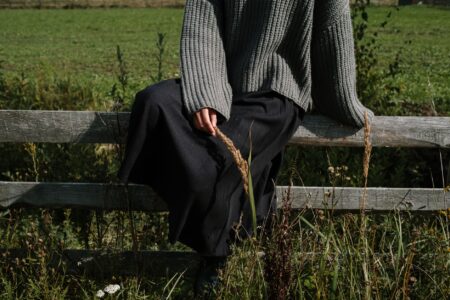
The saddle flap – that structured leather panel that protects a rider’s leg from the stirrup leathers – has spent centuries as purely functional equipment. Now it is finding a second life entirely off the horse, as its distinctive shape and stiff, architectural quality work their way into midi skirt construction.

From the Tack Room to the Cutting Table
Polo club aesthetics have been circling fashion for a while, but this particular detail is more specific than a general equestrian nod. The saddle flap has a very particular geometry: a smooth, slightly curved panel, cut from dense leather or leather-like material, with a clean outer edge and a slight forward taper at the hem. That shape maps onto a midi skirt with surprising logic – the same qualities that make it functional on a saddle make it interesting as a fashion silhouette.
The midi length matters here. A saddle flap that hits below the knee carries visual weight at exactly the point where structured skirts tend to lose momentum. Designers working in this space are not softening the shape with pleating or gathering. The skirts retain the flatness of the original panel – no flare, no drape, just a clean vertical drop with perhaps a slight A-line shift at the hip. It reads as severe in the best possible sense.
Construction is where the equestrian influence becomes most legible. Traditional midi skirts in suiting fabric or cotton tend to rely on darts and seams to create shape at the waist. Saddle flap-inspired versions often work with the inherent rigidity of the material instead – thick vegetable-tanned leather, bonded fabrics, or technical materials that hold their own silhouette without internal structure. The skirt shapes itself. That is a fundamentally different approach to garment engineering than most womenswear midi cuts.
Color choices lean predictably toward the palette of a polo field: cognac, oxblood, tan, black, and a deep British racing green that keeps showing up in mood boards this season. These are not colors chosen for trend-chasing. They are the natural result of taking the source material seriously – if the shape comes from leather equipment, the color logic follows.
How the Silhouette Is Actually Working
The styling challenge with a stiff, flat midi panel is the top half. A skirt with this much structural presence can overwhelm soft fabrics or compete badly with anything that also wants to make a shape. The combinations that work best pair the skirt with something that either matches its formality or deliberately contradicts it. A cropped equestrian jacket – close-fitting, high collar, minimal detailing – extends the polo club reference without becoming costume. On the other end, a relaxed white cotton shirt tucked in and slightly bloused at the waist breaks the severity just enough to feel wearable outside of a runway context.
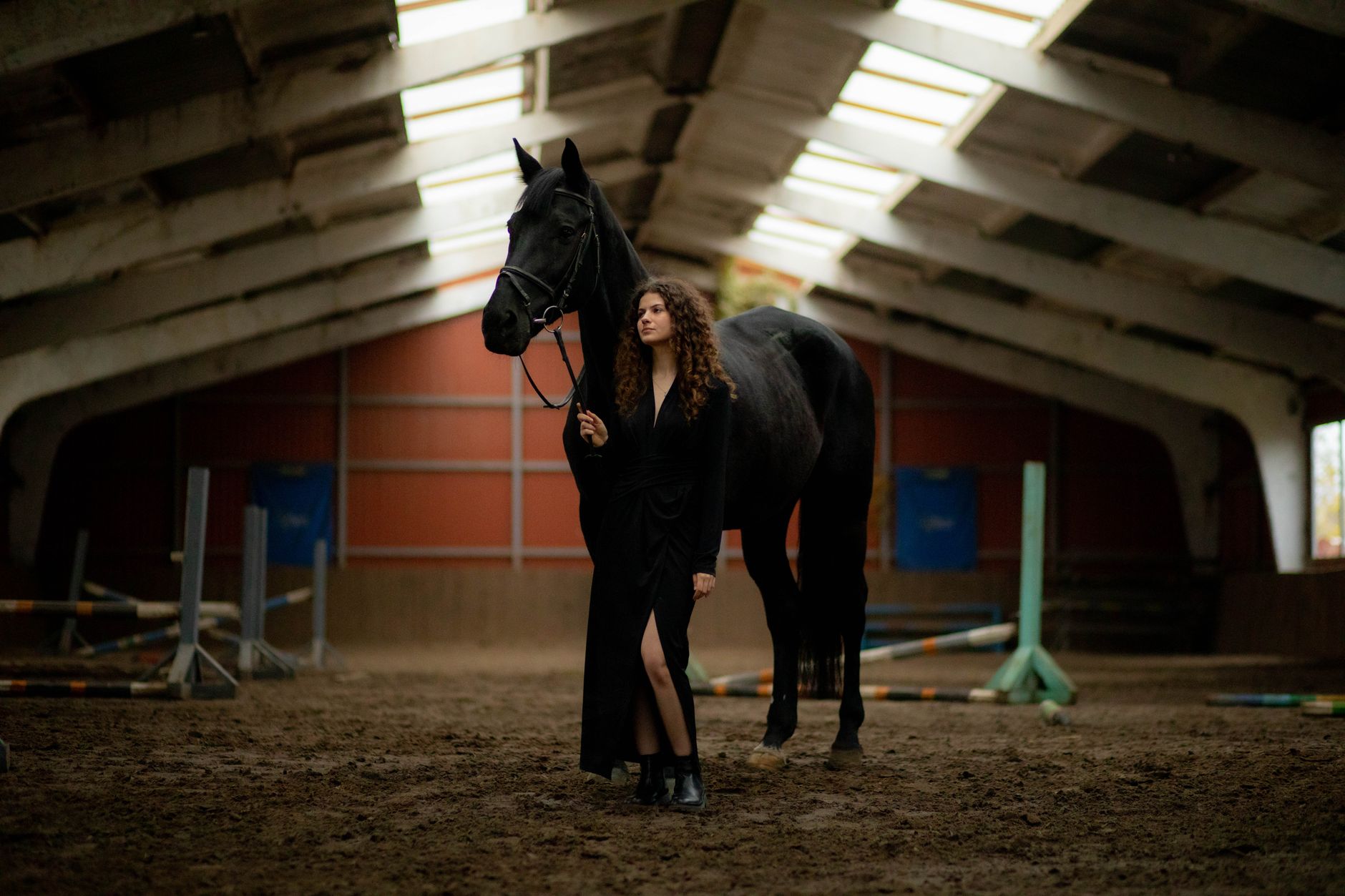
Footwear is a decision point that the skirt’s equestrian DNA makes somewhat easier. Tall riding boots are the obvious choice, and the hem length is specifically flattering when worn with a boot that meets it at or just below the knee. The visual effect creates a continuous vertical line from boot shaft to hem that elongates the leg in a way shorter skirts cannot achieve. Ankle boots with a block heel work as an alternative, though they expose more leg and shift the mood from structured to slightly more casual.
Belt detailing is where designers are adding personality without disrupting the clean silhouette. Wide leather belts worn at the natural waist reference stirrup leathers and bridle hardware without labeling the look too explicitly. Some versions incorporate D-ring closures or polished brass buckles – hardware drawn directly from tack room inventory. These details reward close inspection while leaving the overall silhouette undisturbed from a distance. The restraint is intentional: the skirt’s shape is doing the work, and the hardware is an accent, not the statement.
Seaming on the skirt panel itself is another area of quiet innovation. Traditional saddle flaps are cut from a single piece of leather with minimal seaming by necessity. Fashion versions sometimes play with visible contrast stitching along the outer edge or at a center front seam that mimics the stitching on tack. The stitching does not add construction – it is decorative referencing. Whether that reads as authentic or costumey depends almost entirely on execution: heavy, widely-spaced saddle stitching in a matching thread color tends to look intentional, while fine topstitching in a contrasting color slides toward novelty.
The midi length also gives the skirt range across dress codes that shorter equestrian-inspired pieces do not have. At work, paired with a tucked-in blouse and low block-heeled boots, it reads as directional but professional. At a weekend event, the same skirt worn with a loose knit and loafers looks entirely different – more relaxed, less armored. That versatility is not accidental. The midi proportion is essentially neutral in formality terms, and the saddle flap structure adds character without dictating context.
Where the Trend Is Landing
Independent labels working in leather and technical fabrications are the most active in this space right now – smaller operations where the designer controls production closely enough to execute the specific construction that the look requires. The saddle flap silhouette does not translate well to fast-fashion manufacturing, because the material integrity is the entire point. A floppy approximation in bonded polyester misses what makes the shape work.
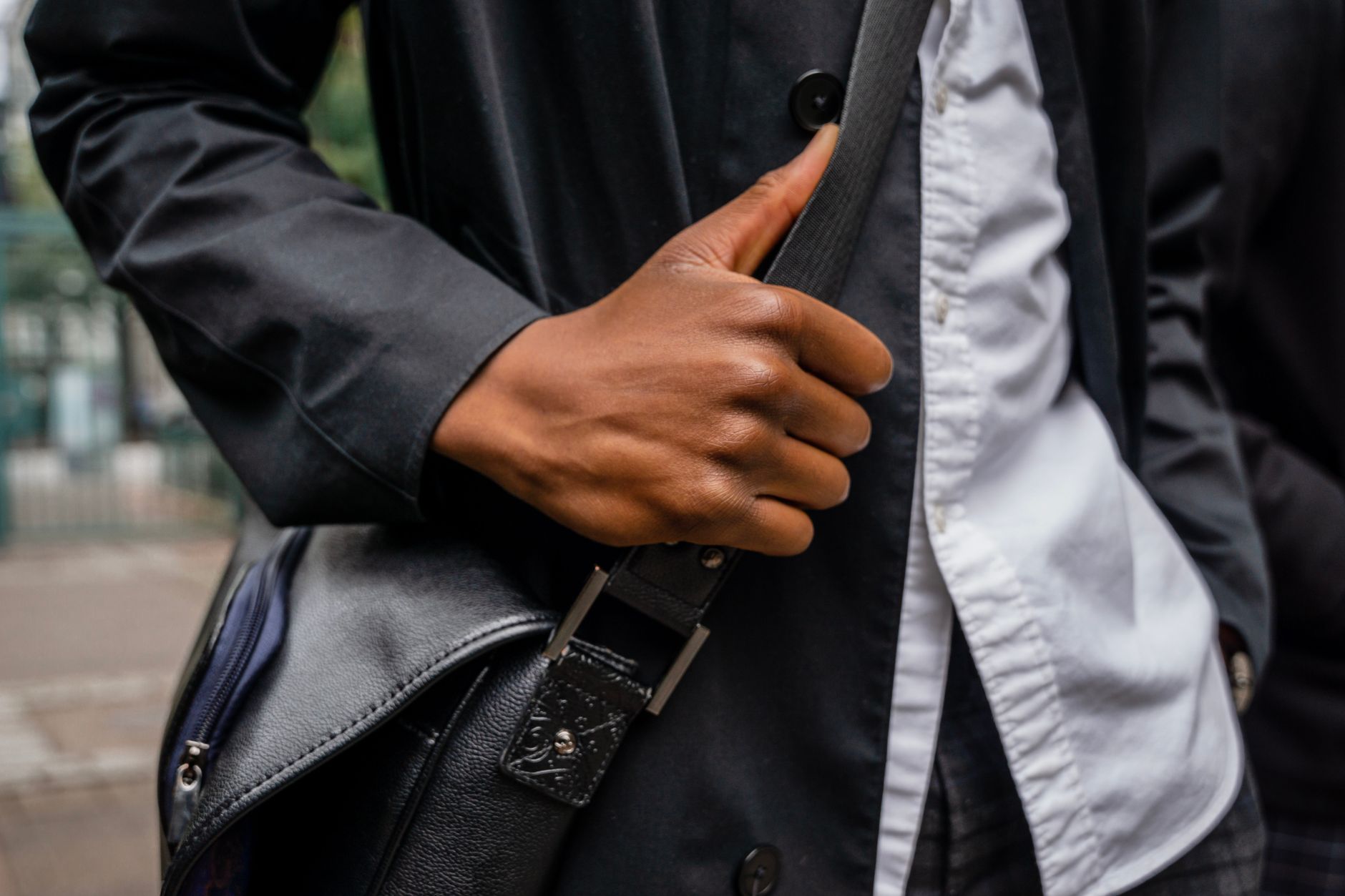
What keeps this from feeling like a costume trend is the absence of obvious branding. No polo mallets on the hem, no embroidered horses, no club crests – just the shape and the material speaking for themselves. The polo club reference is embedded in the construction logic rather than applied as decoration, which is why the skirt reads as fashion rather than themed dressing. That distinction is fragile, though. Once the silhouette gets picked up broadly and the specific material quality gets value-engineered out, the shape alone may not be enough to carry the reference with any credibility.
Frequently Asked Questions
What is a saddle flap skirt?
A saddle flap skirt borrows its shape and construction logic from the leather panel on a riding saddle, resulting in a flat, structured midi silhouette with minimal drape or gathering.
What do you wear with a saddle flap midi skirt?
Tall riding boots that meet the hem at the knee create the strongest silhouette. A cropped equestrian jacket or a relaxed tucked-in shirt both work well depending on the occasion.