

Somewhere between the polo field and the fashion week street style circuit, a very specific piece of tack has started showing up in places it was never designed for. The throat lash – the narrow strap on a bridle that fastens beneath a horse’s jaw to keep the headstall in place – has become a quiet obsession among stylists and accessory designers who are translating its clean, functional geometry into hair ties, braid holders, and minimal fastenings for humans. The silhouette is compact, intentional, and carries the kind of unforced authority that comes from objects with a real purpose.
The crossover is not loud. There are no press releases or celebrity campaigns announcing it. Instead, it is moving through small-run accessory labels, editorial shoots, and the kind of slow-burn Pinterest boards that precede mainstream adoption by about eighteen months. The throat lash braid, in its fashion translation, strips the equestrian reference down to its most essential shape: a slim strap, a clean knot or clasp, and a braid or low ponytail that looks structured without feeling severe.
The Geometry of Equestrian Hardware
Understanding why the throat lash works as a fashion reference requires looking at what it actually does on a bridle. The strap sits just below the cheekbone of a horse, runs under the jaw, and fastens with a small buckle or keeper on the opposite side. It is proportioned to be unobtrusive – narrow enough not to interfere with movement, placed precisely enough to hold everything above it stable. That restraint in proportion is exactly what translates well when you move the reference into hair accessories.
The fashion version borrows the thin strap profile and the fastening logic. A braid secured with a throat lash-inspired tie sits differently than one held with a standard elastic. The hardware sits flat, the closure reads as deliberate, and the overall effect lands somewhere between athletic and architectural. Several small accessory labels working in the equestrian-to-fashion space are producing these fasteners in vegetable-tanned leather, brass hardware, and occasionally waxed cotton webbing – materials that age visibly and carry the kind of patina associated with actual tack.
Braiding Technique Meets Tack Aesthetic
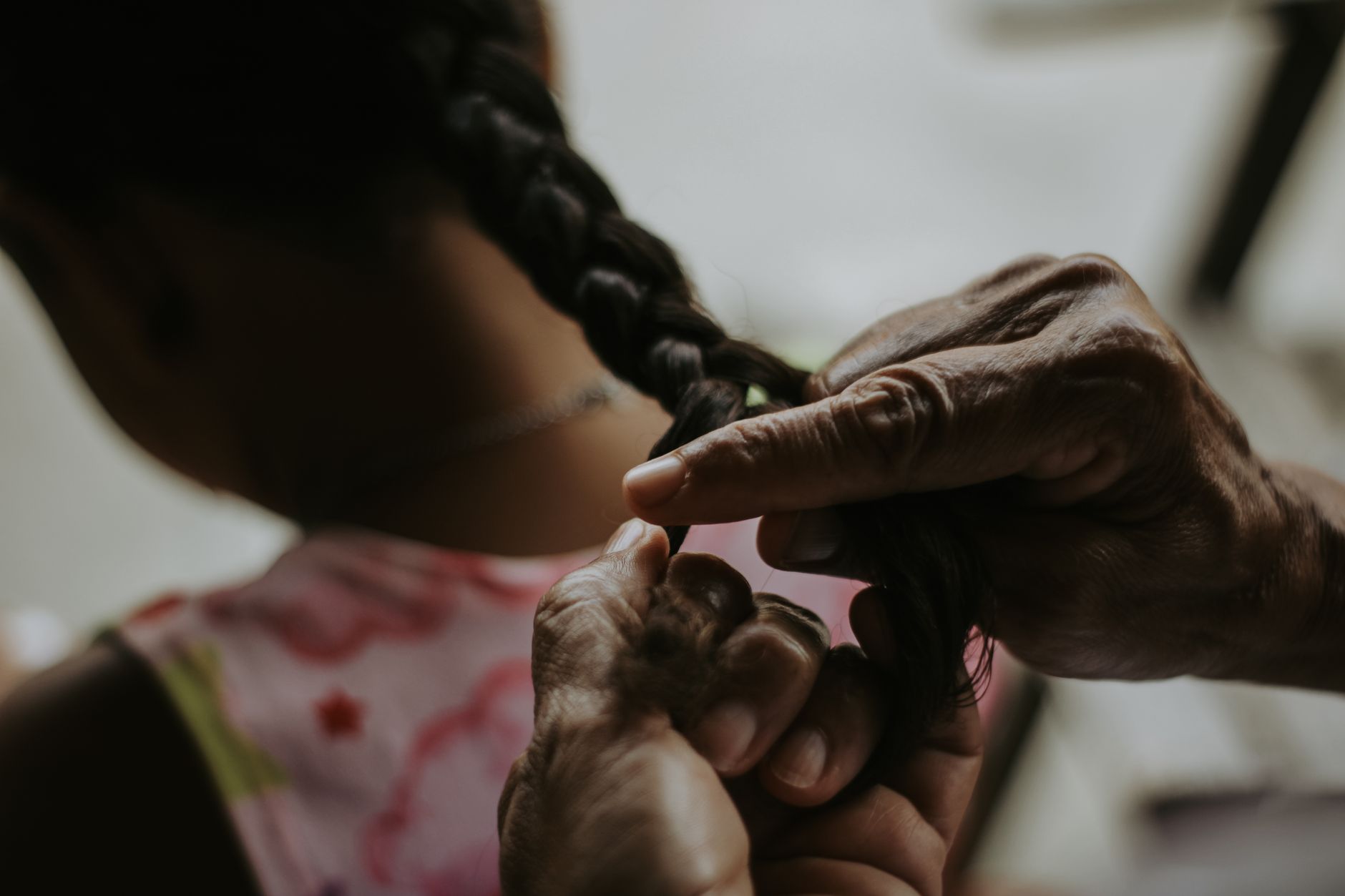
The braid itself matters as much as the fastening. The pairings appearing in editorial and on runway backstage documentation tend toward specific braid structures: flat three-strand braids with tight, even tension, rope twists that hold their form without product, and occasionally a simple plait pulled low and close to the nape. These are not decorative braids loaded with texture and volume. The point is control, not embellishment.
That restraint sets the throat lash braid apart from other equestrian hair references that have cycled through fashion before. The polo-style high ponytail, the hunt cap blowout, the show ring sleek bun – these all carry a recognizable athleticism, but they read as costume-adjacent when worn off a field or a horse. The throat lash braid reads differently because the detail doing the work is so small and so specific that it does not announce itself as a theme. Someone either recognizes what the fastening references, or they simply see a well-finished braid with unusual hardware.
The styling context it favors leans toward the same visual codes as the fastening itself: clean lines, neutral palettes, fabrics with structure. A throat lash braid against a crisp white poplin shirt or a fitted ribbed knit does not need anything else happening around it. It is the kind of detail that works precisely because everything surrounding it is quiet.
Texture in the braid itself is part of the equation. Air-dried hair with some natural variation in the strand thickness actually performs better here than blown-out smoothness. The slight irregularity in the braid makes the flat, precise fastening read as more intentional by contrast. The hardware is the polish; the braid is allowed to be slightly organic.

Where Minimalist Hair Meets Equestrian Utility
The broader minimalist hair movement has been building momentum through a rejection of the hyper-styled blowout and the elaborate updo. Low effort, high intention is the governing logic – and the throat lash braid slots directly into that framework. The fastening does visible work. It is not decorative in the traditional sense, because it is also functional, and that dual purpose is precisely what gives it credibility in minimalist dressing.
This is a different register than the riding-boot aesthetic or the sculptural body jewellery that has drawn from polo breastplate hardware. Hair accessories operating in this space are more intimate in scale and more dependent on placement than statement accessories worn at the collarbone or wrist. A throat lash braid tie worn slightly off-center at the nape communicates attention to detail without performing it.
How to Wear It Without Overthinking It
The entry point for most people will be the ready-made version: a pre-assembled leather or webbing strap with a small buckle or press stud, designed to wrap once around the base of a braid and fasten flat. These are appearing through small leather goods makers and equestrian-adjacent lifestyle brands, usually in cognac, black, or natural undyed leather. The price point is higher than a standard hair elastic, but the durability is proportional – a well-made leather strap handled correctly will outlast a hundred elastics.
The DIY version is also viable for anyone with access to a leather supply or a heavy notion store. A strip of vegetable-tanned leather cut to roughly half an inch wide and twelve inches long, with a small brass buckle attached, replicates the function exactly. The finish does not need to be perfect. Part of what makes tack-inspired accessories work in fashion is that slight rawness of edge, the visible construction logic, the sense that the object was made to work rather than to be looked at.
Placement is where most people will need to experiment. The throat lash braid sits best at the nape or just below it, which means the braid length needs to be thought through from the start. A braid begun too high on the head will have the fastening landing mid-back, which reads as a different aesthetic entirely. Starting low, braiding with even tension, and positioning the strap within the first two inches of the braid’s end gives the result its polo-field precision. The question that remains for the trend is whether it stays within the small-label, style-aware circuit, or whether mass-market interpretations will strip the specificity that currently makes it worth noticing.