


When Equestrian Hardware Meets the Accessory Belt
Saddle girth buckle guards – the small leather or synthetic flaps that protect a horse’s girth straps from rubbing against the saddle billets – have spent over a century doing unglamorous work in polo clubs and competition stables. They are purely functional objects, designed to prevent friction damage on expensive tack. Now, that same utilitarian geometry is showing up in an unexpected place: wrapped around structured fashion belts as a decorative and protective padding element, reinterpreted by accessory designers who spotted something worth borrowing in all that honest, workaday hardware.
The crossover is subtle enough that most wearers have no idea they are carrying a detail rooted in equestrian sport. That anonymity is part of the appeal for the designers driving this trend. The buckle guard’s folded leather construction, its reinforced stitching lines, and its slightly raised, pillow-like profile translate directly into belt design without needing a single horse in the room. What began as a niche obsession among leather goods artisans is now appearing on structured belt wraps across ready-to-wear collections, workwear-adjacent accessories, and the kind of high-end boutique shelves where provenance matters as much as finish.
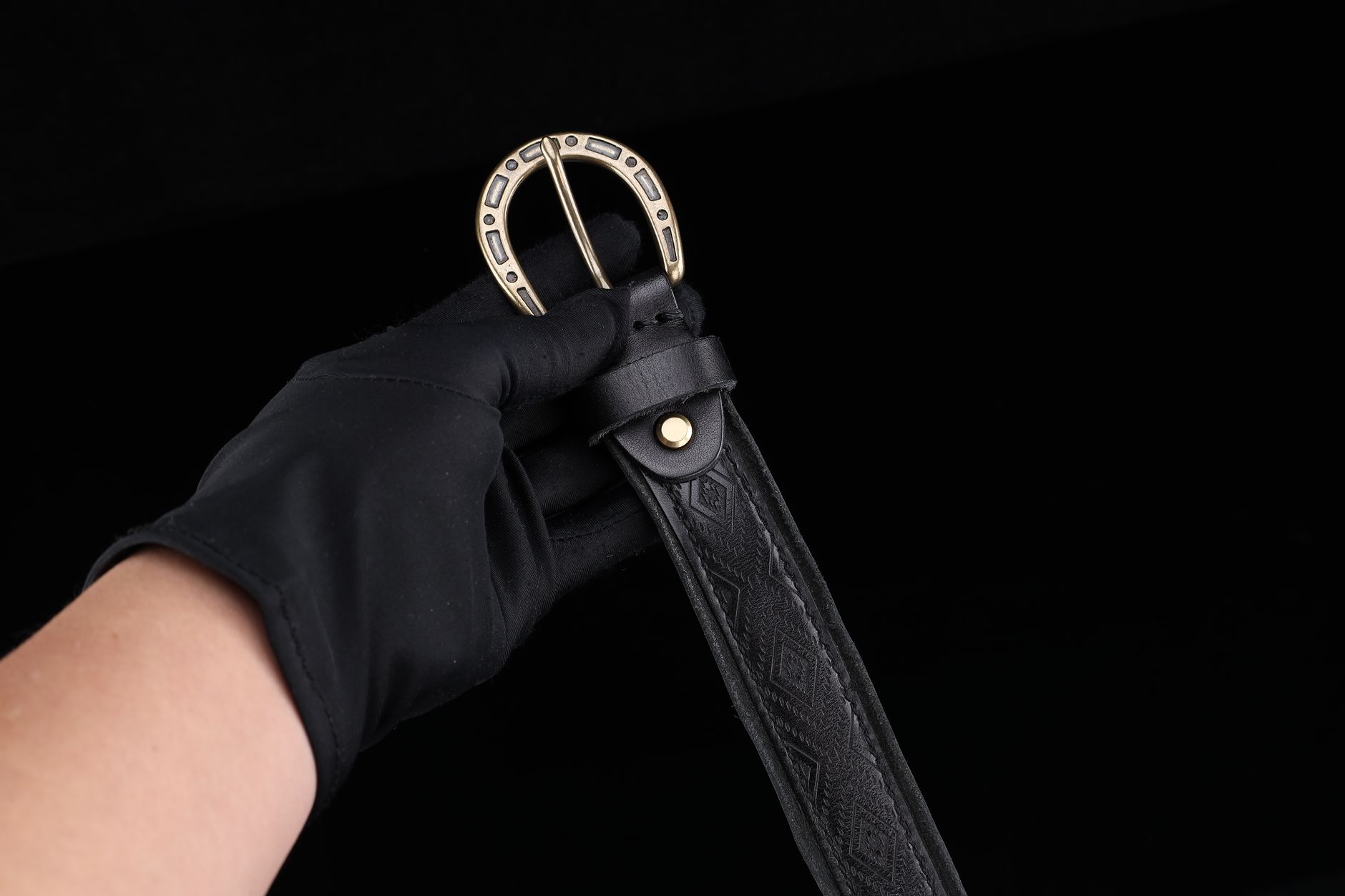
The Anatomy of the Buckle Guard Translation
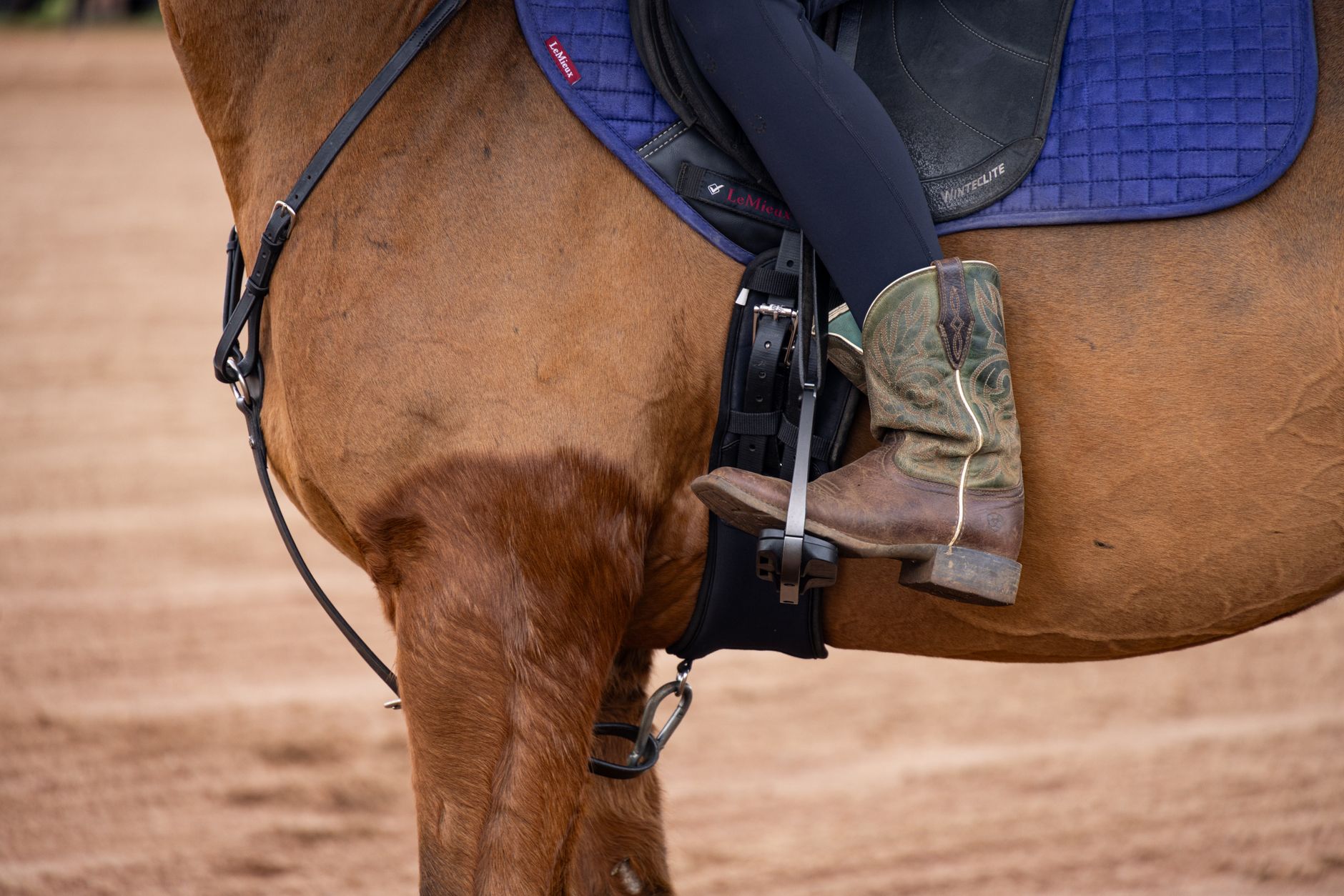
To understand why this works visually, it helps to understand what a girth buckle guard actually does. In its original form, it sits flat over the buckle assembly on a saddle girth, folded lengthwise over a piece of stiffened leather or canvas. The fold creates a natural pleat or ridge, and the stitching that holds it in place produces clean, parallel lines running perpendicular to the buckle shaft. That combination – raised center, framed edges, architectural stitching – is exactly what structured belt design has been searching for as an alternative to plain flat leather panels.
Designers working with this reference are not simply copying a shape. They are lifting a logic: the idea that a buckle needs framing, that the hardware moment on a belt deserves a deliberate architectural response rather than a flat expanse of leather leading up to a prong. The buckle guard insert creates a visual hierarchy on the belt’s face, pulling the eye toward the center fastening in a way that reads as considered and intentional. On structured belts with thick, stiff bodies – the kind worn over blazers, tailored coats, or heavy knitwear – this detail anchors the whole look.
The padding element is equally important. Traditional girth buckle guards carry a slight loft, either from layered leather or from a thin internal fill, and that loft is being preserved in fashion belt interpretations. A padded buckle zone sits proud of the belt’s surface, catching light differently across the day and giving the accessory a three-dimensional quality that flat belts simply cannot achieve. On a dark belt in full-grain vegetable-tanned leather, that raised panel reads almost architectural – a quality more common in structured handbags than in belts.
The stitching choices are doing heavy lifting as well. Equestrian girth guards rely on saddle stitching – a hand-pulled technique using two needles and waxed thread that produces a lock stitch impossible to unravel – and that same stitching style applied to a belt buckle guard zone immediately signals durability and craft. Contrasting thread colors, a staple of traditional tack work, are appearing on fashion interpretations in ivory-on-tan, rust-on-chocolate, and natural-on-black combinations. Each choice borrows the visual language of the tack room without requiring the wearer to have any connection to equestrian sport.
Why Structured Belts Are the Right Host
Not every belt format works with this detail. Thin, soft leather belts and braided styles have no structural mass to carry a padded buckle guard zone – the proportions collapse. Structured belts, typically cut at 40mm or wider from stiff, vegetable-tanned or bridle leather, provide exactly the right canvas. The belt body itself already references workwear and utilitarian tradition, so the equestrian hardware detail reads as an extension of an existing design logic rather than a grafted-on flourish. A 45mm bridle leather belt with a padded guard over the roller buckle looks like it was always meant to carry that detail.
The pairing with structured wraps – belts worn as cinching elements over layered outfits rather than through belt loops – adds another dimension. When a belt is worn over a coat or wrap dress, the buckle becomes a focal point visible from a distance, framed by no garment structure of its own. The guard detail gives that buckle zone a finished, framed quality that holds up to that kind of visual exposure. It is a small design decision with a disproportionate effect on the overall silhouette.
The Polo Club Aesthetic as a Fashion Reference
Polo as a visual reference has always moved in cycles through fashion, typically surfacing when the industry is pulling toward a preppy or country-house register. The current interest in equestrian tack details sits within a broader appetite for sport-adjacent craft objects – things that were built to perform under pressure and happen to look extraordinary doing it. Polo club tack rooms, with their racks of oiled leather, brass hardware, and carefully maintained girth sets, offer a specific visual grammar that fashion absorbs without needing to name the source.
What separates this moment from previous equestrian fashion cycles is the specificity of the reference. Earlier equestrian fashion borrowings tended toward the broad and obvious – riding boots, hacking jackets, stirrup buckles on shoes. The buckle guard detail is granular enough that only someone who has actually handled polo tack would clock the origin immediately. That specificity gives the detail credibility in a market that has grown skeptical of surface-level references. It also gives belt designers room to work with the element on their own terms, adapting proportion, fill, and stitching without being bound to replica accuracy.
A growing number of small leather goods studios are building their belt programs around exactly this kind of tack-derived detail, positioning structured belts as long-term investments rather than seasonal accessories. The buckle guard zone, with its added thickness and reinforced stitching, physically strengthens the most stress-prone area of any belt, so the design choice doubles as a functional improvement. A belt that visibly carries its own logic of construction – that shows you where the stress points are and addresses them directly – is a harder sell to dismiss as trend-driven.

Where This Goes From Here
The detail is already moving beyond its initial boutique footprint. Workwear-influenced brands building around craft and longevity are incorporating padded buckle zones as a standard feature rather than a special option, and the wider structured belt category is responding to the demand. Coloring is expanding too – the original tack palette of oak, havana, and black is being supplemented with slate, forest green, and cognac, all staying within the earthy, non-trend-dependent register that gives equestrian references their staying power.
Fit and styling are shifting alongside the hardware evolution. Structured belts with pronounced buckle guard padding sit differently on the body – the raised zone holds the buckle assembly slightly away from the garment beneath it, reducing fabric wear and keeping the belt face visible even under a heavy coat lapel. Stylists working with editorial clients are beginning to treat the buckle face as a deliberate style point rather than something to minimize, photographing it forward rather than sideways.
The real test for any tack-derived detail is whether it survives the moment when the broader equestrian aesthetic recedes – and here, the buckle guard has an advantage. Because the detail is structural rather than decorative, a belt built around padded buckle guards does not stop making sense when equestrian references stop trending. It remains a well-constructed belt with a functional feature. That durability is exactly what separates a borrowed hardware detail worth investing in from one that looks dated the moment its source reference goes quiet – and for now, polo tack rooms are giving structured belts exactly the kind of reference point they can actually use.
Frequently Asked Questions
What is a saddle girth buckle guard?
A girth buckle guard is a folded leather flap used in equestrian tack to protect saddle billets from friction. Its padded, stitched construction is now being adapted into fashion belt design.
What type of belt works best with a buckle guard detail?
Structured belts cut at 40mm or wider from stiff leather work best, as they provide enough body mass to carry the raised, padded buckle zone without losing proportion.