

The throat lash loop – that small, unassuming leather ring stitched beneath a polo pony’s chin to secure the bridle’s throatlatch – has spent decades doing unglamorous work in the stable. Now it is doing something else entirely: showing up around human necks, translated into sterling silver, oxidized brass, and waxed cord by a growing number of designers mining equestrian hardware for their next minimalist statement.

From Bridle to Neckline: How a Functional Loop Became a Design Object
The throat lash loop is not decorative by origin. Its job is purely mechanical – holding the throatlatch strap flat against the horse’s jaw so the bridle cannot slip over the poll during play. The loop is typically a small, flat oval or rectangular ring, sewn tight to the cheekpiece, with just enough clearance to thread leather through. What makes it visually interesting, and what designers have clearly noticed, is the precision of its geometry. It sits on the bridle like punctuation: small, exact, and load-bearing.
That combination of formal restraint and functional honesty is exactly the kind of visual language minimalist jewelry has been reaching toward. A plain band communicates wealth through material. The throat lash loop communicates something different – utility elevated to elegance, the idea that a thing can be stripped to its structural minimum and still hold. For a choker format, which already works through constriction and geometry rather than ornamentation, the reference is almost too perfect.
The translation from tack room to jewelry bench requires very little adjustment. Designers working in this space are largely keeping the proportions intact – a narrow oval loop, a clean horizontal band, a closure that mimics the pass-through mechanism of the original hardware. Some versions in oxidized sterling read almost industrial. Others, rendered in 18-karat gold with a hand-hammered surface, carry the same restrained authority as a well-worn polo bridle. The equestrian source material is legible if you know it, invisible if you don’t.
This is part of what separates the throat lash choker from more obvious equestrian-borrowing moments in fashion – the Hermes-adjacent horsebit proliferation, the snaffle-ring earring waves that arrive every few seasons. Those pieces tend to announce their reference. The throat lash loop keeps it structural, which means it reads as contemporary minimalism to a casual observer while carrying specific subtext for anyone who has spent time in a polo stable.
Why Minimalist Chokers Are Ready for This Reference Right Now
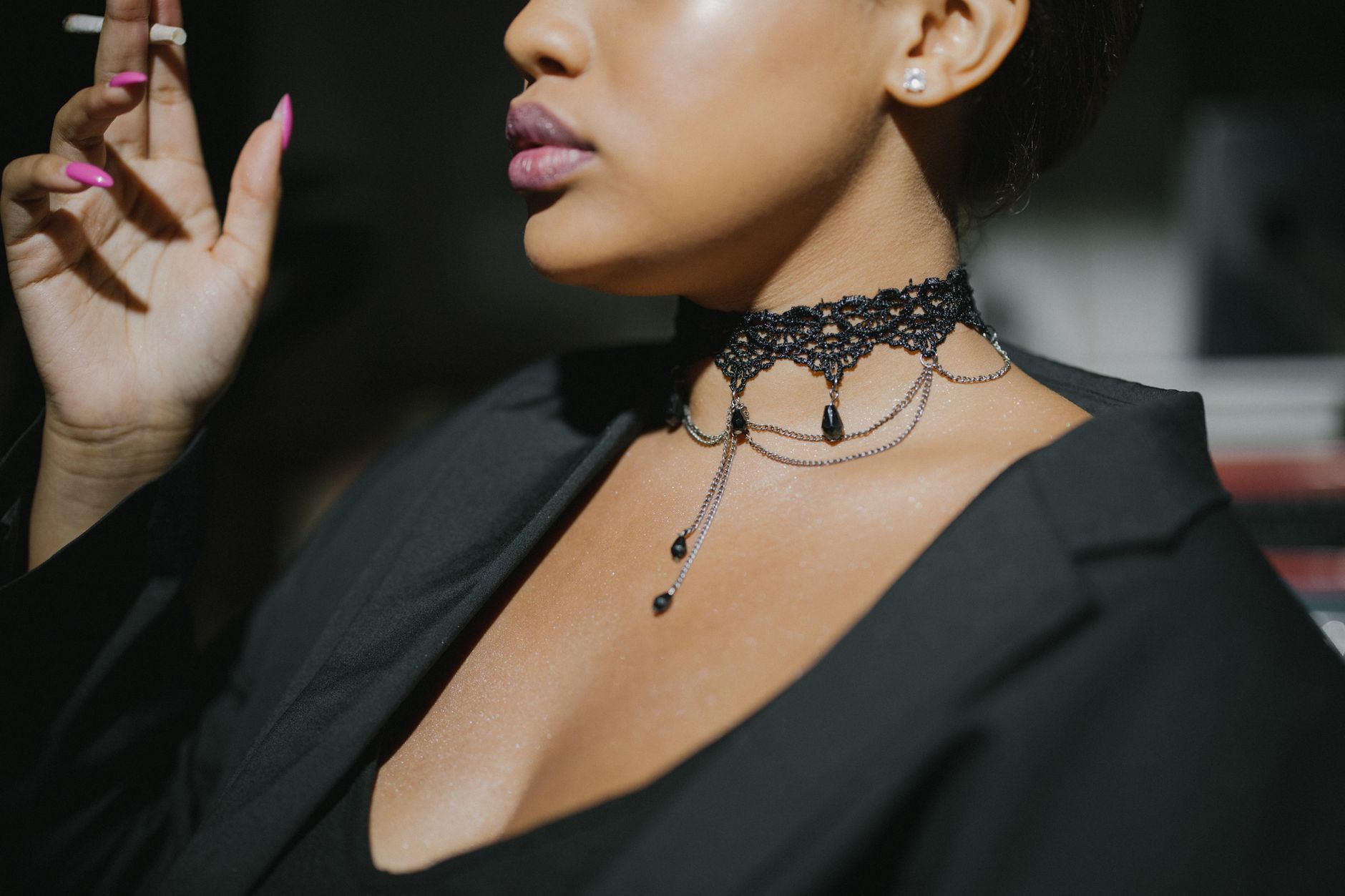
Choker design has cycled through several distinct phases – the velvet ribbon of the 1990s, the tattoo choker’s mass-market plastic moment, the fine gold chain revival of the early 2010s. What the category has been building toward more recently is something harder to name: chokers that look neither nostalgic nor trend-driven, that carry structural interest without visible ornamentation. The throat lash loop fits that gap with unusual precision.
The appeal has to do with proportion. A throat lash loop, properly scaled, creates a focal point at the base of the throat without adding visual weight. It does not dangle. It does not catch light aggressively. It creates a moment of geometry – a small contained shape – that draws the eye briefly and then releases it. In an accessory landscape where maximalism and layering have dominated for several consecutive seasons, that kind of restraint reads as a strong counter-statement.
There is also a tactile dimension to the original hardware that translates well into fine jewelry. Polo tack is made to be handled constantly, in all weather, under significant physical stress. The throat lash loop in its original form has a worn-in quality even when new – leather softened by saddle soap, metal slightly burnished from contact. Jewelry designers are replicating that quality through surface treatments: intentional oxidation, matte finishes, small tool marks left visible rather than polished away. The result is a piece that looks like it has history before you’ve worn it once.
Waxed cord versions are taking a different approach, keeping the loop hardware in metal but replacing the band with cord in neutral tones – sand, black, deep olive. This shifts the choker away from fine jewelry territory and into something closer to the workwear-adjacent accessories movement that has been building quietly for several seasons. A brass loop on waxed cord sits differently at the throat than its gold counterpart, but both trace back to the same source geometry.
The polo browband’s move into sculptural hair jewellery followed a similar logic – equestrian hardware reduced to its structural core and recontextualized as a wearable object. The throat lash loop is following that same path, just lower on the body and with even fewer moving parts.
Who Is Wearing This and Where It Goes Next
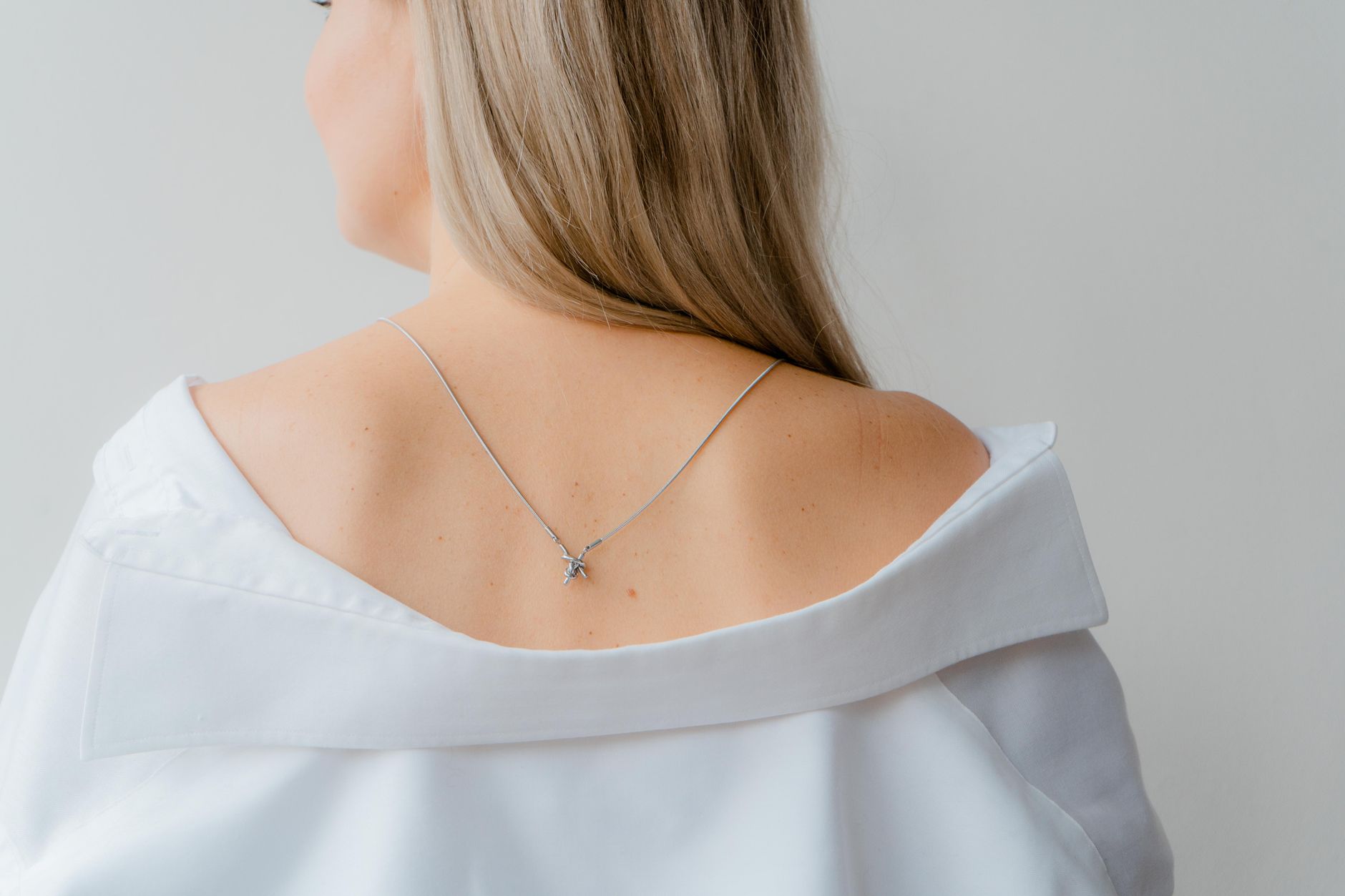
The early adoption pattern for this look is following the usual minimalist jewelry trajectory – women who shop independent designers, who favor clean tailoring over trend pieces, who know enough about equestrian culture to appreciate the reference without wanting it to dominate the outfit. A throat lash loop choker works against a high neckline as a subtle counter-element, and it reads with particular clarity against an open collar or a wide-neck knit where the geometry of the throat is unobstructed.
The question the design raises is how far the reference can travel before it loses what makes it interesting. Once a structural motif gets licensed broadly, it tends to drift from its origin until the original logic disappears entirely. Right now, the throat lash loop choker still carries the weight of its function – you can look at it and understand what it once held together. Whether that legibility survives mass production is the thing nobody working in this space seems eager to answer.