

When Sport Meets the Jeweler’s Bench
The rowing blade – that long, flat, water-slicing implement built for pure function – has almost nothing in common with fine jewelry on the surface. One is lacquered wood and composite carbon, designed to catch water and propel a shell across a river. The other is precious metal shaped for the body, meant to catch light and hold attention. And yet, across independent jewelry studios and small-batch accessory drops, the silhouette of the rowing blade is showing up as an earring form with growing frequency. The shape works. And the fashion world is starting to notice why.
The trend is quiet, which is part of what makes it interesting. This is not a branded campaign or a high-profile collaboration announcement. It is the kind of organic aesthetic convergence that starts in small studios, gets picked up by stylists sourcing unusual statement pieces, and eventually lands in the editorial spreads of magazines that track where culture is drifting before it arrives anywhere obvious.
The Silhouette That Makes It Work
A rowing blade – specifically the blade end of an oar, sometimes called the spoon or the loom depending on its cross-section – carries a very specific geometry. It is elongated, slightly widened at one end, and often subtly curved along its length. That profile maps naturally onto what jewelry designers call a “drop,” the pendant section of a dangling earring that falls below the ear and moves with the wearer. The rowing blade’s proportions are almost pre-designed for the format.
What the shape offers that a standard teardrop or oval does not is directionality. The blade form implies movement – forward momentum, something cutting through resistance. Worn as an earring, it frames the jaw and neck in a way that feels active rather than static. Designers working in this space are also exploiting the surface area the blade provides: its flat face becomes a canvas for enamel fills, hammered textures, or oxidized finishes that catch light differently depending on how the piece swings.
Club colors are part of the conversation too. Rowing clubs have long maintained specific stripe patterns and color combinations on their blades – it is how crews identify each other on the water. Those color schemes, typically rendered in high-contrast combinations like navy and gold, scarlet and cream, or black and forest green, translate directly into enamel work on earring drops. The result is a piece that reads as abstract color-block jewelry to someone unfamiliar with rowing, but signals something specific and deliberate to anyone who knows the sport.

Why Sporting Silhouettes Keep Finding Jewelry
The path from sport equipment to wearable accessory is well worn at this point. Equestrian hardware – stirrups, bits, snaffle rings – has been absorbed into fine jewelry vocabulary for decades. The appeal tends to follow a consistent logic: sporting objects are engineered with obsessive attention to performance, which produces forms that are refined, purposeful, and often unexpectedly beautiful when extracted from context.
Rowing blade jewelry fits neatly into that lineage. The sport itself carries cultural associations – Oxford and Cambridge boat races, Ivy League regattas, an aesthetic of restrained athleticism and institutional tradition – that translate into a particular kind of quiet status signaling that jewelry has always been good at. Wearing a blade drop earring is not a loud statement. It is the kind of detail that people with a specific visual literacy will recognize and others will simply appreciate as a well-designed earring.
How Designers Are Interpreting the Form
The most interesting executions are the ones that do not lean too hard into the literal. A blade earring that comes packaged with rowing club provenance and narrative text risks becoming memorabilia. The pieces gaining traction in editorial circles are the ones where the shape is present but abstracted enough to function as pure design object – where the rowing reference is there for those who want to find it, but does not need to be announced.
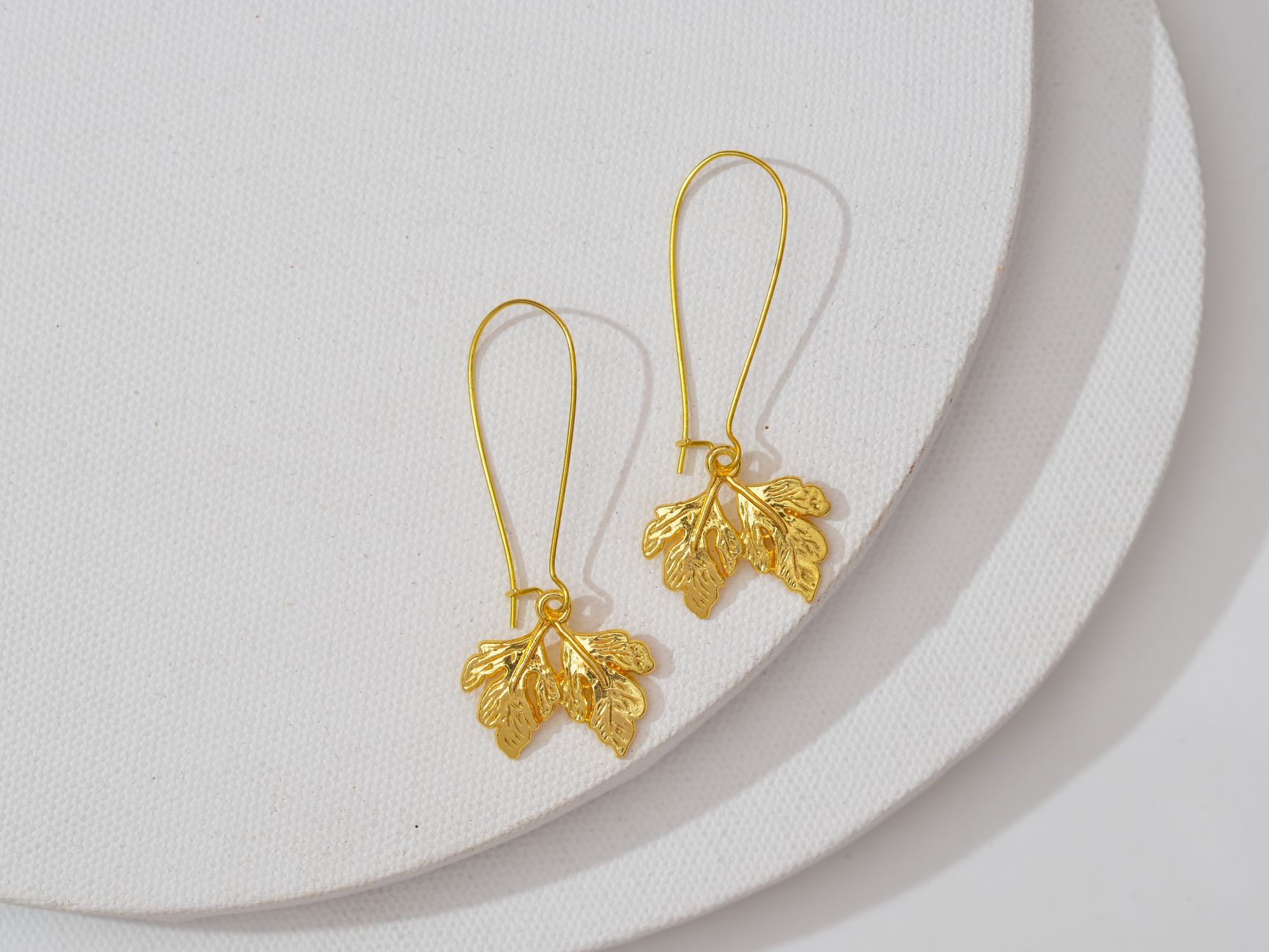
Materials are doing a lot of work in this space. Sterling silver with a brushed finish reads as clean and architectural, emphasizing the blade’s linear quality. Gold vermeil versions, particularly those with a slightly irregular hammered surface, pick up the worn, water-smoothed quality of a blade that has seen actual use. Some designers are combining the two – a gold-toned body with a silver-tipped blade end – which echoes the way actual racing blades are sometimes finished with contrasting color at the tip for visibility on the water.
Scale is a variable worth tracking. Blade drops appear at miniature scale as delicate studs with a suspended micro-drop, at mid-scale as earrings that sit roughly at the collarbone, and at a statement scale that pushes the silhouette into maximalist territory. Each scale produces a different conversation with the outfit. The mid-scale version is proving most versatile – long enough to register as a considered statement, short enough to work under a blazer collar or with a high-neck knit without getting obscured.
The pairing instinct from stylists tends toward structured, clean-lined dressing – tailored coats, simple column silhouettes, anything that creates a quiet backdrop for the earring’s movement. The blade form’s association with precision and performance makes it feel slightly incongruous against very soft or romantic styling, which is something designers are actively working with rather than against. The mild tension between the blade’s hard-edged sport origin and the softness of a drop earring’s natural movement against the neck is exactly the kind of friction that makes an accessory worth looking at twice.