

Rowing has long carried a dress code – blazers striped in school colours, silk ties knotted at regattas, badges earned through blades. Now that visual language, specifically the oarsman blade palette of Eton College, is making a quiet but deliberate move into accessories, and the fashion world is paying close attention.

A Palette With Provenance
Eton’s oarsman blades follow a strict heraldic logic: deep navy, light blue, and white arranged in bold horizontal bands, sometimes punctuated with red or gold depending on the crew’s house affiliation. These aren’t colours chosen for aesthetics alone. They carry centuries of institutional weight, the kind of visual shorthand that communicates belonging, discipline, and earned status without a single word. That combination – historic credibility plus graphic clarity – is precisely what makes them so attractive to accessory designers working in the current obsession with heritage sportswear codes.
The trend isn’t about slapping a crest on a canvas tote. The more interesting expressions pull the blade colour structure directly – the horizontal banding, the navy-on-white-on-blue layering – and translate it into objects like silk scarves, grosgrain-trimmed leather goods, striped enamel cufflinks, and woven watch straps. The result reads as quietly authoritative rather than costumed, which is exactly where the market for elevated accessories is gravitating right now.
What makes Eton’s specific palette so workable is its restraint. The dominant colour story is essentially a cool triad: navy anchors, pale blue lifts, white separates them cleanly. Designers can borrow two of those three tones and still land squarely in the reference. A navy leather belt with a white edge stitch, a pale blue silk pocket square with navy rolled hem – neither piece shouts “rowing club,” but both carry that unmistakable crispness associated with serious amateur sport at its most ceremonial.
The historical timing matters too. Rowing as an aesthetic reference has been building quietly since prep-school and university wardrobes became a recurring mood on international runways. But most of that energy stopped at the blazer. Accessories lagged behind, still reaching for the obvious – the oar motif, the regatta pennant print. The blade colour approach strips all that literal imagery away and works with colour architecture alone, which gives it far longer commercial legs.

How Accessory Designers Are Translating the Reference
Silk scarves are the most natural vehicle, and the most sophisticated execution tends to borrow the blade’s banding logic rather than its iconography. A wide horizontal stripe in Eton’s navy and pale blue on a white ground is a clean, wearable composition that works tied at the neck, looped through a bag handle, or folded as a breast pocket accent. Some independent British accessory studios have been quietly working in exactly this direction, producing limited-run pieces that nod to the rowing world without labelling themselves as such.
Watch straps have become a surprisingly sharp expression of the palette. Grosgrain and striped canvas straps in navy-white-blue configurations have circulated through vintage military and prep references for decades, but the specific Eton blade banding – three roughly equal horizontal bands, cool-toned throughout – gives the combination a more precise institutional edge. Paired with a dress watch in silver or gold, the effect is the kind of understated insider signalling that appeals to buyers who already know what they’re looking at.
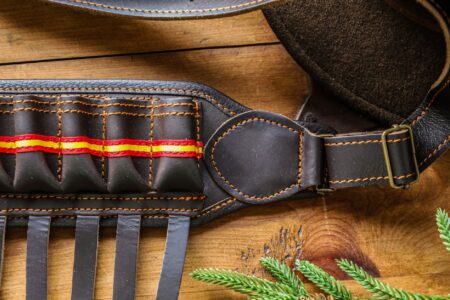
Leather goods translate the palette differently. Here the colours typically appear as contrast stitching, edge painting, or interior lining rather than surface pattern. A navy exterior bag with pale blue interior leather and white topstitching hits the blade reference without becoming a novelty item. Structured totes, briefcases, and card holders are all absorbing this colour logic, particularly from smaller British and Italian workshops where the language of institutional sport is part of the design vocabulary by default.
Enamelwork is another territory opening up. Hard enamel jewellery and accessories – cufflinks, collar clips, lapel pins – have the graphic precision to render the blade banding at small scale without losing legibility. A set of cufflinks in Eton’s exact navy and light blue horizontal register reads immediately to anyone familiar with the visual culture of British rowing, and as a purely abstract stripe to everyone else. That dual readability is part of what makes the reference durable.
There is also a growing thread of knitwear accessories – specifically knitted ties, striped socks, and narrow scarves – that lands naturally within this palette without any institutional branding at all. A navy and pale blue striped knit tie carries the whole visual argument without needing a single badge or label. For buyers assembling wardrobes around quiet authority, that kind of unmarked heritage is increasingly more desirable than any logo could offer. The connection to tailored trouser fabric traditions rooted in elite sport culture runs through the same appetite for textural and chromatic authenticity over surface branding.
Why Now, and What It Signals

The appetite for institution-coded colour comes at a moment when accessory buyers are fatigued by logo saturation and looking for something that communicates taste through knowledge rather than spend. Eton blade colours work because they’re specific enough to signal cultural literacy but abstract enough – just three cool tones in horizontal bands – to avoid feeling like costume. A pale blue grosgrain hatband or a navy-and-white striped card holder doesn’t announce its reference; it simply looks exactly right, which is the only announcement that matters in this register.
The deeper question the trend raises is whether the palette can sustain itself once it moves further into mainstream production. Heritage colour codes derived from elite institutions have a history of diluting rapidly once they escape their original context – the club stripe is probably the most overworked example. What keeps Eton blade colours from that fate, at least for now, is that most designers working with them aren’t naming the reference explicitly. The moment it gets labelled, packaged, and sold as “Eton-inspired,” the specificity that makes it interesting will likely disappear faster than a coxswain’s call at the start of a race.
Frequently Asked Questions
What are Eton College oarsman blade colours?
Eton blade colours refer to the horizontal banding system – typically navy, pale blue, and white – used to identify rowing crews by house affiliation at Eton College.
How are Eton blade colours appearing in fashion accessories?
Designers are translating the blade palette into silk scarves, grosgrain watch straps, contrast-stitched leather goods, and enamel cufflinks without using explicit institutional branding.