


A shoe long associated with school uniforms and toddler wardrobes is now turning up at farmers markets, gallery openings and Sunday brunch tables. The Mary Jane, defined by its rounded toe and a single strap across the instep, has moved past its dressier roles and settled into the part of the closet reserved for errands, coffee runs and long unplanned walks. It is a quieter move than a sneaker collaboration or a boot craze, but it shows up on streets and in social feeds with growing regularity.
The appeal is simple. It looks considered without looking like effort.
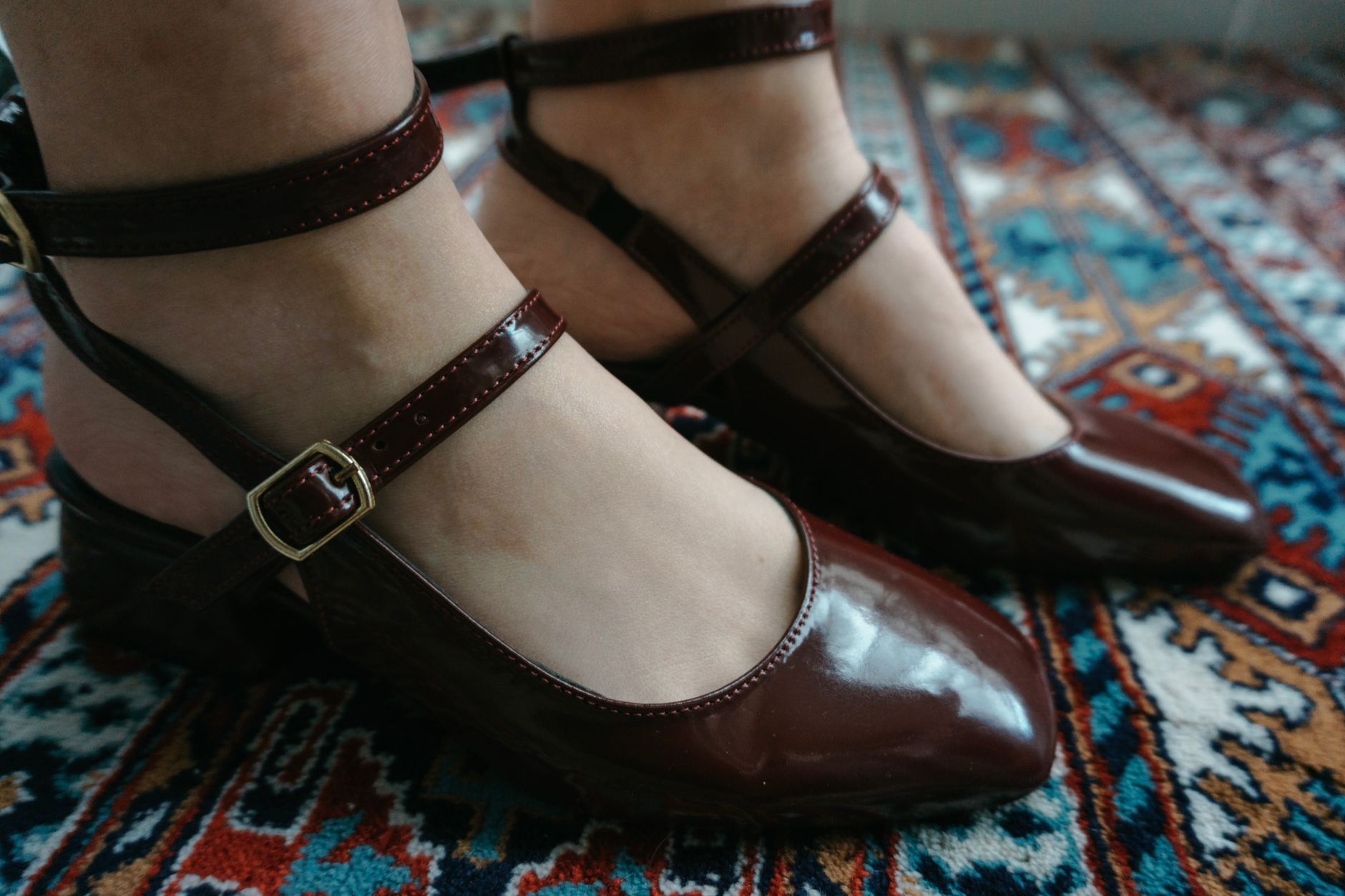
Why the Strap Beats the Slip-On
The weekend shoe has long had two default settings: the sneaker and the ballet flat. Sneakers deliver comfort but can flatten an outfit into something purely athletic, even when the rest of the look is soft or tailored. Ballet flats look neat, but they slip at the heel, and anyone who has walked six blocks in a thin pair knows the feeling of gripping with the toes just to keep them on. The Mary Jane solves the practical problem first. The strap anchors the foot at the instep, so the shoe stays put through stairs, crosswalks and a dash for the train. It also adds visual structure, a horizontal line across the foot that reads as deliberate rather than accidental.
Design variety is a big part of why the style travels so easily into casual territory. The flat leather version is the purest form, but there are low block heels, chunky platforms, rubber lug soles and sneaker hybrids with athletic cushioning under a classic strapped upper. Each of these nudges the shoe further from dressy and closer to everyday. Closures matter too. A traditional buckle feels polished, a hook-and-loop strap feels sporty, and an elastic band feels almost like a slipper, which is exactly what some weekend wearers want.
Color and finish do quiet work as well. Black patent leather is still the classic, but it carries a formality that can clash with a sweatshirt and denim. Matte leather, suede, washed canvas and soft tan tones lower the temperature considerably. Burgundy and deep chocolate brown have become easy ways to add a shade of interest without making the shoe the loudest thing in the outfit. A metallic pair can work on a weekend, too, as long as the rest of the look stays plain enough to let it shine.
Styling Them Without the Costume Effect
The main risk with a Mary Jane is looking too sweet, or worse, like a literal school-uniform reference. The fix is counterbalance. Pair the girlish silhouette with pieces that have a little weight and looseness to them: straight-leg jeans with a slight break at the ankle, a boxy sweatshirt, an oversized button-down worn open over a white tee, or cargo trousers in a washed neutral. Add a sturdy outer layer such as a barn jacket and the whole outfit settles into something relaxed and slightly rugged, with the shoe supplying the only polished note.
Socks are the other lever. Ribbed white crew socks give a sporty, vintage feel, while sheer or fine-knit pairs lean softer and more feminine. Going bare works in warm weather, provided the shoe has a cushioned lining. Hem length matters more than most people expect: a cropped trouser, a rolled cuff or a midi skirt that stops mid-calf shows off the strap, while a full-length hem swallows it and wastes the detail entirely.

Comfort, Cost and the Case for Wearing Them Hard
The reason this shoe is gaining ground on weekends comes down to how casual dressing has changed. Weekend outfits are looser and more layered than they used to be, but people still want to look finished with minimal thought. A Mary Jane is a one-step finishing move. Slip it on with jeans and a T-shirt and the outfit gains a sense of intention that a plain sneaker rarely delivers. Because the shoe has a defined shape and a clear point of view, it lets everything else in the outfit stay simple, and that trade is exactly what most people want from a Saturday look.
Fit and construction decide whether a pair earns its place. A good casual Mary Jane has a roomy toe box, a flexible sole and an insole with real cushioning, since these are shoes meant to cover miles, not just cross a restaurant floor. Leather with some give will mold to the foot after a few wears, while stiff synthetic straps tend to rub at the instep and the top of the foot. An adjustable strap is a practical advantage, because it accommodates thicker socks in cooler months and a slimmer fit when the temperature rises. Heel counters should hold firm, otherwise the main benefit of the strap is lost.
Versatility also makes the math friendlier than it looks. A single pair in neutral leather can cover jeans, shorts, a slip dress, wide-leg trousers and a knit skirt without any awkward transitions, and it can go from a morning errand to an evening dinner without a change. That range lowers the cost per wear for anyone who buys one thoughtfully, and it explains why so many people are choosing one dependable pair over a rotation of trend-driven styles. The shoe works hardest when it is treated as a daily staple rather than a special occasion piece.
The style does have limits. The strap cuts across the foot and can visually shorten the leg for some wearers, especially with flat versions worn under cropped hems, and wider calves or high insteps can make the fit unforgiving. Cheaper pairs with rigid straps are the usual culprits for blisters. The real test comes around the third hour of a Saturday, when the coffee run has turned into a full afternoon on foot: if the strap digs in by then, no amount of clever styling will rescue the shoe.
Frequently Asked Questions
How do you style Mary Jane shoes for a casual look?
Pair them with straight-leg jeans, cargo trousers or a midi skirt, and keep the top half relaxed with a sweatshirt or oversized shirt. Matte leather or suede versions look most casual.
What socks work best with Mary Jane shoes?
Ribbed white crew socks give a sporty, vintage feel, while sheer or fine-knit socks look softer. Going bare also works in warm weather if the shoe has a cushioned lining.
Are Mary Jane shoes comfortable enough for all-day wear?
They can be, if you choose a pair with a roomy toe box, a flexible sole and a cushioned insole. An adjustable strap and soft leather help prevent rubbing.