

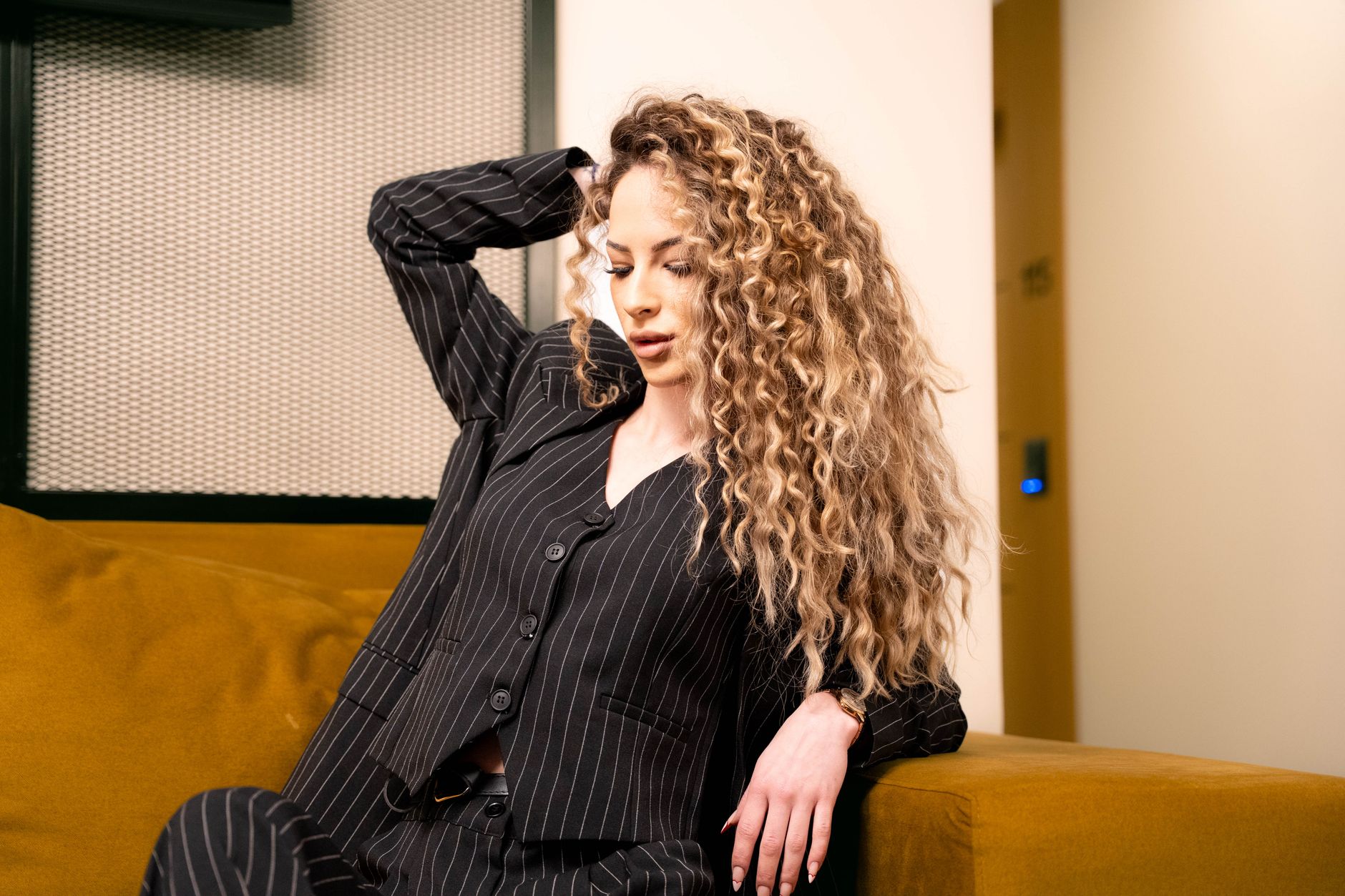
A pinstripe is a disciplined way to be loud. The lines are thin, evenly spaced and almost military in their order, yet on a red carpet they read as pure confidence. After seasons dominated by sequins, sculpted gowns and sheer illusion dresses, the pattern is returning in a way that feels deliberate rather than nostalgic. It shows up on double-breasted jackets worn with nothing underneath, on skirt suits with razor shoulders, and on wide-leg trousers that pool over a pointed shoe.
So why is a fabric so tied to bank lobbies suddenly winning photo calls?
From Trading Floor to Step-and-Repeat
For most of the twentieth century, the pinstripe was a uniform. It became shorthand for financial authority in British and American business dress, and the 1980s power suit cemented the association with ambition, hierarchy and money. Film took the idea further, using wide chalk stripes to signal everything from corporate villainy to gangland swagger. A pattern that carries that much baggage is rarely neutral, and that is exactly what makes it useful on a carpet where every outfit is trying to say something in a single frame.
The first reason for the comeback is simple fatigue with the default. The black tuxedo is elegant, but it is also the most predictable answer to a formal invitation, and a line of identical silhouettes gets lost on a photographer’s contact sheet. A pinstripe suit still signals seriousness and tailoring skill, yet it breaks the monotony of solid black without tipping into costume. It sits in a useful gap between black tie and creative formal, which is where a lot of modern invitations actually land.
The second reason is about who is wearing it. Suiting on women is no longer a surprise on the carpet, so the interest has moved from whether to wear a suit to which suit to wear. The pinstripe lets the wearer borrow the authority of the boardroom and then undercut it, with a lace bralette instead of a shirt, a corset belt at the waist, or a jacket cut so sharply at the shoulder that it looks architectural. The borrowed codes stay recognizable, but the context flips them.
What the Camera Does With a Line
Vertical stripes are one of the oldest tricks in tailoring because they lengthen the body, and flash photography exaggerates the effect. On a carpet, where a look is seen head to toe from a low angle and frozen mid-stride, a column of fine lines draws the eye upward and makes a long leg look longer still. Movement adds a second layer. When the wearer turns or bends, the stripes bend with them, which gives a still image a sense of motion that a plain dark fabric cannot deliver.
There is a technical catch, though. Very fine, tightly spaced stripes can shimmer or ripple on video, an optical effect known as moire, which is a real concern when a look will be streamed live. That nudges designers toward bolder spacing, chalk stripes and tonal versions that stay stable on screen. The pattern has to survive both the still camera and the broadcast lens, and the fabrics that do both well are getting most of the attention.
Designers Are Bending the Rules of the Stripe
The most interesting changes are in material and color. Traditional pinstripe lives in navy and charcoal wool, but the version appearing on carpets is just as likely to be satin, silk crepe or fluid viscose that drapes rather than stands. Tonal stripes, such as ivory on ivory or black on black, photograph as texture first and pattern second, which gives a suit quiet richness. Deep burgundy, chocolate brown and bottle green are also turning up, moving the stripe well away from the corporate palette it came from.
Proportion does even more of the work. Jackets are cut oversized with strong, padded shoulders, or cropped short to expose the waist. Trousers are wide, high-waisted and long enough to graze the floor. On the menswear side, the tie has largely disappeared, replaced by an open collar, a silk shirt left unbuttoned a little further than expected, or a fine knit underneath. The relaxed fit is what keeps the pattern from feeling stiff. A stripe that once signaled restraint now signals ease, and ease is much harder to fake.
Styling choices matter because the pinstripe itself is quiet. Pairing it with heavy jewelry, sculptural earrings, a pearl strand or a bold brooch gives the eye a second place to land, and the contrast between strict tailoring and ornament is what reads as modern. There is also a practical argument. Red carpet clothing is often worn once and retired, but a well-cut pinstripe suit can be re-worn to a premiere, a press day or an actual office, so it holds up under repeat use in a way a gown rarely does.
The risk is that the pattern is unforgiving. Stripes spaced too wide or cut too boxy tip quickly into gangster costume, and stripes that are too faint disappear into plain gray on camera. The gap between power and parody comes down to a few millimeters of spacing, and the red carpet leaves no room to get it wrong.
Frequently Asked Questions
Why are pinstripe suits popular on the red carpet again?
They offer formality without the predictability of a black tuxedo, and the vertical lines elongate the body in photographs. Updated fabrics and relaxed proportions also make the pattern feel fresh.
How should a pinstripe suit be styled for a formal event?
Keep the tailoring sharp and let accessories carry the contrast, such as statement jewelry, a silk shirt or a bralette instead of a traditional collar and tie. Tonal or satin versions read as more evening-appropriate than classic wool.
Do pinstripes photograph well on camera?
Generally yes, though very fine stripes can shimmer on video because of moire. Bolder spacing, chalk stripes and tonal stripes tend to hold up better on both stills and broadcast.